March 7 2025, Unidentified man. South Korea
Seoul, March 7 2025. A South Korean man supporting impeached South Korean President Yoon Suk Yeol, set himself on fire, police said. The 79-year-old man, whose name was withheld, set fire to himself on the rooftop of a building near Seoul City Hall at around noon, according to the police. The man carried printed materials denouncing the opposition bloc, while supporting Yoon.
. In early December 2024, President Yoon abruptly declared martial law, claiming a threat from “North Korean communist forces” and labeling opposition party members as “anti-state elements.” His decree banned protests, suspended media freedom, halted parliamentary sessions, and even saw police and military forces deployed to block lawmakers from entering the National Assembly. In response Legislators started climbing walls and forced entry, then unanimously rescinded martial law within hours.
The National Assembly swiftly impeached him on December 14, In April 2025, the Constitutional Court upheld the impeachment, citing serious constitutional violations, and formally removed Yoon from office. He has since been indicted on insurrection charges and refused to comply with prosecutor summons. The scandal prompted new laws limiting presidential powers and a snap election in June 2025.
February 25 2025, Mohammad Asif Javed Jutt. Pakistan*
On 25 February, 2025, outside the Lahore High Court, Mohammad Asif Javed Jutt doused himself in petrol and set himself on fire. The 48-year-old former Nestlé worker, who had spent nearly a decade fighting for fair employment.
Jutt worked for Nestlé for 16 years before being fired by the management for trying to form a union in 2016. He was terminated despite winning the case in the National Industrial Relations Commission (NIRC) or the labor court. NIRC ordered his reinstatement, however, using its vast resources, Nestlé was able to drag Asif’s case on for over nine years. The years of court battles and lack of alternative employment caused tremendous economic hardship for Jutt and his family. He was forced to sell his home and anything else of value to feed his family and cover the costs of the prolonged legal fight.
Nestle ended up paying 7.5million Pakistani Rupees, around 27 000usd, to the family and the case was dismissed.
February 04 2025, Sunil Kumar Mishra. India
February 4th 2025, an IDFC Bank employee, Sunil Kumar Mishra, set himself on fire after pouring petrol on his body after being fired from job. In a viral video, he accused the branch head and Managing Director of his termination and sought public support.
On his Twitter he spoke out against the toxic culture in the banking industry. ‘The toxic work culture in Indian banks is pushing employees to the brink—leading to extreme stress, mental breakdowns, and even suicides. The pressure to meet unrealistic targets is so severe that employees are forced to neglect their families and personal well-being.’
January 20 2025, Thairie Ritchie. United States of America
On 20th of January 2025 Thairie Ritchie, a well known Santa Cruz community organizer put himself on fire atop the Black Lives Matter mural on Center Street in downtown Santa Cruz, only a few yards from the city’s power center. It happened only a few hours after the annual Martin Luther King Jr. Day march had finished inside the neighboring Civic Auditorium and President Donald Trump had taken his oath of office for the second time in Washington. A quote from a friend :
“This is not just wanting to die. This was a message,” “A Black Lives Matter organizer who I know was wholly committed to the liberation of Black lives, who lit himself on fire at the Black Lives Matter mural on MLK Day at the beginning of the inauguration of Trump,” he said. “This is all strategic. Thairie is a self-studied activist. He understands what he’s doing.”
January 15 2025, Unidentified man. South Korea
January 15th 2025. An unknown man set himself ablaze near South Korea’s corruption investigation office, where impeached President Yoon Suk Yeol was being interrogated over insurrection allegations.
A bit over a month earlier Yoon Suk Yeol had -out of nowhere- declared martial law, saying the National Assembly had become a “den of criminals” paralyzing government affairs. This was followed by armed personnel encircling the Assembly building, preventing lawmakers from going inside. Nonetheless lawmakers climed fences and walls in order to get inside and voted unanimously to lift the martial law. Some days later Yoon’s constitutional powers were also suspended and on the 14th he was impeached. Since then there has been considerable protest against and in support of Yoon Suk Yeol.
January 3 2025, Raju Patel & Rajkumar Raghuvanshi. India
On the 3rd of January 2025, During a protest in Pithampur, India, two young men, Raju Patel and Rajkumar Raghuvanshi doused themselves in gasoline and burst into flames. It is not clear wether one of the two put them on fire or if it was someone from the crowd. The crowd quickly responded and tried to douse the flames. 337 tonnes of chemical waste had arrived to the city, to be disposed of by burning it in Pithampur. The waste was transported from the now-defunct Union Carbide factory in the city of Bhopal, site of the 1984 gas tragedy that is considered one of the worst industrial disasters in history. Pithampur has already been facing pollution problems since the rapid industrialisation of the 80s. Residents are not keen on it becoming the disposal ground for chemical waste.
In 1984, about 45 tons of the dangerous gas methyl isocyanate escaped from an insecticide plant that was owned by the Indian subsidiary of the American firm Union Carbide Corporation. The gas drifted over the densely populated neighbourhoods around the plant, killing thousands of people immediately and creating a panic as tens of thousands of others attempted to flee Bhopal. The immediate death toll was estimated to be between 15,000 and 20,000. Some half a million survivors suffered respiratory problems, eye irritation or blindness, and other maladies resulting from exposure to the toxic gas;
- https://www.thehindu.com/news/national/madhya-pradesh/union-carbide-waste-disposal-protests-rock-pithampur-two-attempt-self-immolation/article69057483.ece
- https://timesofindia.indiatimes.com/city/bhopal/protesters-opposing-transfer-of-toxic-waste-from-bhopal-gas-tragedy-site-to-pithampur-attempt-self-immolation-2-suffer-burn-injuries/articleshow/116909888.cms
- https://indiatomorrow.net/2025/01/04/two-youths-attempt-self-immolation-as-pithampur-protest-gains-momentum-on-carbide-factorys-waste-issue/
December 31 2024, Sunil. India
On the last day of 2024 An autorickshaw driver, Sunil, put himself on fire after dousing himself in petrol. The family says he did this in protest of the personnel of the Netaji Nagar police station in India. The family claims they were extorting him for information on drugdealers and 100 000 rupees, around a thousand euros.
October 5 2024, Samuel Mena Jr. United States of America
October 5th 2024. Samuel Mena Jr, a Photojournalist for KTVK from Phoenix, Arizona put himself on fire in Washington DC in front of the White House. He did this in protest of the ongoing genocide in Palestine (as of 2025). He was captured on video lighting his left arm on fire, lifting it into the air, and screaming in pain. The flames were quickly doused by protesters and police.
September 15 2024, Ekong Eshiet & Trayvon Brown. United States of America
on september 15th, 2024 At Red Onion State Prison in Virginia, US two men, Ekong Eshiet and Trayvon Brown, lit themselves on fire in the prison’s solitary confinement unit, demanding an end to the unbearable isolation, racism, and brutality they were facing daily. Over an approximate two-week span, during the same period that Ekong burned himself, at least six other prisoners at Red Onion also set themselves ablaze, all suffering serious injuries. All were Black.
The director for Virginia’s department of corrections wrote in his statement that : “The recent round of stories about Red Onion are nothing more than bad-faith efforts to try to score cheap political points by advocacy groups who pursue prison abolition and policies that would make Virginians less safe.”
Despite the United Nations’ designation that placing a person in solitary confinement for more than 15 days is torture, the practice is still commonplace in U.S. prisons and jails.
September 11 2024, Matthew Nelson. United States of America
On september 11 2024 Matthew Nelson, a Massachusets man self-immolated in front of the Israeli consulate in Boston. In a video Nelson filmed himself and posted to YouTube on Sept. 11, Nelson told viewers “My name is Matt Nelson, and I’m about to take drastic action in protest. We are all complicit in the ongoing genocide in Gaza. We consider ourselves the greatest nation in history, but the money we spend on war exceeds the total we invest in educating our children, helping the homeless, ensuring equal rights for all Americans, and protecting the environment.”
August 28 2024, Mano Yogalingam. Australia
August 28th 2024 Mano Yogalingam doused himself in gasoline and set himself on fire after spending 11 years on a bridging visa, facing the uncertainty of possible deportation. He arrived with his family from Sri Lanka when he was twelve years old. He went to school in Melbourne, he made friends, built a life but was never granted citizenship.
Yogalingam was a key organiser of the 49-day protest outside the office of the Department of Home Affairs in Melbourne, a movement seeking federal government intervention for the thousands of asylum seekers caught up in the former government’s discredited and unfair ‘fast-track’ asylum process. After alleged neo-Nazis attacked the protest site in Melbourne’s city centre, Yogalingam volunteered as an overnight guard, keeping vigil while others slept. After keeping watch over the protesters on Sunday night, he left the camp late on Monday morning. On Tuesday evening, Yogalingam set himself alight. He died in hospital the next day
Aug 23 2024 Demetrious Wallace. United States of America
On August 23, 2024, 27‑year‑old inmate Demetrius Wallace set his foot ablaze while held in solitary confinement at Virginia’s notorious Red Onion super‑max prison, aiming to force a transfer to a facility with proper medical care. His case is one of at least six similar incidents at Red Onion in 2024, reflecting deep systemic issues like retaliation, racism, and denial of medical care, documented by incarcerated journalists and prompting calls for independent investigation. This case is less an overt act of protest as with some of the other Red Onion cases, but firstly a desperate attempt to get relocated to a place where he did not have to suffer constant humiliation and fear for his life.
May 1 2024, Ruslan Palitsyn. Russia
May 1st 2024 Ruslan Palitsyn lit himself on fire outside a Russian military enlistment office in St Petersburg, where men sign up to go fight in the ongoing Russia-Ukraine war (as of Juli 2025). Palitsyn had come to St Petersburg from Krasnoyarsk in Siberia. He was known for his involvement in dancing, music and acting.
April 19 2024, Maxwell Azzarello. United States of America
Apr 19 2024 Max Azzarello set himself on fire outside the New York court where then former United States President Donald Trump was on trial.
Police and certain acquaintances have expressed they think he got lost in paranoia and conspiracy theories after suffering the loss of a loved one.
He left behind a manifesto that opens with the lines:
‘‘This extreme act of protest is to draw attention to an urgent and important discovery: We are victims of a totalitarian con, and our own government (along with many of their allies) is about to hit us with an apocalyptic fascist world coup. These claims sound like fantastical conspiracy theory, but they are not. They are proof of conspiracy.’’
April 9 2024, Yassine Selmi. Tunisia
9 april 2024 Yassine Selmi, a 22-year-old construction worker, died in a hospital in Tunis, two days after setting himself on fire in front of a police station, He was attempting to “resolve a fight between two people and police officers near a police station” when the officers threatened to arrest him in Bou Hajjla, a small town in Kairouan. The young man later came back to the police station with a gasoline container and set himself on fire in protest of the police’s threats.
One must consider this in the context of poverty and economic hardship young Tunisians face. In the week before, four other people, mostly form non-coastal cities that are economically hit the hardest, self immolated. Albeit not with a clearly articulated motive.
February 25 2024, Aaron Bushnell. United States of America
On February 25, 2024, Aaron Bushnell, a 25-year-old serviceman of the United States Air Force, died after setting himself on fire outside the front gate of the Embassy of Israel in Washington, D.C. Immediately before the act, which was live-streamed on Twitch, Bushnell said that he was protesting against “what people have been experiencing in Palestine at the hands of their colonizers” and declared that he “will no longer be complicit in genocide”, after which he doused himself with a flammable liquid and set himself on fire.
As he burned, Bushnell repeatedly shouted “Free Palestine!” After he collapsed onto the ground. Bushnells act was seen globally and became a flashpoint for debates about protest ethics, U.S. complicity in global conflicts, and the limits of individual resistance. Palestinian groups, including Hamas and the Popular Front for the Liberation of Palestine, praised his sacrifice, and a street was named after him in Jericho.
- https://time.com/6821425/israel-embassy-air-force-protest-fire-self-immolation-aaron-bushnell-latest-updates
- https://www.newyorker.com/news/our-columnists/aaron-bushnells-act-of-political-despair
- https://www.theguardian.com/world/2024/mar/10/palestinian-town-of-jericho-names-street-after-us-airman-who-set-himself-on-fire
December 1 2023, Unidentified woman. United States of America
December 1st 2023 a woman whose identity is still not released (June 2025) self-immolated outside the Israeli Consulate in Atlanta, Georgia; following what officials described as “an act of extreme political protest”, a Palestinian national flag was recovered at the scene. This marked the first American self-immolation in protest of the Palestinian genocide.
- https://www.pbs.org/newshour/nation/protester-sets-self-on-fire-outside-israeli-consulate-in-atlanta-suffers-critical-burns
- https://www.nytimes.com/2023/11/30/world/middleeast/protester-fire-israeli-consulate-atlanta.html
- https://www.theguardian.com/us-news/2023/dec/01/protester-palestine-self-immolate-atlanta-israel-consulate
November 8 2023, Unidentified man. Democratic Republic of Congo
Novemer 8th 2023 an unknown man in Kinshasa, Democratic Republic of Congo, set himself on fire. The video which shows him holding a sign reading ‘STOP THE GENOCIDE IN CONGO’ spread rapidly through Congolese social media.
Since 1996, the Democratic Republic of Congo has been embroiled in violence that has killed and displaced many millions of people. Today, most of the fighting is taking place in the regions of North and South Kivu, on the DRC/Rwanda border. Some fighting is political, resulting from unrest caused by Hutu refugees from the 1994 Rwandan genocide now living in DRC, while other fighting results from an international demand for natural resources. This has drawn in many neighboring countries, mercenaries and militias.
Six million have died, and more than six million are displaced after decades of fighting and the ensuing humanitarian crisis in the eastern region of the Democratic Republic of Congo, drawing in neighbors, mercenaries and militias.
*September 25 2023, Unidentified man. Russia
- On Sunday, September 25, a young man set himself on fire at the Central bus station in Ryazan. The incident occurred at about 3 p.m. An unidentified young man poured gasoline on himself and set himself on fire. He screamed that he did not want to go to the ‘special operation’ in Ukraine.
August 17 2023, Robert Gituhu. Kenya
On August 17th 2023 Robert Gituhu’s Held a flag in his left hand and stood atop a statue at Mwembe Tayari roundabout in Mombasa, the young graduate, who scored remarkably high in school, doused himself with a flammable liquid before setting himself ablaze with a sizeable crowd watching in disbelief. his final words as captured in the video and recounted by witnesses: “I have not stolen from anyone. I am not a thief. I am protesting because Raila’s victory was stolen…If maize flour prices are not reduced, I better die,”
“My son believed he was a leader. He hoped to get a job after graduating and work for years before joining politics. He often asked how I would feel if he became an MP or governor. Sadly, this did not happen.” His mother said during an interview with a local press.
William Ruto was elected President of Kenya with 50.5% of the vote, defeating Raila Odinga who received 48.85% of the vote. Odinga filed a petition with the Supreme Court of Kenya challenging the results. The Supreme Court rejected the challenge and upheld Ruto’s victory. Odinga said he would respect the court verdict, although he still claimed victory.
August 01 2023, Bar Kalaf. Israel
On 1 august 2023 another Israeli veteran set himself on fire, Bar Kalaf, who served in the army from 2008 to 2011 and participated in the attack on Gaza dubbed Operation Protective Edge as a reservist, Bar Kalaf had been seeking recognition for post-traumatic stress disorder (PTSD) related to his service. However, the Defence Ministry rejected his application, stating that he was diagnosed with a “mental illness not directly linked to his military duties.”
May 24 2023 DeAndre Gordon. United States of America
May 24th 2023, DeAndre Gordon, an incarcerated man at Red Onion State Prison in Virginia, deliberately set himself on fire in his cell, suffering third-degree burns. This extreme act was not a suicide attempt but a desperate move to escape what he described as inhumane and abusive treatment by prison staff. Gordon later explained that he believed self-immolation was the only way he could force a transfer to a medical facility outside the prison, particularly because Red Onion lacked adequate treatment for serious burns. His injuries required him to be moved to VCU Medical Center in Richmond, where proper care could be administered.
Gordon’s self-immolation followed repeated allegations of abuse, including a violent incident on May 7, 2022, in which he claims correctional officers beat him, restrained him improperly, and then denied him access to medical attention. In a subsequent civil rights lawsuit, he accused prison officials of deliberately covering up the incident, withholding grievance forms, and retaliating against him for trying to report the abuse. His claims align with a broader pattern of mistreatment at Red Onion, a supermax facility notorious for its use of solitary confinement and harsh disciplinary tactics. He was the first to do this in Red Onion state prison, but at least 5 more would follow in the coming two years. This case is less an overt act of protest as with some of the other Red Onion cases, but firstly a desperate attempt to get relocated to a place where he did not have to suffer constant humiliation and fear for his life. I choose to include it because I, just like the prisoners, believe it is important that this is known.
May 1 2023, Yang Hoe-Dong. South Korea
On international workers day, 1st of may 2023 A Korean union, Yang Hoe-Dong leader ended his life, enraged in anger and humiliation as the government attempted to bring racketeering charges against him over union activity. Yang Hoe-dong, a chapter leader of a national construction workers’ union, set himself on fire at a courthouse where he was summoned to a hearing for the review of an arrest warrant for him. He was pronounced dead at the hospital the following day. This is following intense government crackdowns of union activity and detentions of members. Yang Hoe-Dong in one of the notes he left:
”I am setting myself afire today because my rightful union activity is regarded [by the government] as an obstruction of business and racketeering,” “My self-worth can’t tolerate this.”“Please put an end to the Yoon regime, please free the innocent detainees.”
April 13 2023, Nizar Issaoui. Tunisia
On 13 April 2023, Nizar Issaoui, a professional footballer, died after setting himself on fire in what Issaoui said was a protest against Tunisia’s “police state”. News of Issaoui’s death prompted protests on the streets of Haffouz, Tunisian media reported. Young demonstrators threw stones at police, who responded with teargas. Similar clashes broke out during the funeral later that week. Hundreds of mourners gathered outside Issaoui’s house before his funeral, shouting: “With our blood and with our soul we will sacrifice ourselves for you, Nizar.”
Issaoui had been accused of terrorism by police officers after he complained that he was unable to buy bananas for less than 10 dinars ($3.30; £2.66) a kilogram, double the price set by the government, reports say.In a Facebook post, the footballer had written: “For a dispute with someone selling bananas at 10 dinars, I get accused of terrorism at the police station. Terrorism for a complaint about bananas… I have no more energy. Let the police state know that the sentence will be executed today.”
March 27, 2023 Ahmed Jaouad, Morocco
March 27th 2023, Ahmed Jaouad, playwright and actor, set himself on fire in front of the ministry of culture in Rabat. This came after nearly thirty years of service in administration and leading workshops at the Mohammed V National Theatre, he retired in October 2021 with a pension of approximately 1,300 DH, or 120 euros per month : too little to support his wife and two children. As a result, Ahmed Jawad continued to work, staging plays and selling them to the Ministry of Culture.
In a letter to the minister, Ahmed Jawad requested the purchase of 10 performances to help alleviate his poverty. Following the ministry’s refusal to offer him only two performances this year, Ahmed Jawad reportedly began a three-week hunger strike in early February. This was before deciding, faced with the authorities’ lack of response, to set himself on fire.
January 31, 2023 Unidentified man, Brazil
January 31st 2023 an unidentified, 58-year-old man from Botucatu burned himself in the central flowerbed of the Esplanada dos Ministérios. According to witnesses, he shouted
“death to Xandão” , referring to Alexandre de Moraes. A Brazilian jurist and judge on the Brazilian Supreme Federal Court. He is a controversial figure, known for his actions in combating disinformation and alleged coup attempts. Elon Musk famously called him “Darth Vader”.
The man was carrying papers with photos of people such as Johann Georg Elser, known for having tried to kill Adolf Hitler; former South African President Nelson Mandela; and Claus von Stauffenberg, known for commanding Operation Valkyrie, whose objective was to assassinate Hitler. All of them were accompanied by the phrase “Perdeu, mané” (“you lost, idiot”) , said last year by Supreme Court Justice Luís Roberto Barroso in the United States, after being approached by a pro-Bolsonaro protester.
January 24, 2023 Prem Prasad Acharya, Nepal
On January 24, 2023 Prem Prasad Acharya, a Nepali entrepreneur from Ilam, set himself on fire in front of the Parliament in Kathmandu as the Prime Minister was passing by with a carcade. It was a desperate protest against systemic corruption, exploitative business practices, bureaucratic obstruction, and state apathy toward honest entrepreneurs. He had started several businesses that failed because of abuse of power and corruption. In a detailed Facebook post published shortly before his self-immolation, he named major retail chains like Bhat-Bhateni and Big Mart for alleged exploitation, criticized the government for failing to support small businesses, and outlined 25 reform demands. His death, which occurred hours later in a hospital, sparked national outrage and protests under the slogan “It’s a murder, not suicide,” leading to the formation of a governmental task force to investigate his grievances. The case exposed deep flaws in Nepal’s economic and governance systems, with many viewing Acharya’s act not as personal despair but as a tragic indictment of a corrupt and indifferent state.
September 21 2022, Unidentified man. Japan
September 21, 2022 A man set himself on fire near the Japanese prime minister’s office in Tokyo on Wednesday in an apparent protest against the state funeral that was planned for Shinzo Abe the week after. A note was found with him that said, “Personally, I am absolutely against Abe’s funeral”, Kyodo reported.
While delivering a campaign speech for a colleague on July 8, 2022, Prime minister Abe Shinzo was assassinated by a 41-year-old man with a homemade gun. The killer held a deep personal grudge against the Unification Church, which he blamed for financially ruining his family. He targeted Abe, whom he viewed as a prominent supporter and facilitator of the organization’s political influence. This motive brought to light deep, longstanding connections between the Liberal Democratic Party and the Unification Church*—ties dating back to Abe’s grandfather—and sparked a national scandal, prompting political backlash, investigations into the church’s influence, and calls for reform.
*A religious movement born in South Korea in the 50s. Critics describe it as a manipulative, politically connected authoritarian organization that operates more like a sect.
June 2022, Unkown monk. Tibet
In June 2022 An unidentified Tibetan monk burnt himself in front of a portrait of the exiled Dalai Lama to protest the widespread crackdown of Tibetan Buddhist institutions in the so called Kanlho Tibetan Autonomous Prefecture in Gansu province, which is in the traditional Amdo region. At the time of his death, the monk was in retreat at his residence in Khagya Township.
Chinese authorities reportedly interfered with retreat practices, subjecting monks to monitoring and restrictions under the direction of local Chinese officials. Following the self-immolation, the monk’s family was detained under the pretext of Covid-19 protocols, despite no clear evidence of infection. Moreover, local authorities allegedly obstructed efforts to identify the self-immolator, illustrating a broader policy of silencing dissent and erasing acts of resistance tied to Tibetan identity and religious devotion.
That a mere monk is unable to engage safely in solitary spiritual retreat at his own home without the violent interferences of the Chinese state shows the extent and depth of religious repression in Tibet,” TCHRD researcher Nyiwoe said while talking about the case.
May 18 2022, Krisnapal. India
On May 18th 2022 An indian farmer Krishanpal set himself on fire after being scolded by police. He had filed a police complaint over people burning his crops two weeks before. When they ignored him and he went to demand their attention, they scolded him and told him to leave. Following this he set himself ablaze outside an SSP* office. Following his death, five police officers were suspended and an inquiry was started.
*Senior Superintendent of Police
April 22 2022, Wynn Bruce, United States of America
Wynn Bruce was a photojournalist who ran a portrait photography studio, an active member of Boulder’s contact improvisational dance community, and a graduate of Front Range Community College and Community College of Denver. He was also a buddhist and really passionate climate activist.
Those who knew Bruce say he was protesting against inaction on the climate crisis. About a year before, Bruce responded to one of his own posts about climate change with a comment that included a fire emoji and the date “4/22/2022.” Indicating that he might have planned his act over a year before. His last Facebook post on March 28 said, “This is NOT humor. It is ALL about breathing,”
March 30 2022, Tsering Samdup, Tibet
March 27 2022, Taphun, Tibet
February 25 2022 Tsewang Norbu, Tibet
February 25th 2022 Tsewang Norbu chanted “Free Tibet” and then set himself on fire in front of hundreds of people outside the Potala Palace in Lhasa. Then his body disappeared. . He was a young and prominent pop singer in Tibet and China. He rose to national prominence in China through his performances in various variety shows.
He was the 158th Tibetan to die in this manner since 2009. Norbu’s Weibo and Douyin accounts were filled with large numbers of condolence messages and as a result, the comment function on both apps was disabled for Norbu’s accounts. His last Weibo post, written on the day of his death, expressed gratitude to his fans for their comments and messages about his most recent song. Norbu’s songs were removed from music platforms in mainland China. in May 2022 Norbu’s father, Choegyen, also committed suicide after being relentlessly threatened and harassed by Chinese police.
Multiple Chinese citizens were also arrested for ‘leaking’ (sharing online) information about Tsewang Norbu’s death.
January 1 2022, unidentified man. Australia
On new years day of 2022 a Melbourne man set himself on fire inside his car. in front of a diner. When they rushed to him he was heard screaming ”NO VAX ID”. Referring to the Covid-19 vaccine mandates that were enforced at the time.
- https://www.news.com.au/national/victoria/news/melbourne-man-set-himself-on-fire-after-shouting-about-vaccine-mandates/news-story/1fc6f8a95bc99359a2e527c28d333f51
- https://web.archive.org/web/20220102042028/https://www.newshub.co.nz/home/world/2022/01/melbourne-man-suffers-life-threatening-injuries-after-setting-himself-on-fire-while-yelling-about-covid-19-vaccine-mandates.html
September 14, 2021, Ella Nik Bayan, Germany
September 14th 2021 Ella Nik Bayan put herself on fire in Alexanderplatz, Berlin. She did not leave behind a message or expressed an explicit political motive. I include it nonetheless, because her struggle as an Iranian trans woman and refugee in Germany and Berlin (Europes ‘queer capital’) illustrates the often overlooked brutality queer and refugee-status individuals face.
For more information read this article
May 18 2021, Behzad Mahmoudi, Iraq
April 12 2021, Itzik Saidan. Israel
Itzik Saidan set himself on fire in front of the Defense Ministry’s rehabilitation department offices in Petah Tikva that handles the rehabilitation of injured soldiers, two days before the annual Memorial Day.
After the 2014 Operation Protective Edge conflict in Gaza, Itzik Saidyan suffered from severe PTSD. He was recognized as being disabled, but the defense ministery only recognized him as 25% disabled instead of 50% as he requested. They said his disability was also due to childhood trauma instead of the bloodshed he had witnessed.
“I wanted them to see and to understand how much I suffered from them, to understand the extent to which I am ready to die rather than go on living after what I went through with them,” he said afterwards. He had gone to the Defense Ministry office for injured soldiers and self immolated there.
- https://www.haaretz.com/israel-news/2021-04-13/ty-article/.premium/disabled-israeli-army-veteran-sets-himself-on-fire-ahead-of-memorial-day/0000017f-f03e-d487-abff-f3fe928f0000
- https://www.haaretz.com/israel-news/2021-04-14/ty-article/on-memorial-day-protest-in-solidarity-with-israeli-army-vet-who-set-himself-on-fire/0000017f-dbf1-d3a5-af7f-fbff75060000
February 12 2021, Halil S. Germany
On February 12th, 2021, Halil S. set himself on fire in front of the Landtag in Dresden. Twenty-two years earlier, Abdullah Öcalan, the leader of the PKK—the militant Kurdistan Workers’ Party—was captured and imprisoned on a Turkish prison island, where he remains to this day (as of July 2025). Since then, Kurds who view his imprisonment as an act of unjust state repression have held annual protests in his support. Halil was one of those supporters, and arrested for his connections to the PKK, or its successor organisation Kongra-Gel.
The public prosecutor’s office considered him the main leader of the banned group (that is classified as a terrorist organisation) in the Dresden area since 2007. He received a suspended sentence in 2009, but two years later, the Dresden Regional Court sentenced him to nine months in prison.
January 11 2021, Liu Jin. China
November 2 2020, Leroy Archie Ponpon. Liberia
October 2 2020, Irina Slavina. Russia
Irina Slavina set herself on fire in front of the Interior Ministry office in Nizhniy Novgorod. She was a journalist that had been harrased and fined multiple times by the Russian government for joking and being critical of state actions. The guise of covid-19 was also used to prosecute her for alledgedly spreading misinformation. Slavina, who ran a press shop that billed itself as having “no censorship” and “no orders ‘from above,’” said she was being probed for ties to the Open Russia opposition group, which is financed by a fierce critic of the Kremlin, Mikhail Khodorkovsky.
The day before, they had raided her house. Cut the doors and confiscated a lot of material. “They were looking for brochures, leaflets, invoices of Open Russia, possibly an icon with the face of Mikhail Khodorkovsky… I don’t have any of this”, they seized “flash drives, my laptop, my daughter’s laptop, the computer, phones — not just mine, but also my husband’s — a bunch of my notebooks that I scribbled on during press conferences.”
”I’m left without the means of production”.
September 18 2020, Syarhei Radchenya. Belarus
On September 18th 2020 amidst the Belarusian protests and police brutality, Syarhei Radchenya burned himself near the local police station in Smalavichy.
The 2020–2021 Belarusian protests were a series of mass political demonstrations and protests against the Belarusian government and President Alexander Lukashenko. The largest anti-government protests in the history of Belarus, the demonstrations began in the lead-up to and during the 2020 presidential election, in which Lukashenko sought his sixth term in office. In response to the demonstrations, a number of relatively small pro-government rallies were held. The protests intensified nationwide after the official election results were announced on the night of 9 August, Lukashenko announced he had won 80% of the vote. The protesters faced violent persecution by the authorities. A statement by the United Nations Human Rights Office on 1 September cited more than 450 documented cases of torture and ill-treatment of detainees, as well as reports of sexual abuse and rape. At the end of 2020, the Viasna Human Rights Centre documented 1,000 testimonies of torture victims.
August 14 2020, Fikret Güven. Turkey
August 3 2020, Yavuz Polat, Turkey
On august 3rd, Yavuz Polat, A street vendor, set himself on fire after municipal police seized his stall and harrased him. He was selling corn in the picnic area during Eid al-Adha celebrations.
July 27 2020, Arie Den Dekker. The Netherlands
On July 27 Arie Den Dekker put himself on fire in front of the city hall of Oss. He was a Dutch man who had witnessed a murder in 2018. Following him becoming a witness, his house wat torched multiple times and he was put into witness protection. The Oss municipality considered it dangerous to have him live in the city since he was a target and his house was already put on fire before. After failing to stick to the program conditions because he could not cope with the loneliness, and had a tendency to talk too much about the things he wasn’t supposed to, he was cut from witness protection. This caused him to be homeless, while being effectively banned from Oss, his homecity.
Den Dekker protested in front of Oss’ city hall multiple times, throwing dead fish inside, dousing himself in cow feces while shouting he was being treated like shit and committing other desperate acts on multiple occasions, but his pleas went ignored.
July 18 2020, Linda J. Zhang. United States of America
On July 18, 2020 at 4:48 Linda J. Zhang set herself on fire. Linda was an 18-year old New York student. She had adopted a “zero waste” and plastics-free lifestyle. She advocated for the reduction of plastic usage whenever she could. She started a campaign at Horace Greeley, with the support of her friends, to replace bottled water with locally sourced water that contained no plastics in the school cafeteria. She participated in environment-related forums and created Youtube videos to help people to live sustainably. She has also been the recipient of numerous honors and regional and national awards for her writing, including a Scholastic gold medal in poetry in 2018 and a Claudia Ann Seaman Award for Fiction in 2019. She wrote in a letter she posted that she could not continue “reciting poetry even as the world is burning.”
February 7 2020, Adem Yarıcı. Turkey
On February 7th 2020 An unemployed Turkish father, Adem Yarici, set himself on fire in Turkey’s southern city of Hatay in front of the provincial governor’s office. “I’m unemployed, I’m hungry, my children are hungry,” Yarici reportedly shouted before he set himself on fire. Security officers intervened with fire extinguishers. Yarici was taken to hospital but then died of a heart attack while he was being transferred to another hospital in the city of Mersin.
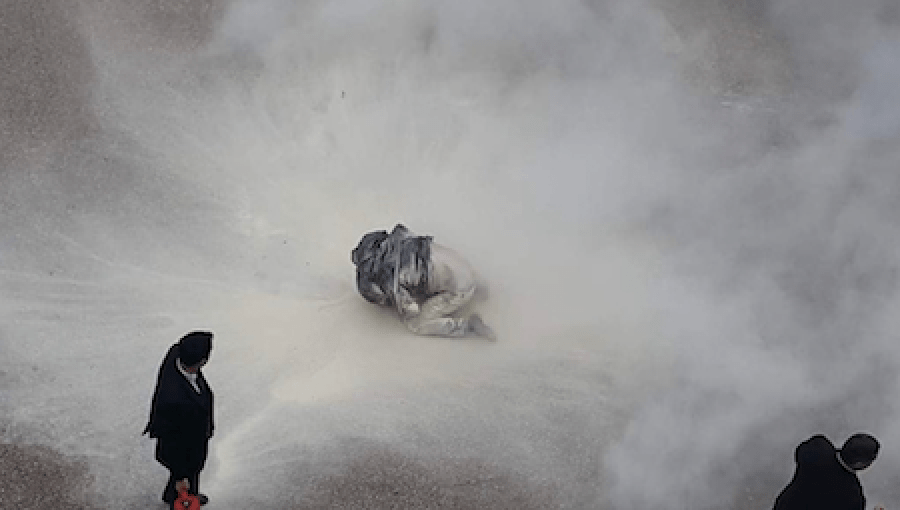
A painful image from self immolation that is very different from others that are out there.
November 26 2019, Yonten. Tibet
November 10 2019, Anas K. France
November 10th 2019 A 22-year-old student enrolled at Lyon University set himself on fire in front of the regional public authority office that manages university services including student housing, cafeterias and bursaries on november 10th 2019. This in response to being unable to sustain himself anymore. In a post on Facebook, he blamed Emmanuel Macron, François Hollande, Nicolas Sarkozy and the EU for having killed him, and also attacked Marine Le Pen and media figures for creating fear, also urging readers to “Fight against the rise of fascism which divides us, and against liberalism which creates inequalities”. In the wake of his self burning many French students protested and actions happened all over the country. Today, 20 percent of students live under the poverty line, one in two students admit to skipping meals because they have to make financial choices and a third do without medical care.
October 23 2019, Ali Wazir. Switzerland
October 23rd Ali Wazir, a Syrian Kurdish man set himself on fire in front of the seat of the UNHCR in Geneva. This happened in the midst of the 2019 Turkish military offensive, code named ‘Operation Peace Spring’,. It was a cross-border military operation conducted by the Turkish Armed Forces and the Syrian National Army against the Syrian Democratic Forces, which Turkeys government classified as a terrorist group because of its links to the PKK, The kurdistan workers party. The conflict resulted in the displacement of over 300,000 people and caused the death of around a hundred innocent civilians. Turkey also wanted to set up a ‘safe zone’ around the border and resettle Syrian refugees that had come to Turkey there. Since this area was predominantly Kurdish people critisized this a pretext to settle their land.
September 10 2019, Albert Razin. Russia
Albert Alexeyevich Razin was an Udmurt rights activist. Udmurts are a people that make up a tiny percentage of russia but have a rich culuture and history. Ethnically they are a mix of finnish and turkish people. Razin was also a Neopaganist (based on traditional udmurt beliefs in dieties and spirits). He did it as an act of protest against a 2018 language policy introduced by the Russian federal government. Prior to this reform, regional languages were often taught alongside Russian in the republics where ethnic minorities lived. The 2018 policy, which amended the federal education law, allowed parents to opt out of having their children study these regional languages, effectively deprioritizing them in favor of Russian and accelerating their decline.
This shift was part of a broader centralization push by the Kremlin that many viewed as a deliberate effort to erode the cultural autonomy of Russia’s non-Russian ethnic groups. In areas like Udmurtia, where the Udmurt language was already endangered, the reform was seen not only as a symbolic blow but also as a concrete mechanism of Russification.
When putting himself on fire Albert Razin held a sign that said “If my language dies tomorrow, then I’m ready to die today”
September 9 2019, Sahar Khodayari. Iran
September 9th 2019, Sahar Khodayari, or ‘blue girl’ put herself on fire in front of an Iranian courthouse after hearing she may receive a 6-month prison sentence.
Sahar was a fan of the football team Esteghlal F.C. In March 2019, she had attempted to enter the male-only Azadi Stadium in Tehran while disguised as a man to watch a match played by the team. Security noticed and arrested her. She spent three days in jail before being released on bail. At her courtcase in september 2019 she was charged with “openly committing a sinful act by appearing in public without a hijab” and “insulting officials”. While no verdict was delivered in her case because the judge was unavailable, she was reportedly told she might face a six-month jail sentence. After leaving court, in front of the building, she poured petrol over herself and put it on fire. The six-month jail sentence was affirmed while she was in hospital. One month later, under pressure of FIFA who decided to host select qualifier games for the 2022 FIFA World Cup in Iran, women were allowed to watch football matches in 2019. However, in 2022, Iranian women were blocked from entering the stadium for a World Cup qualifier. To this day women are still banned from attending football matches in many cities in Iran.
- https://www.amnesty.org/en/latest/press-release/2019/09/iran-shocking-death-of-football-fan-who-set-herself-on-fire-exposes-impact-of-contempt-for-womens-rights/
- https://www.theguardian.com/world/2019/sep/10/iranian-female-football-fan-who-self-immolated-outside-court-dies
- https://www.bbc.com/news/world-middle-east-49646879
February 20 2019, Uğur Şakar. Germany
On 20th of February 2019, 43-year-old Uğur Şakar set himself on fire in front of the courthouse in Krefeld, calling for the release of Kurdish PKK leader Abdullah Öcalan, who had been locked up in isolation on the Imrali Island Prison in the Sea of Marmara. To this day he remains imprisoned.
Şakar left behind a handwritten letter. He saluted the Kurdish hunger strikes, and wrote, “The PKK has taught us the philosophy that ‘resistance is life’. It is our duty to resist injustice, wherever we are.” The letter ends with: “I condemn the German state’s police brutality and political pressure agains Kurds. I invite each and every Kurd to fight for a free life, rather than living as a slave. We will prevail. Let us, as a people, gather around the friends who gathered for the Leader in their hunger strikes.”
December 24 2018, Abdel Razaq Zorgi. Tunisia
December 9 2018, Gedhun Gyatso. Tibet
December 8 2018, Drugko. Tibet
November 28 2018, Mahsun Özen. Turkey*
On november 28 2018, on the anniversary of the Roboski airstrike that killed 34 Kurds, Mahsun Özen put himself on fire in Izmir, Turkey.
On 28 December 2011, Turkish air forces bombed a group of mostly under 18 border traders in the northern Kurdish province of Şırnak. The dead border traders had loaded their mules with two canisters of diesel fuel, one kilo of tea and one kilo of sugar each. Suddenly, a rain of bombs fell on them. It is very likely the officials responsible for this bombing knew they were not terrorists, as is claimed. None of the people responsible have been held accountable. Several people have been thrown in jail and prosecuted by the state for protesting this inaction.
November 4 2018, Dopo. Tibet
September 27 2018, Umit Acar. Germany
After the Turkish coup attempt in July 2016 led to mass arrests of politically active Kurds, Umit Acars father sent him and his brother to Germany. In an interview his brother stated: “When you go somewhere else, you become more vulnerable and even angrier,” “On top of that, there’s the psychological crisis. We wanted to get involved for our people, but that wasn’t possible here.” Umit Acar set himself on fire in Ingolstadt, shortly before Erdogan was to visit Germany.
Kurdish oppression in Turkey is an issue that goes back more than a century. Since the founding of the Turkish Republic in 1923, the state has aimed at assimilating Kurds and denying their distinct identity, including banning the Kurdish language in public spaces and suppressing Kurdish political movements. Armed conflict intensified in the 1980s with the rise of the Kurdistan Workers’ Party (PKK), prompting harsh military crackdowns and widespread human rights abuses. Despite some reforms in the 2000s, such as limited cultural rights and peace talks, the Turkish government’s stance has hardened again in recent years, with ongoing arrests of Kurdish politicians, closure of pro-Kurdish parties, and renewed military operations, perpetuating a cycle of conflict and marginalization.
September 19 2018. Nicholas McCray. United States of America
Nicholas McCrary was a prolific YouTube figure who had autism and whose videos were known with the incel community, more specifically “blackcels” (black incels).
The incel worldview is based on the notion that attractiveness is pre-determined by genetic factors, which dictate our physical appearance, and these are the main features that women find attractive in men. Those who subscribe to inceldom believe these physical traits to be substandard in themselves and that they are “doomed to a life of involuntary celibacy”. An immense culture has grown around this with specific vocabularies, memes, and growing hostility to women and the outside world. McCray accused black women of being “prejudiced” towards normal and nice black men. Instead ”preferring thugs, pretty boys and light skin men.”
September 19 2018 he tweeted “WOMEN ALL FIND ME PHYSICALLY UGLY” before setting himself on fire.
August 15, 2018. Melanie Smith. United Kingdom
in London a woman later identified as Melanie Smith set herself on fire at the housing office of Barnet London Borough Council. It began when an eviction notice arrived through the post in April 2018, warning that her landlord had started legal proceedings to remove her from her home because she had rent arrears of more than £700. She had the means to move into a smaller house or a social house, but there were severe shortages so she was facing homelessness as a 50-year old woman. Authorities did everything they could to divert attention from the story, and mostly, they succeeded.
August 2 2018, Vatan Karabash. Crimea
Early in 2018 Russia announced it would build a new district in annexed Crimea. This is in an area where many local Crimean Tartars settled after returning from the deportation they suffered in the 40s under Stalin. He accused them of collaborating with the Nazis in the second world war, and the entire population +- 200 000 people was deported, mostly to Uzbekistan, without trial. The return of the Crimean Tatars to their historic homeland happened mostly in the late 80s/early 90s. Soviet authorities still tried to sabotage this as much as possible, meaning many of the homes were built without official permission. After Russia announced plans for rebuilding this area, local Crimean Tatars still fear their houses will be demolished to make way for the planned apartments. On august 2 2018 Vatan Karabash protested this by setting himself on fire.
June 26 2018, John Watts. United States of America
June 26 2018. John Watts, 58, arrived at the Georgia capitol building before noon wearing a vest lined with firecrackers and flammable devices, then doused himself with flammable liquid and lit the fireworks. He was an American veteran who, like many others, was neglected by the state. Specific reasons were not released. That he protested his treatment by the U.S. Department of Veterans Affairs is all we know.
June 20 2018, Chloe Sagal. United States of America
Chloe Sagal was a game developer and artist. She was proud of her Romani heritage and an active socialist. After it was revealed that a crowdfunding campaign to raise money for Sagal to deal with metal poisoning, caused by metal shrapnel in her body was actually being used for her gender surgery she became the target of hate mob ‘Kiwi Farms’, an online group New Yorker magazine described as “the web’s biggest community of stalkers”. This destroyed her livelyhood and mental state.
Before walking into a park and putting herself on fire she read a note that was also mailed to local newsstations ”It’s been a painful life. I deserve an honorable political death. Stop thinking of yourselves in this, please support me, and please take advantage of my sacrifice.” ”Don’t remember me as the monster you think I am, remember me for all the things I loved, making people smile with stupid jokes, making things, learning + studying.
What followed was an intricate statement about housing, mental health treatment, capitalism and suicide in America.
May 20 2018, Fathi Harb. Palestine
Fathi Harb is the first example of a public act of self-immolation in Gaza that was filmed and posted online. Harb reportedly shouted ‘Damn Hamas’ before dousing himself in petrol and setting himself alight on a street in Gaza City shortly before dawn prayers during the holy month of Ramadan in 2018. Being 21, He would have barely remembered a time before Gaza was an open-air prison. The absolute despair of oppression and poverty in Gaza drove him to try to make a statement through his death.
April 4 2018, David Buckel. United States of America
At around 6 a.m. on April 14, 2018, David Buckel set himself on fire at Prospect Park, near his home in Brooklyn. Several minutes prior, at 5:55 a.m., he had emailed a note to multiple news media outlets, in which he wrote “Most humans on the planet now breathe air made unhealthy by fossil fuels, and many die early deaths as a result—my early death by fossil fuel reflects what we are doing to ourselves.” He was a climate activist as well as a senior counsel and marriage project director at Lambda Legal, an American lawyer organization that focuses on lesbian, gay, bisexual, and transgender (LGBTQ+) communities. At Lamda he had worked on several of their most notable cases.
March 7 2018, Tsekho Tugchak. Tibet
January 15 2018, Dmitry Rudov. Russia
January 15th 2018 Dmitry Rudov poured gasoline on himself and ignited it in front of the mayor’s office in the city of Ishimbai. He shouted “I protest! Corruption!”. Local media reports cited Rudov’s friends as saying that he had been laid off from the firm where he had worked as an engineer. They say Rudov viewed his sacking as an illegal dismissal and wrote an open letter to President Vladimir Putin, asking him to intervene, which did not happen.
December 23 2017, Konpe. Tibet
November 26 2017, Tenga. Tibet
October 19 2017, Piotr Szczęsny. Poland
On October 19th 2017, a man at the palace of culture and science in warsaw began handing out leaflets and played a song called ‘I love freedom’ by a 90s Polish rock band. He poured gasoline over himself en set himself on fire. Piotr Szczęsny was a Polish chemist and a Mensa member (high IQ society). He was protesting the ruling ‘law and justice’, a right-wing populist and national-conservative political party in Poland. next to the official gallery of the Palace of Culture a plaque was installed in his rememberance. It reads “I, an ordinary, grey person”
The last lines of his leaflets read : ”why such a radical form of protest? Because the situation is dramatic. This is not about the fact that the government makes many or some mistakes (every government does), but that this government shakes the foundations of our sovereignty and the functionality of our society. Meanwhile most of the society is asleep, paying no attention to what is happening, and it needs to awaken from this slumber.
September 21 2017, Zdenek Hanzlik. New Zealand
After more than three years without seeing his children and having to ask permission to send them birthday and Christmas cards and presents, Zdenek Hanzlik felt that the New Zealand family courts and justice system were actively siding against him and had enough. For the last three years he had been obsessed with gaining acces to his children and on september 21 2017 he burned himself oustide parliament.
The arranged marriage with his wife that happened through a church he later called a cult, did not turn out well. He raised his children with ‘oldschool discipline’, that his wife, and probably most of us, considered abusive. Yet nobody doubted that he did love them. In the years long legal battle he was demonized by the opposing lawyers, while at one point not having any legal recourse himself.
July 29 2017, Pasang Dhondup. India
Pasang Dhondups self-immolation took place at a Buddhist temple in Dharmasala Eyewitnesses recounted that they saw the self-immolator on his knees and engulfed in flames while shouting “Long live His Holiness the Dalai Lama.” Dhondup was a wood-painter that escaped from Tibet to India in 1991, at a time Tibet remained under strict Chinese control following decades of political tension and repression since the 1950 Chinese invasion and the failed 1959 uprising. Repression that continues up to this day.
July 15 2017, Tenzin Choeying. India
Tenzin Choeying doused himself with kerosene and set fire to himself at around 9 am in the entrance of a residential hall at the Central University for Tibetan Studies, according to eyewitnesses. “He ran and shouted “Victory to Tibet.”
In 2017, the situation in Tibet remained tightly controlled by the Chinese government. Widespread restrictions on religious freedom, political expression, and cultural practices were prevalent. The CCP pressured monks and nuns to pledge loyalty to the state and promoted Mandarin over the Tibetan language in schools and public life. Surveillance was omnipresent, especially in the Buddhist monasteries, where the CCP installed cameras and infiltrated informants to monitor dissent. As of now, in 2025, the situation has only gotten worse with the introduction of reeducaion camps and harsher repression.
May 19 2017, Unnamed man. Germany
On 19 december 2016 Anis Amri, a Tunisian national, drove a truck into a christmas market in Central Berlin. killing 12 people and injuring 49, leaving 18 in a critical condition. This was the first major terror attack in Germany in a long time. For days later he would be shot dead by Italian police after opening fire on them. Exactly 5 months after the attack, may 19 2017, an unnamed German man would set himself ablaze in central Munich against the ‘Islamization’ of Germany. On his car he wrote things like “Amri is just the tip of the iceberg.” and “War on German soil – never again”.
May 18 2017, Jamyang Losal. Tibet
May 2 2017, Chakdor Kyab. Tibet
April 15 2017, Wangchuk Tseten. Tibet
March 18 2017, Pema Gyaltsen. Tibet
February 11 2017, Unnknown man. Sudan
A man set himself on fire near the presidential palace in an act of protest against the Sudanese government. “I am Sudanese and Omar-al Bashir is a dictator,” he reportedly shouted before he poured gasoline on himself and set himself ablaze, prompting onlookers to intervene to put out the flames. The extraordinary act is the first known incident of self-immolation in the country.
Omar al-Bashir had been at the head of a politically repressive government since 1989 following a military coup. Two years after this unknown man burned himself in protest, al-Bashir himself was deposed in a coup and is currently in custody. In April 2023, a civil war erupted between the Sudanese Armed Forces (SAF) and the paramilitary Rapid Support Forces (RSF), shattering hopes for a peaceful transition to civilian rule. The conflict has devastated the country—over 150,000 people killed, more than 12 million displaced, and nearly half of the 50 million population now (2025) facing food insecurity or famine.
January 8 2017, Jung-won. South Korea
January 8 2017, Jung-won, a buddhist monk, put himself on fire at a protest demanding justice for the many (thousands and thousands) korean ‘comfort women’ that were taken prisoner and used as sex-slaves by the Japanese during the second world war and the 2015 deal struck with Japan on the matter. It stated that a compensation and apology would “finally and irreversibly” resolve the matter.
Tensions between the two countries increased the day before after Tokyo withdrew its ambassador to South Korea in a conflict over a statue representing sex slaves. Japan said the 1.5m-tall (5ft) bronze statue depicting a young, barefoot woman sitting in a chair, was a violation of the 2015 agreement. At the time 46 former “comfort women” were still alive in South Korea.
December 8 2016, Tashi Rabten. Tibet
May 2 2016, Hodan Yasi. Nauru
A 21-year-old Somali refugee set herself alight on Nauru in what was the second attempted self-immolation on the island in a week. Nauru, an island country and microstate in Micronesia, part of Oceania in the Central Pacific. Is host to an Australian refugee detention camp still running to this day ( May 2025) Here mostly African refugees are kept in deplorable conditions. The week before Hodan was forcibly returned to Nauru after she had been brought to Australia for medical treatment. She apparently screamed that she wanted to stay in Australia rather than go back to the remote island where she had been for three years, but her pleas were ignored. On Monday, just days later, she doused herself in accelerant and set herself alight.
As recently as January 2025 The UN human rights Committee ruled that in Nauru, Australia blatantly violated international law in regards to the arbitrary detention of asylum seekers -many of whom are minors and recognised refugees- as well as other fundamental rights, including the right to challenge detention in court.
– https://rightnow.org.au/opinion/hodan-survived-somalia-only-to-be-driven-to-suicide/
–https://www.amnesty.org.au/nauru-detention-centre-must-be-urgently-evacuated-in-light-of-un-ruling/
–https://www.unhcr.org/asia/news/press-releases/un-ruling-australia-s-responsibility-people-transferred-nauru#:~:text=The%20tiny%20Pacific%20Island%20nation,by%20Australia%20for%20offshore%20processing.&text=The%20UN%20Human%20Rights%20Committee,with%20UNHCR’s%20long%2Dheld%20position.
April 27 2016, Omid Masoumali. Nauru
On april 27th Omid Masoumali set himself on fire on Nauru, an island country and microstate in Micronesia, part of Oceania in the Central Pacific. It is host to an Australian refugee detention camp still running to this day ( May 2025). Here mostly african refugees are kept in deplorable conditions. On April 27, 2016 during a visit to the camp by representatives of a UNHCR fundraising arm (Australia for UNHCR) told the refugees to expect to remain on Nauru for “another ten years”. Upon hearing this, Omid Masoumali doused himself in gasoline and set himself on fire.
What is worse is that the wounds were deemed ‘very survivable’ and his chance of survival was estimated at 90/95% if he were treated in a proper Australian hospital, instead he was poorly treated in a shack on Nauru without proper medical equipment. He passed away two days later.
- https://www.abc.net.au/news/2019-03-01/inquest-death-iranian-refugee-omid-masoumali-burns/10854742
- https://www.abc.net.au/news/2016-05-02/omid-masoumali-without-proper-medical-care-for-hours,-says-wife/7374884
- https://www.theguardian.com/australia-news/2019/feb/25/omid-masoumali-set-himself-on-fire-on-nauru-after-un-officials-upset-partner-inquest-told
March 23 2016, Sonam Tso. Tibet
March 19 2016, Charles Ingram. United States of America
February 29 2016. Kalsang Wangdu. Tibet
February 29 2016. Dorjee Tsering. India
November 13 2015, S. Erdene. Mongolia
October 24 2015, Erlan Bektibaev. Kazahstan
October 18 2015, Khodayar Amini. Australia
Khodayar Amini, a 30-year-old Hazara Afghan who lost many family members to the Taliban, had been living in Australia on a bridging visa after being released from a detention centre. On october 18 2015 he spoke with two advocates at the Refugee Rights Action Network (RRAN) on a video call. On the call he said “They tortured me for 37 months and during all these times, they treated me in the most cruel and inhumane way, they violated my basic human right and took away my human dignity…They killed me as well as many of my friends such as: Nasim Najafi, Reza Rezayee and Ahmad Ali Jaffari,” all refugees that had committed suicide. While on the call, he poured gasoline over himself and set himself on fire.
September 17 2015, Shurmo. Tibet
August 27 2015, Tashi Kyi. Tibet
August 12 2015, Choi Yeon-Yeol. South Korea
Since 1992, activists have organized weekly protests in front of the Japanese Embassy to demand justice for the tens -maybe hundreds- of thousands South Korean women who were forced to work as sex slaves for the Japanese military during the war. Referred to as ‘comfort women’ There was such a protest on August 12th 2015, the 70th anniversary of the korean liberation. During this protest, Choi Yeon-yeol self immolated in a flower bed. In his bag a statement was written with condemning remarks about Japan over its stance on issues related to its colonial rule of Korea and wartime conduct.
July 9 2015, Sonam Topgyal. Tibet
May 27 2015, Sangye Tso. Tibet
May 20 2015, Tenzin Gyatso. Tibet
April 15 2015, Neykyab. Tibet
April 8 2015, Yeshi Khandro. Tibet
March 14 2015, Younes Askare. Iran
March 14 2015 Younes Askare Self-immolated after local authorities confiscated his vendor stall in Khorramshahr, Iran. This was linked to a larger ongoing governmental discrimination of Ahwazi Arabs.
Ahwazi Arabs consider Ahwaz occupied Arab land after the invasion of the Emirate of Al-Ahwaz in 1925. The name of Al-Ahwaz was changed to Khuzestan, Bushehr and Hormozgan in 1935. The Al-Ahwaz region was annexed by Iran against the will of its people in 1925 as the region had previously been independent. The region is the primary source of revenue for Iran’s oil and gas. For Iran it is the second most vital and strategic region after Tehran and directly related to the national security of the nation. There has long been an outcry that the state of Iran is actively discriminating against the Ahwazi Arabs living here, denying acces to work, harrassment,..
The story of Younes Askare has a striking resemblance to Mohamed Bouazizi, the fruit vendor who burned himself five years earlier. But Younes’ death was of a lot less immediate consequence.
March 5 2015, Norchuk. Tibet
December 23 2014, Kalsang Yeshi. Tibet
December 22 2014, Tsepey. Tibet
December 16 2014, Sangye Khar. Tibet
September 17 2014, Lhamo Tashi. Tibet
September 16 2014, Kunchok. Tibet
June 23 2014, Charles Moore. United States of America
On June 23, 2014 people in a shopping centre of Grand Saline were suddenly confronted with a man on fire. Charles Moore, a retired pastor, had driven about 75 miles back to his birthtown. He parked his car in a shopping center parking lot on the far eastern part of the city. He then proceeded to pour gasoline on himself and set himself ablaze. He left a typed note on his car stating he was born in Grand Saline and grew up around racial discrimination. The note explained that his act was a protest of what he saw as Grand Saline’s long-standing racist culture. He said that the Grand Saline community shunned blacks and resorted to violence, including hangings, burnings, and decapitations. Declaring himself heartbroken, he lamented that America and Grand Saline had never really repented for the atrocities of slavery.
June 20 2014, Thu Hoang. United States of America
Thu Hoang, a Vietnamese American man burned himself to death on the 20th of june 2014 in response to the Chinese state-owned China National Offshore Oil Corporation moving one of its oil rigs near the disputed Paracel Islands in South China Sea. This created immense unrest in Vietnam because this was seen as an open territorial provocation, equivalent to an invasion of Vietnam. Many protests erupted in Vietnam and amidst this unrest . China announced that the drilling would last from May 2 to August 15 On July 15, China announced that the platform had completed its work and withdrew it fully one month earlier than originally announced. This incident is refered to as the Hai Yang Shi You 981 standoff.
The standoff is regarded by analysts as the most serious development in the territorial disputes between the two countries ever since the Johnson South Reef Skirmish in 1988 in which 64 Vietnamese soldiers were killed. It has also triggered an unprecedented wave of anti-China protests in Vietnam and attracted political commentators and scholars to re-evaluate Vietnam’s diplomatic, security, and domestic policies towards China.
May 23 2014, Le Thi Tuyet Mai. Vietnam.
May 23 2014, Le Thi Tuyet Mai self immolated In response to the Chinese state-owned China National Offshore Oil Corporation positioning one of its oil rigs near the disputed Paracel Islands in the South China Sea, major unrest broke out in Vietnam. The move was widely perceived as a direct territorial provocation, equivalent to an invasion of Vietnamese sovereignty. The incident sparked widespread protests across Vietnam. During this period of heightened tension, China declared that the drilling operation would take place from May 2 to August 15. However, on July 15, China announced that the rig had completed its operations and withdrew it—an month earlier than originally announced. This confrontation came to be known as the Hai Yang Shi You 981 standoff.
Beside her body was a 5-liter jerrycan of petrol, a lighter and several banners. The banners were inscribed: – “Homage to the Goddess of Compassion” – “The Unified Buddhist Church of Vietnam will survive side by side with the Vietnamese people” – “All together against Chinese invasion” – “I offer my body as a torch to light the path of all patriots” – “Support the Declaration of UBCV Patriarch Thich Quang Do to oppose China’s invasion of Vietnamese waters and lands”.
April 15 2014, Thinley Namgyal. Tibet
March 29 2014, Dolma. Tibet
March 16 2014, Lobsang Palden. Tibet
March 16 2014, Jigme Tenzin. Tibet
February 13 2014, Lobsang Dorjee. Tibet
Februay 5 2014, Phagmo Samdrup. Tibet
December 19 2013, Tsultrim Gyatso. Tibet
December 3 2019, Kunchok Tseten. Tibet
November 11 2013, Tsering Gyal. Tibet
September 28 2013, Shichung. Tibet
August 6 2013, Karma Ngedon Gyatso. Nepal
July 20 2013, Kunchok Sonam. Tibet
June 12 2013, Andrzej Filipiak. Poland
Andrzej Filipiak came to Warsaw from Kielce on the 12th of June. At around 11 a.m. he sat on a bench in front of the Prime Minister’s office and set himself on fire. He had no banners, he did not shout. The 56-year-old man could not find a job and did not receive any help from the state. His wife stated that ”He did it because he was already broken and desperate about our situation. He had no job and MOPR refuses to give us more help, we have nothing to live on.” ”My husband said that everything that is wrong with our family is the fault of the Polish government, which governs in such a way that people have no work and no means of living.”
https://wpolityce.pl/polityka/159625-podpalil-sie-bo-byl-zalamany-i-zrozpaczony-sytuacja-nie-mam-pracy-a-mopr-nam-odmawia-pomocy-nie-mamy-z-czego-zyc
May 24 2013, Bowatte Indarathana. Sri Lanka
May 24 2013 a buddhist monk burned himself in protest in Sri Lanka. There had been an ongoing spread of religious diversity in the country that Bowatte as something damaging. He was also protesting the slaughter of cattle, which is forbidden in Buddhism.
Bowatte belonged to a Buddhist revivalist group which had been campaigning against the Muslim halal method of slaughtering animals. Several Muslim establishments had also been targeted by similar hardline Buddhists in the preceeding months.
Dozens of monks from the same groups staged a demonstration in the capital Colombo after the authorities rejected their demand for the Bowatte to be given a state funeral.
May 27 2013, Tenzin Sherab. Tibet
May 15 2013, Ali Jabiri Alhouraysi. Saudi Arabia
Not a lot of information is available about Ali Jabiri Alhouraysi. We know he was a vegetable seller, like Bouazizi two years before, whose self immolation was a catalyst for the Arab Spring.
According to the reports, Alhouraysi, had recently had his Saudi citizenship stripped and was desperate about his life and work condition in the country. He put himself on fire after being unable to present his identification papers when he was searched by police. For a time Mr Alhouraysi’s family was refusing to receive his body from the hospital. More than 100 hundred people also gathered outside the police department in capital Riyadh in anger at Ali Jabiri Alhouraysi’s death.
April 24 2013, Kunchok Woeser. Tibet
April 24 2013, Lobsang Dawa. Tibet
April 16 2013, Jugtso. Tibet
March 26 2013, Kunchok Tenzin. Tibet
March 25 2013, Lhambo Kyab. Tibet
March 24 2013, Kalkyi. Tibet
March 20 2013, Todor Yochev. Bulgaria
On March 20th 2013 Todor Yochev set himself on fire durning the 2013 Bulgarian protests against the first Borisov cabinet, initially they were civil demonstrations against high electricity and hot water bills resulting from monopolism. Demonstrations broke out in Blagoevgrad and subsequently spread to over 30 cities in Bulgaria that ended with the resignation of the Boyko Borisov government. They were caused by abnormally high electricity bills, but later turned into a mass movement against the government and the political system. During these protests there were violent clashes between protesters and police. In the course of these protests, five Bulgarian men burned themselves to death in protest of the government.
March 16 2013, Lobsang Thogmey. Tibet
March 13 2013, Dimitar Dimitrov. Bulgaria
March 13th 2013 Dimitar Dimitrov set himself on fire in front of the presidential palace in Sofia. This happened a few weeks after the 2013 Bulgarian protests. The unrest initially began as peaceful demonstrations in response to outrageously high electricity and hot water bills. The protests started in Blagoevgrad and soon spread to more than 30 cities across the country. What began as a reaction to economic hardship quickly transformed into a broader movement challenging the government and the entire political system. The growing discontent ultimately led to the resignation of Borisov’s government. At various points, the protests turned violent, with clashes erupting between demonstrators and police.
Mr Dimitrov wanted the world to understand the predicament of the EU’s poorest member. After three weeks in hospital and a number of operations to repair his face and limbs, he went home and talked to a journalist.
“It was excruciating. People who have had minor burns will know how bad that pain is,” he says. “But they don’t know what it is like when your whole body, your flesh, is on fire. Now I realise why the church used to burn people at the stake.” “I believe I achieved what I set out to achieve. I might have been a fool, but I hope it will change things for the better here,” he said.
–https://www.bbc.com/news/world-europe-22439961
– https://www.vice.com/en/article/burning-men-of-bulgaria/
March 13 2013, Kunchok Wangmo. Tibet
February 26 2013, Ventzislav Vasilev, Bulgaria
Six days after the resignation of Prime Minister Boyko Borisovs cabinet as a result of protest, Ventzislav Vasilev self immolated in Radnevo. Unrest was still widespread. The 2013 Bulgarian protests were a series of nationwide demonstrations sparked by outrage over extremely high electricity bills and monopolistic practices in the energy sector. Beginning in January, the protests quickly grew into a broader movement against government corruption, poverty, and the political establishment. Widespread public discontent led to mass participation across more than 30 cities and ultimately forced Prime Minister Boyko Borisov’s government to resign in February 2013. The protests were marked by both peaceful demonstrations and instances of violence between protesters and police.
February 25 2013, Sangdag. Tibet
February 24 2013, Tsesung Kyab. Tibet
February 24 2013, Phagmo Dhondup. Tibet
February 20 2013, Plamen Goranov. Bulgaria
Plamen Goranov, 36, set himself on fire a little after 7:30 am February 20th in front of Varna’s municipality. A meeting against Varna politicians and unbearably high utility bills gathered thousands of demonstrators later in the day. While he burned he screamed ; ”Kiro, Kiro, today I had to be in Antalya.” the name Kiro is diminutive from Kiril. Fourth-term Varna Mayor’s name is Kiril Yordanov. The day before he also told a friend that he was no longer going to take part in the protests and was planning to leave for Antalya (Turkey) to practice his hobby – mountain climbing. He also carried a poster that called for the resignation of Kiril Yordanov. Later that day Kiril Yordanov as well as prime Minister Boyko Borisovs cabinet resigned as a result of the widespread protests and clashes with police.
The 2013 Bulgarian protests were a series of nationwide demonstrations sparked by outrage over extremely high electricity bills and monopolistic practices in the energy sector. Beginning in January, the protests quickly grew into a broader movement against government corruption, poverty, and the political establishment. Widespread public discontent led to mass participation across more than 30 cities and ultimately forced Prime Minister Boyko Borisov’s government to resign in February 2013.
February 19 2013, Sonam Dhargyal. Tibet
February 19 2013, Rinchen. Tibet
February 18 2013, Trayan Marechkov. Bulgaria
February 17 2013, Namlha Tsering. Tibet
February 13 2013, Drupchen Tsering. Nepal
February 13 2013, Drukpa Khar. Tibet
Februrary 3 2013, Lobsang Namgyal. Tibet
January 22 2013, Kunchok Kyab. Tibet
January 18 2013, Dupchok. Tibet
January 12 2013, Tsering Tashi. Tibet
December 9 2012, Wangchen Kyi. Tibet
December 8 2012, Kunchok Phelgye. Tibet
December 8 2012, Pema Dorjee. Tibet
December 3 2012, Lobsang Gedhun. Tibet
December 2 2012, Sangdag Kyab. Tibet
November 30 2012,Kunchok Kyab. Tibet
November 29 2012, Tsering Namgya. Tibet
November 28 2012, Wande Khar. Tibet
November 27 2012, Sangay Tashi. Tibet
November 27 2012, Kalsang Kyab. Tibet
November 26 2012, Gonpo Tsering. Tibet
November 26 2012, Kunchok Tsering. Tibet
November 26 2012, Wangyal. Tibet
November 25 2012, Sangay Dolma. Tibet
November 23 2012, Tamdrin Dorjee. Tibet
November 22 2012, Tamdrin Kyab. Tibet
November 22 2012, Lubum Tsering. Tibet
November 20 2012, Tsering Dhondup. Tibet
November 19 2012, Wangchen Norbu. Tibet
November 17 2012, Chagmo Kyi. Tibet
November 17 2012, Sangdhak Tsering. Tibet
November 16 2012, David Alain. France
November 15 2012, Tenzin Dolma. Tibet
November 15 2012, Khabum Gyal. Tibet
November 12 2012, Nyingchak Bum. Tibet
November 12 2012, Nyingkar Tashi. Tibet
November 10 2012, Gonpo Tsering. Tibet
November 8 2012, Kalsang Jinpa. Tibet
November 7 2012, Tsegyal. Tibet
November 7 2012, Tamding Tso. Tibet
November 7 2012, Dorjee Kyab. Tibet
November 7 2012, Samdup. Tibet
November 7 2012, Dorjee. Tibet
November 4 2012, Dorjee Lhundrup. Tibet
Oktober 26 2012, Thubwang Gyab. Tibet
Oktober 26 2012, Lhamo Tseten. Tibet
Oktober 25 2012, Tenzin. Tibet
Oktober 25 2012, Tsepo. Tibet
Oktober 23 2012, Dorjee Rinchen. Tibet
Oktober 23 2012, Dhondup. Tibet
Oktober 20 2012, Lhamo Kyab. Tibet
Oktober 13 2012, Tamdrin Dorje. Tibet
Oktober 10 2012, Lirak Bejko. Albania
During Enver Hoxha’s four-decade rule over Albania under communist leadership, around 100,000 people were either executed or sent to forced labor camps, and thousands were imprisoned for their political beliefs—some for decades. In 2007, legislation was introduced to provide financial compensation to former political prisoners, based on the number of days they had spent incarcerated. However, by 2012, 20 former prisoners from the Soviet-era regime had yet to receive any payments and launched a hunger strike in protest. The government, however, refused to accept any responsibility for the delay. Two days after one of the ex-detainees self immolated, Lirak Bejko followed suit.
The head of the Political Prisoners strikers declared to Top News that they had prepared a list with others who will self immolate.
October 8 2012, Gjergi Ndreca. Albania
8 October 2012, Gjergj Ndreca, a former political prisoner who had spent six years behind bars during Soviet-era Albania, set himself on fire in front of a hunger strike tent. Two days later, another former prisoner, Lirak Bejko, followed suit and also self-immolated. The two men were among 20 former political detainees protesting the government’s failure to deliver compensation promised under a 2007 law, which granted daily monetary reparations for time spent in prison. Their demands were met with silence—Prime Minister Sali Berisha’s government denied responsibility and insisted the men had already been paid. Under Enver Hoxha’s 40-year communist regime, around 100,000 people were executed or sent to labor camps, and thousands more were imprisoned for decades simply for their political beliefs.
October 6 2012, Sangay Gyatso. Tibet
October 4 2012, Gudrub. Tibet
September 29 2012, Yungdrung. Tibet
September 13 2012, Passang Lhamo. China. Tibet
August 27 2012, Dhamchoe. Tibet
August 27 2012, Lobsang Kelsang. Tibet
August 13 2012, Lungtok. Tibet
August 13 2012, Tashi. Tibet
August 10 2012, Choepa. Tibet
August 7 2012, Dolkar Kyi. Tibet
August 6 2012, Lobsang Tsultrim. Tibet
July 30 2012, Đặng Thị Kim Liêng. Vietnam
In the course of 2011 a Vietnamese blogger, Tạ Phong Tần, had been arrested after posting about government corruption on her website ‘free journalists club’. She was arrested for ‘distorting the truth, denigrating the party and state’ and was facing up to 20 years in prison. July 30th 2012 marked one week before her trial date. On this day her mother, Đặng Thị Kim Liêng went to the offices of the Bac Lieu People’s Committee and set herself on fire. She and her family had also faced harassment from the state, including threats of eviction. In March that year, Reporters Without Borders published The Enemies of the Internet, a report listing countries with the worst record on internet freedom. To no one’s surprise China topped the list of most enthusiastic jailor of netizens, but taking the silver medal, as it had the previous year, was Vietnam – alongside Iran.
Tạ Phong Tần was released on September 19, 2015 after serving three years of a 10-year prison term.
July 20 2012. Akiva Mafi, Israel
Akiva Mafi, a 45 year old wheelchair bound IDF veteran also burned himself to death in Yehud, Israel. Disabled veterans had been demonstrating for 3 months with regards to welfare cuts and rising living costs. He had protested in front of the Defence Ministry against the lack of support for veterans. He self immolated close to the veterans clinic where he worked. The week before, Israel approved a package of sweeping austerity measures that it said were essential to cut the budget deficit and shield the economy. These heavily targeted vulnerable socially vulnerable and poorer people.
July 18 2012, Valentina Gerasimovna. Russia
In Russia, on 18 july 2012 Valentina Gerasimovna addressed the (Putin’s ruling) United Russia Party at it’s public reception center for legal advice. She defended her interests as an apartment buyer in a litigation with a construction firm, wherein she had lost all legal disputes and complained of the legal services she was provided. In the same public reception area of the building, she poured gasoline on herself and self immolated. With her, a part of the building went up in flames and four others were hospitalized.
July 17 2012, Lobsang Lozin. Tibet
July 16 2012 Zion Vaknin. Israel
July 14 2012. Moshe Silman. Israel
By July 14 2012 Was recognized as being disabled but the state of Israel did not help him so he was on the verge of homelessness. He had made threats to harm himself, which were responded to by the psychiatric commission representative of the NIS stating that ”those who threaten suicide do not intend to commit suicide.” Nonetheless he doused himself in gasoline and burned himself to death.
Before setting himself on fire, Silman handed out copies of a letter in which he blamed Prime Minister Binyamin Netanyahu and Finance Minister Yuval Steinitz for his economic hardships. Describing them as villains. From his letter:
“I have no money for medicine or rent… I served in the army, and until the age of 46 I served in the reserves,” the letter read. “I will not be homeless, that’s why I’m protesting against all the injustices done to me and those like me by the state.
July 7 2012, Tsewang Dorjee. Tibet
June 27 2012, Dickyi Choezom. Tibet
June 20 2012, Ngawang Norphel. Tibet
June 20 2012, Tenzin Khedup. Tibet
June 15 2012, Tamding Thar. Tibet
May 30 2012, Rikyo. Tibet
May 27 2012, Dhargye. Tibet
May 27 2012, Dorjee Tseten. Tibet
April 19 2012, Choepak Kyab. Tibet
April 16 2012, Sonam. Tibet
April 6 2012, Atse. Tibet
April 6 2012, Tulku Athup. Tibet
March 30 2012, Bandavath Suresh. India
On 30th of March Bandavath Suresh set himself on fire in his house shouting “Jai Telangana!”
He was a 25 year old lorry driver who had been active in the Telangana movement. He and Shyamapuri Shankar, who also burned himself that day, would turn out to be the last self-immolation for the cause of Telangana statehood.
The struggle for the formation of Telangana as a separate state was a long and complex process that spanned several decades. The demand for a separate Telangana state was primarily driven by the sentiment that the region had been neglected in terms of development, representation and resources under the united Andhra Pradesh state.
In the 50s the ‘State Reorganization Commission’ was formed to reorganize the Indian states based on linguistic and administrative factors. Telangana, with a significant Telugu- speaking population and strong local culture, was merged with Andhra Pradesh, which had a predominantly Andhra- speaking population.
In the sixty years that followed various political movements and protest organizations emerged in Telangana, advocating for statehood. Many lives were taken and sacrificed for this cause in this decades-long struggle. June 2 2014 Telangana was finally created as India’s youngest, independent state.
March 30 2012, Shyamapuri Shankar. India
On 30th of March Shyamapuri Shankar set himself on fire in his house. According to relatives and villagers, Shankar used to take an active role in the Telangana movement and was the lone breadwinner of the family after his father died two years ago. Upset over the delay in the formation of separate Telangana state, Shankar tried to kill himself, they said. He and Bandavath Suresh, who also burned himself that day, would turn out to be the last self-immolation for the cause of Telangana statehood.
The journey toward the creation of Telangana as a separate state was a long and intricate one, stretching over several decades. The core of the demand stemmed from the belief that Telangana had been consistently overlooked in areas such as development, political representation, and allocation of resources within the unified Andhra Pradesh state.
Back in the 1950s, the ‘State Reorganization Commission’ was established to redraw state boundaries based on linguistic and administrative criteria. Despite having its own distinct cultural identity and a large Telugu-speaking population, Telangana was merged with Andhra, whose population primarily had an Andhra- speaking population.
Over the next sixty years, numerous political movements and protest groups rose within Telangana, persistently pushing for separate statehood. The movement witnessed widespread unrest and the loss of many lives, as people fought for an independent Telangana. Ultimately, on June 2, 2014, Telangana was officially recognized as India’s youngest state.
March 30 2012, Chimey Palden. Tibet
March 30 2012, Tenpa Dhargyal. Tibet
March 28 2012, Sripuram Srikanth. India
March 28 2012, K Uppalaiah. India
March 28 2012, Lobsang Sherab. Tibet
March 27 2012, Kalakanchi Ilaiah. India
March 27 2012, Pallavi. India
March 26 2012, B.R. Goud. India
March 26 2012, Rajmoulli. India
March 26 2012, Jamphel Yeshi. India (tib)
March 24 2012, L Bhoja Naik. India
March 17 2012, Sonam Thargyal. Tibet
March 16 2012, Lobsang Tsultrum. Tibet
March 14 2012, Jamyang Palden. Tibet
March 10 2012, Gepey. Tibet
March 5 2012, Dorjee. Tibet
March 4 2012, Rinchen Kyi. Tibet
March 3 2012, Tsering Kyi. Tibet
February 19 2012, Nangdrol. Tibet
February 17 2012, Damchoe Sangpo. Tibet
February 13 2012, Lobsang Gyatso. Tibet
February 10 2012, Tenzin Choedron. Tibet
February 9 2012, Sonam Rabyang. Tibet
February 8 2012, Rigzin Dorjee. Tibet
January 14 2012, Lobsang Jamyang. Tibet
January 8 2012, Lama Sopa. Tibet
January 6 2012, Tsultrim. Tibet
January 6 2012, Tennyi. Tibet
December 7 2011, Sondag Hutagalung. Indonesia
On December 7, 2011, after a protest against the government, a 22-year-old Bung Karno University law-student named Sondang Hutagalung set himself on fire in front of the Presidential Palace, Jakarta.
Sondag was chair of an organisation associated with KONTRAS, founded in 1998. (short for Komisi untuk Orang Hilang dan Korban Tindak Kekerasan), translated as The Commission for the Disappeared and Victims of Violence, is a prominent Indonesian human rights organization. They focus on investigating enforced dissapearances and state/political violence. The founder, a respected human rights lawyer Munir Said Thalib, was poisoned with arsenic on a flight from Jakarta to Amsterdam on 7 September 2004. Sondag had been present at a memorial demonstration three months earlier too.
December 1 2011, Tenzin Phuntsok. Tibet
November 11 2011, Yenesew Gebre. Ethiopia
on November 11, Yenesew Gebre set himself on fire at a local meeting aimed at resolving a series of protests. He reportedly spoke out against Prime Minister Meles Zenawi’s regime. When security agents tried to stop him, Yeneneh walked out of the meeting hall and set himself alight infront of the other protesters gathered in the compound.
According to close friends, Yenesew Gebre was widely respected and well known for raising serious issues and challenging authorities. Before his self-immolation he had been fired from his teaching-position for being to vocal in his campaigning against injustice at the hands of ruling party officials. More specifically a 2009 Anti-Terrorism Proclamation was being used to target critics of the government. This law was criticized for its overly broad and vague definitions of “terrorism,” allowing the government to criminalize peaceful dissent. And that is exactly what happened. In 2011 several journalists in the country were charged with ‘terrorism’ (Eskinder Nega, Martin Schibbye and Johan Persson).
After years of domestic and international pressure, it was repealed and replaced with another anti-terrorism law in 2020. While the new law is less repressive on paper, human rights groups have reported that government authorities still abuse it to crack down on dissent.
November 10 2011, Bhutuk. Nepal
November 4 2011, Sherab Tsedor. Tibet
November 3 2011, Palden Choetso. Tibet
October 25 2011, Dawa Tsering. Tibet
October 17 2011, Tenzin Wangmo. Tibet
October 15 2011, Norbu Dramdul. Tibet
October 7 2011, Choephel. Tibet
October 7 2011, Khaying. Tibet
October 3 2011, Kelsang Wangchuk. Tibet
September 26 2011, Lobsang Kunchok. Tibet
September 26 2011, Lobsang Kelsang. Tibet
September 23 2011, Andrej Zydek. Poland
On September 23 2011, Andrej Zydek put himself on fire in front of the Prime Minister Donald Tusks Chancellery in Al. Ujazdowskie. He took out 3 bottles of solvent and poured them on himself before lighting a match. He also had a letter adressed to Tusk with him in which – citing “reasonable suspicions” – he claims that “many crimes were committed in the tax office where he worked”. The passivity of law enforcement agencies towards these crimes was supposed to be the reason for his self-immolation. On the sidelines, Andrzej Ż. also mentions problems with finding a job, which was supposedly a consequence of his disclosure of irregularities in the office.
“Greetings, Mr. Prime Minister, and I wish you well. Please explain to my wife and children why they no longer have a father”
September 16 2011, Apostolos Polyzonis. Greece
September 16 2011 Apostolos Polyzonis put himself on fire on the steps of his bank. He was facing immense economic hardship and just heard that his bank seized all his ‘property’, ten euros. He went to the bank to protest and took flammable liquid with him. He was shouting about what the bank had done to him when someone from inside the bank told him ‘f*ck you pour it on yourself and put it on fire’ that is what he did. He survived and gave an interview.
August 28 2011, Senkodi. India
On August 28 2011 A Tamil woman, Senkodi, burned herself in front of a government office at Kanchipuram to protest death sentences of several inmates dubbed ‘the Rajiv killers’. While burning she shouted: “Free Perarivalan, Murugan and Santhan!” They were suspected of having collaborated in the assasination of ex-prime minister Rajiv Ghandi in 1991. By that point they had been in jail for 21 years. In 2022 They were released after more than 30 years in Prison.
Rajiv Gandhi’s assassination was a major turning point in Indian political and security history. A young woman (Thenmozhi Rajaratnam) blew herself up in name of the LTTE (Liberation Tigers of Tamil Eelam). The LTTE had a deep resentment toward Rajiv Gandhi because of his role in sending the Indian Peace Keeping Force (IPKF) to Sri Lanka in 1987—a move that the LTTE saw as a betrayal and military threat to their goal of creating an independent Tamil state (Tamil Eelam). This conflict had been a brutal ethnic civil war that had been going on since the 80s until 2009 (officially) in Sri Lanka.
August 15 2011, Tsewang Norbu. Tibet
August 15 2011 Tsewang Norbu put himself on fire in protest of the ever worsening abuses suffered under Chinese control in Tibet. The Chinese had set up ‘reeducation camps’ and the monks in the monestaries were forced into lockdown. Students protested so acces to the internet was cut off and they were not allowed to have any book that dit not have a government stamp on it. Houses were raided, electricity cut off from monestaries, propaganda campaigns set up, teenagers and elders killed by police brutality. When Tsewang Norbu self-immolated a local crowd blocked the police from intervening.
June 15 2011, Thomas James Ball. United States of America
June 15 2011, Thomas James Ball went to the main rear entrance of the Cheshire County Superior
Court House in Keene County, poured gasoline over himself, and self immolated and calmly walked around a bit and collapsed on all fours and sat burning. He refused help from men nearby. He was a 58 year old unemployed father. He owed 3000 dollars in child support to his ex wife. The wifes lawyer wanted to have him jailed. He was a leader of the Worcester branch of the Massachusetts-based ‘Fatherhood Coalition’. And had evidently reached his limit.
At a time of Miss USA coverage and Obama’s Father’s Day plans the self immolation went fairly unnoticed. Nonetheless he immediately became a symbol for the ‘mens rights’ movements. The event was a local news item until it was reported in a story in the International Business Times 2 days later. Feminist group activists had his Wikipedia page taken down, but it was later restored by mens group activists, but it has been deleted once again.
March 16 2011, Rigzin Phuntsog, Tibet
Phuntsog, a 20-year old monk, immolated himself on March 16, the 3rd anniversary of a protest at Kirti in 2008 during which at least 10 Tibetans were shot dead. Police extinguished the flames and were seen beating Phuntsog before he died, according to Tibetan exiles in contact with Tibetans in the area. According to Tibetan exiles who spoke to a witness of the protest, before he was stopped by police Phuntsog shouted slogans including “May His Holiness the Dalai Lama live for 10,000 years!”
According to the same sources, protests then broke out against the Chinese authorities involving hundreds of monks and laypeople. After an attempted peaceful march from the monastery, police broke up the protests, detaining an unknown number of monks and beating Tibetans involved.
An account of the aftermath of the self-immolation: Kirti monks intervened when police were beating Phuntsog and took him back to the monastery before ensuring he received medical treatment. The Chinese authorities’ official statement included the false claim that the monks “forcibly took [Phuntsog] out of the hospital.
February 21 2011, Mohd Mustafa. India
Mohd Mustafa was a 40-year-old private photographer from Hyderabad who attempted self-immolation on February 20, 2011, at a bus stand in IDA Bolarum. He reportedly shouted “Jai Telangana” (Victory to Telangana) during the act.
His act was part of a series of self-immolation attempts by individuals protesting for the creation of a separate Telangana state. These incidents drew significant attention to the Telangana movement and intensified public discourse on the issue.
The Telangana Movement was a long-standing struggle to create a separate state for the Telangana region, which had been merged with Andhra in 1956 to form Andhra Pradesh. Over the years, people in Telangana felt marginalized in terms of political power, jobs, education, and resource distribution. The first major uprising occurred in 1969, led by students in Hyderabad, resulting in widespread protests and protester deaths. From 2009 to 2013, the movement intensified with hunger strikes, large-scale demonstrations, and tragic acts of self-immolation. The Indian government eventually approved the creation of Telangana, and it officially became the 29th state of India on June 2, 2014.
January 28, 2011 Abdelhafid Boudechicha. Algeria
Abdelhafid put himself on fire January 28 2011 at Medjana, he was a 29 year old day laborer who lived with his parents and five siblings. He shouted repeatedly “I’m fed up!” then asked his mother’s forgiveness.
His self-immolation was not just a personal act of protest—it reflected broader public anger in Algeria at the time over poor governance and lack of opportunity.
This is part of a wave of self immolations that swept trough the north of Africa -Algeria in particular- around this time. It started when street vendor Mohammad Bouazizi self immolated and corresponds to the beginning of the Arab Spring. There is very little information available about many of the cases that occured during this time. Keep in mind that they might be underrepresented because of this.
January 17 2011, Yacoub Ould Dahoud. Mauritania
On January 17, 2011 Yacoub Ould Dahoud self immolated in front of the Presidential Palace in Nouakchott, the capital of Mauritania.
Dahoud, in his early forties, came from a wealthy family and was a practicing Muslim, and was reportedly happily married with children. Despite this he was deeply disturbed by the widespread corruption, injustice, and lack of democratic freedoms in Mauritania. His protest was a response to the oppressive political environment under President Mohamed Ould Abdel Aziz, who had come to power through a military coup in 2008.
Before, Dahoud posted a manifesto on his Facebook page, outlining his grievances and demands. He called for an end to military interference in politics, the abolition of taxes on basic goods, and the establishment of a constitutional democracy. He also called for the release of human rights activists and the reform of electoral processes. His manifesto concluded with a plea for the Mauritanian people to have the right to self-determination and a functioning democracy.
January 17 2011, Abdo Abdel Hameed. Egypt
January 17 2011 Abdo Abdel Hameed went to Kasr El Aini Street in downtown Cairo, poured a container of petrol over himself, lit a match and self immolated.
According to his brother, Abdel Hameed set himself on fire to protest the system for allocating bread. Hamada explained that his brother decided to go to Cairo to protest the voucher system that allocates a set number of loaves of bread per day to each family, regardless of the number of members. Abdel Hameed complained several times to the local authorities that the number loaves was insufficient for his family and also for his restaurant. He survived.
This is part of a wave of self immolations that swept trough the north of Africa around this time. It started when street vendor Mohammad Bouazizi self immolated and corresponds to the beginning of the Arab Spring. There is very little information available about many of the cases that occured during this time. Keep in mind that they might be underrepresented because of this.
January 17 2011, Maamir Lotfi. Algeria
on January 17 Lotfi Maamir, a father of six, doused himself in gasoline and set himself alight at the headquarters of the People’s Assembly of the Wilaya APW (departmental assembly), where he had come to demand a job and housing, but was denied a meeting with the governor.
This is part of a wave of self immolations that swept trough the north of Africa -Algeria in particular- around this time. It started when street vendor Mohammad Bouazizi self immolated and corresponds to the beginning of the Arab Spring. There is very little information available about many of the cases that occured during this time. Keep in mind that they might be underrepresented because of this.
January 16 2011, Bhavani. India
January 16 2011 D Bhavani, a first-year intermediate student, shut herself in a room at her house, doused herself with kerosene and set herself on fire. She was alone at the house as her parents and family members had gone to a nearby market to make purchases for Dussehra festivities. Bhavani had purportedly written (in Telugu) on the room wall that she was taking the extreme step as “there was a failure in declaring a separate Telangana state and no one was responsible for her death”, police said.
The Telangana Movement was a long-standing struggle to create a separate state for the Telangana region, which had been merged with Andhra in 1956 to form Andhra Pradesh. Over the years, people in Telangana felt marginalized in terms of political power, jobs, education, and resource distribution. The first major uprising occurred in 1969, led by students in Hyderabad, resulting in widespread protests and protester deaths. From 2009 to 2013, the movement intensified with hunger strikes, large-scale demonstrations, and tragic acts of self-immolation. The Indian government eventually approved the creation of Telangana, and it officially became the 29th state of India on June 2, 2014.
January 16 2011, Venugopala Reddy. India
On 16 January 2011 Venugopala Reddy doused himself in petrol and set himself alight. He was in his final year of his master of computer applications degree at Osmania University, Hyderabad. A note found nearby his charred body demanded the immediate independence of Telangana from Andra Pradesh, India’s fifth largest state.
The Telangana Movement was a long-standing struggle to create a separate state for the Telangana region, which had been merged with Andhra in 1956 to form Andhra Pradesh. Over the years, people in Telangana felt marginalized in terms of political power, jobs, education, and resource distribution. The first major uprising occurred in 1969, led by students in Hyderabad, resulting in widespread protests and protester deaths. From 2009 to 2013, the movement intensified with hunger strikes, large-scale demonstrations, and tragic acts of self-immolation. The Indian government eventually approved the creation of Telangana, and it officially became the 29th state of India on June 2, 2014.
January 16 2011, Senouci Touat. Algeria
On January 16th 2011 Senouci Touat set himself on fire outside the headquarters of the domestic intelligence agency for the department of Mostaganem, Algeria. A former member of the military, Touat reportedly faced challenges after being discharged from service without a pension or adequate support, leaving him in a difficult economic and personal situation, like many other Algerians. His case was one of several similar incidents that occurred across Algeria during those early days of the Arab Spring. A period marked by widespread uprising against corruption, poverty and sub-par living conditions. His individual story did not receive the same international attention as some others, but it is part of a broader pattern of protest that reflected the urgency many citizens felt for systemic change.
January 15 2011, Bouterfif Mohsen. Algeria
ABouterfif Mohsen 27 died on Saturday 15 January after he suffered serious burns after setting himself on fire in the square of Boukhedra in Tebessa city, east of Algeria.
Bouterfif Mohsen was insulted by the mayor while trying to talk about housing-and unemployment problems. The mayor alledgedly told him that ” If he had courage he would immolate himself by fire as Bouazizi had done”. Later the mayor was fired by the governor of the region.
This is part of a wave of self immolations that swept trough the north of Africa -Algeria in particular- around this time. It started when street vendor Mohammad Bouazizi self immolated and corresponds to the beginning of the Arab Spring. There is very little information available about many of the cases that occured during this time. Keep in mind that they might be underrepresented because of this.
January 12 2011, Mohamed Aouichia, Algeria
On January 12 2011 Mohamed Aouichia went to the compound of the Daira building in Bordj
Menaiel and self immolated. He was a 26 year old father and husband. He had been sharing a room with 7 other people, including his sister. since ’03. He had repeatedly approached local authorities
to get on social housing.
This is part of a wave of self immolations that swept trough the north of Africa -Algeria in particular- around this time. It started when street vendor Mohammad Bouazizi self immolated and corresponds to the beginning of the Arab Spring. There is very little information available about many of the cases that occured during this time. Keep in mind that they might be underrepresented because of this.
January 14 2011, Hosni Kalaya, Tunisia
On January 14th 2011 Kalaya set himself on fire while being assaulted by a group of policemen. Kalaya is the less well known instigator of Tunisia’s 2011 uprising. Like Mohamed Bouazizi, the fruit seller who set himself on fire after police confiscated his fruit cart, Kalaya’s self-immolation in those same weeks also caused Tunisians to take to the streets in protests that ultimately forced President Zine El Abidine Ben Ali from power.
He survived but for Kalaya Jan. 14 marks a grimm moment: He sees it as the anniversary of the moment he inspired his half-brother’s suicide. Five years later Saber Khalfati, his 25-year-old half-brother, walked to a garden near his home, poured a can of gasoline over himself and lit a match.
“My brother was younger than me and always looked to me for inspiration,” he says. “I feel guilty, because I feel that somehow gave him the idea to do this.” “If anyone really knew the pain they were going to experience, they would never have done it.”
- https://www.spiegel.de/international/world/self-immolation-survivor-looks-back-at-arab-spring-a-1072814.html
- https://www.npr.org/sections/parallels/2018/01/19/578847198/self-immolation-rises-as-desperate-tunisians-seek-escape-from-poverty
- https://apnews.com/article/international-news-tunisia-coronavirus-pandemic-fires-tunis-a995219697e8085918bfa54a63880a3b
December 17 2010, Tarek el-Tayeb Mohamed Bouazizi. Tunisia
December 17th 2010 would mark the most influencial self immolation in recent history. It was a major event in a series of dominos which are still falling. Mohamed Bouazizi, He was a 26 year old street vendor of vegetables who was born in a villiage in Tunisia to a family of poor construction workers. He had faced mistreatment and confiscations by local police for years. When on this day police took his scales and products because he had no money to bribe them, he went to the governors office where he was refused. He left, returned, poured gasoline over himself and shouted ‘HOW DO YOU EXPECT ME TO MAKE A LIVING’ before setting himself on fire. This would be one of the triggers in the outburst of the Tunisian revolution and more widely would act as a catalyst for the Arab spring.
He is now remembered as a symbol of resistance on one hand, but many remember him bitterly. Overall, the Tunisian revolution represented a decline in living standards for most. Much of the progress that was made since the revolution has been turned back and many Tunisians are struggling immensely.
October 27 2010, Nana Pipia. Georgia
October 27th Nana Pipia poured petrol on herself and self immolated in the yard of the Ministry of IDPs from Occupied Territories. After the end of the Russo-Georgian war in 2008 the Georgian government decided they would begin executing mass evictions in Tbilisi on IDP’s, (Internally displaced persons). Refugees in their own country. To force them to the provincial regions. Many people had been there since the previous war in the early nineties. Nana Pipia was one of these people. On october 27 2010 she had met with with a senior ministry official and protested that housing in western Georgia (like that offered to her) was remote and without employment prospects or provision for growing food, with nothing but grass. He said, “Then you can live on grass.”
September 10 2010, Ye Zhongcheng. China
September 10 2010 40 local police officers and urban administrators knocked down the door of Ye Zhongcheng and his family. He went to his roof with several family members and they set themselves on fire. This was the outcome of a three-year dispute over the ground on which the house was built. The government wanted to build a bus station but despite offers of land and monetary compensation Ye and his family refused to leave their house.
Later police also harassed other women of the family trying to visit their family in the hospital and petition people for their cause. Developments were posted (with pictures) online as they were happening. To be found here
July 31 2010, Eshan Reddy. India
Eshan Reddy, an engineering student, put himself on fire at the Osmania University campus. He was preparing for the GRE examination and had apparently taken an oath that he would sacrifice his life if Pradesh Congress Committee (PCC) lost the election and Telangana Rashtra Samiti (TRS) candidates won. He left a suicide note; “I wished before Maisamma (a local goddess) that I would sacrifice my life if D Srinivas (PCC chief) and other Congress candidates were defeated in the elections and now I am fulfilling my wish,”. In addition, he named several leaders of the Congress and the TDP as betrayers of Telangana, requesting the Telangana joint action committee to declare them as traitors.
The struggle for the formation of Telangana as a separate state was a long and complex process that spanned several decades. The demand for a separate Telangana state was primarily driven by the sentiment that the region had been neglected in terms of development, representation and resources under the united Andhra Pradesh state.
In the 50s the ‘State Reorganization Commission’ was formed to reorganize the Indian states based on linguistic and administrative factors. Telangana, with a significant Telugu- speaking population and strong local culture, was merged with Andhra Pradesh, which had a predominantly Andhra- speaking population.
In the sixty years that followed various political movements and protest organizations emerged in Telangana, advocating for statehood. Many lives were taken and sacrificed for this cause in this decades-long struggle. June 2 2014 Telangana was finally created as India’s youngest, independent state.
February 21 2010, Subram/Siripur Yadaiah. India
On february 21st Subram Yadaiah came to the university campus to take part in the
students’ agitation for Telanaga. Police stopped a march of hundreds of students toward an assembly, and he left his bag nearby with a suicide note in Telugu, poured petrol over himself and shouted slogans and self immolated and ran at the barricade of policemen.
From the note:
”People like me will get jobs if Telangana state is formed. I am giving life for Telangana and please don’t stop this movement till Telangana is achieved. I was hopeful of getting a job in separate Telangana state but it appears that the separate state will not be formed. I am laying down my life for the cause of Telangana and many more will do so till the goal is achieved. Jai Telangana”
In the 50s the ‘State Reorganization Commission’ was formed to reorganize the Indian states based on linguistic and administrative factors. Telangana, with a significant Telugu- speaking population and strong local culture, was merged with Andhra Pradesh, which had a predominantly Andhra- speaking population.
In the sixty years that followed various political movements and protest organizations emerged in Telangana, advocating for statehood. Many lives were taken and sacrificed for this cause in this decades-long struggle. June 2 2014 Telangana was finally created as India’s youngest, independent state
December 3 2009, Kasoju Srikanth Chary. India
On december 3rd 2009 Kasoju Srikanth Chary climbed the statue of Ambedkar and set himself ablaze after dousing himself in kerosene. This happened four days after Telangana independence leader K. Chandrashekar Rao (KCR) was arrested as he was undertaking a fast unto death for the Telangana cause. Just before self immolating he told his mother that “If KCR is saved, Telangana state will be safe. It’s okay if I die, save KCR,”. Now, Telangana has been an independent state for more than ten years and KCR, as well as his son, are still some of the biggest figures in Telangana politics
In the 50s the ‘State Reorganization Commission’ was formed to reorganize the Indian states based on linguistic and administrative factors. Telangana, with a significant Telugu- speaking population and strong local culture, was merged with Andhra Pradesh, which had a predominantly Andhra- speaking population.
In the sixty years that followed various political movements and protest organizations emerged in Telangana, advocating for statehood. Many lives were taken and sacrificed for this cause in this decades-long struggle. June 2 2014 Telangana was finally created as India’s youngest, independent state
- https://www.thenewsminute.com/telangana/my-son-s-sacrifice-forgotten-telangana-martyr-srikanth-charys-mother-speaks-out-92248
- https://www.ndtv.com/india-news/telangana-issue-trs-chief-k-chandrasekhar-rao-arrested-405774
- https://www.tribuneindia.com/news/world/we-will-return-to-power-in-3-years-kcr-will-be-cm-again-declares-ktr/
December 3 2009, Tang Fu-zhen (唐福珍). China
On december 3rd 2009 Tang Fu-Zhen set herself on fire on the roof of her house after a three hour fight with a ‘demolition crew’ wearing camouflage, backed by police and firefighters. With shields and steel pipes they forced their way into Tang Fu-Zhen’s family home and started indescriminately beating anybody in their way. In pyamas the family tried to fight back with stones and bottles of gasoline until Tang Fu-Zhen doused herself in gasoline, went to the roof of the building and set fire to herself.
This was started by the Chinese governments desire to demolish the house for an infrastructure project, and the family’s refusal to give it up. This case sparked a lot of anger over the demolition law that made the event possible. It authorizes demolition “before” a compensation agreement is reached. Despite a 2007 property law that said demolition work can start only “after” both the demolition crew and residents agree on compensation.
February 27 2009, Tapey. Tibet
On february 27th a young monk called Tapey set himself on fire while raising a home-made Tibetan flag with a photo of the Dalai Lama at a market area not far from Kirti monastery in Ngaba. He began to shout slogans until nearby police shot him and took him away.
By this point China had occupied Tibet for 60 years. The ban against public assembly, protest, public slogans, photos of the Dalai Lama or exiled Tibetan government was enforced by soldiers, and arrest went hand in hand with police shootings, abductions, torture and disappearances. Early february 27th, local authorities told monks at the monastery that prayer ceremonies that day for Monlam (held after Tibetan New Year Losar) would not be allowed. Hundreds of monks had gathered outside the prayer hall and went ahead with the ceremony. Under threat of police senior monks urged them to stop. The monks dispursed, but Tapey self-immolated shortly after. This would be a beginning of an unprecedented wave of self immolations that would follow in the next three years.
February 12 2009, Murugathasan Varnakulasingham. Switzerland
February 12th 2009 Murugathasan Varnakulasingham travelled from London to the UN complex in the Place de Nations in Geneva, Switzerland and self immolated. He did this to protest the immense bloodshed that was happening in Sri Lanka. Police found a note close to his body that read:
“We Tamils, displaced and all over the world, loudly raised our problems and asked for help before [the] international community in your own language for three decades. But nothing happened … So I decided to sacrifice my life … The flames over my body will be a torch to guide you through the liberation path.”
In the beginning of 2009, the Sri Lankan civil war was coming to a close with the victory of state troops over the Liberation Tigers of Tamil Eelam, A rebel group fighting for representation of the native Tamil citizens in governement and a seperate state ‘Eelam’ for Tamil citizens in Sri Lanka. The civil war had been raging since 1983, and Tamil people had faced heavy discrimination even long before that. This tail end of the war was marked by remarkable brutality of state forces against civilians as well as rapidly mounting Tamil deaths. In May of that year the Sri Lankan state would declare absolute victory over the Tamil Rebel group along with the death of its leader one day later. The aftermath left deep scars, with ongoing debates about human rights violations, reconciliation, and justice for war-affected communities.
January 29 2009, Kumar Muthukumar
On 29 January 2009 Muthukumar, a young journalist and Indian Tamil, doused himself with several liters of petrol, and set himself on fire opposite the state Congress headquarters in Shastri Bhavan, Chennai. Just before his death, he flung several copies of his eight-page note in which he protested the Indian government’s inaction and passive support of the Tamil genocide that was happening at the hands of Sri Lanka state troops in their decades long civil war against the Liberation Tigers of Tamil Eelam (LTTE), a militant separatist group seeking an independent Tamil state in the north and east of the island. Rooted in ethnic tensions between the majority Sinhalese and minority Tamils, the war was marked by guerrilla warfare, suicide bombings, and widespread civilian casualties on both sides. The LTTE, also known as the Tamil Tigers, was known for pioneering suicide bomb tactics and assassinating political figures, including former Indian Prime Minister Rajiv Gandhi. After nearly three decades of conflict and failed peace efforts, the war ended in May 2009 when the Sri Lankan military defeated the LTTE. The aftermath left deep scars, with ongoing debates about human rights violations, reconciliation, and justice for war-affected communities.
“The police will try to lay my body to rest. Don’t allow them to do that! Capture my dead body, don’t bury it, and use it as a trump card to sharpen your struggle!” He wrote in note.
November 10 2008, Rosen Markov. Bulgaria
November 10th 2008 Rosen Markov, the eccentric leader of the “Party of Bulgarian Men” set himself on fire in front of the Bulgarian National TV station.
Since the late 90s the TV station had been playing short news broadcasts in Turkish before the Bulgarian-language news at 4 pm every weekday afternoon. The broadcast was a courtesy to the ethnic Turkish minority in Bulgaria but had been violently opposed by nationalists over the years.
That day, in San Stefnov Street in front of the state TV station’s main entrance, he set up a table and displayed a banner that read “No to the news in Turkish on the BNT. They are an outrage. Who needs them?” and self-immolated. He was quickly saved by police and came of relatively unscathed, a year later he would attempt Seppuku before the building of the Bulgarian Parliament for the same reason. In this case too he was quickly stopped by police and came away in good health
October 1 2008, Ramiro Guillen Tapia. Mexico
October 1st 2008 Ramiro Guillen Tapia set himself on fire in front of the state governor’s office in Jalapa, Mexico. Tapia was the leader of a farmer’s group that claims it had been stripped of its 620 acres of land in Veracruz state. For years his group was seeking government mediation in the dispute. He self-immolated when governor Fidel Herrara, refused to meet with his group. Herrara had cancelled more than 100 appointments in the last 4 years.
IDENTITY NOT RELEASED Mar 23 ’08 Yangon, Myanmar
JASWINDER SINGH July 2 ’07 Bhatinda, Punjab, India
April 1 2007, Hee Se-Uk. South Korea
1 April, 2007 Hee-Se-Uk put himself on fire in front of a hotel where negotiators from Seoul and Washington were engaged in the finalisation of the free trade agreement (FTA) between the two countries. in his own words he was ” a taxi driver unconcerned with the misery of the underprivileged.” This changed when he witnessed the protest and eventual demolition of houses in the name of redevelopment in [low-income neighborhood] Bongcheon-dong in 1995. As well as when a U.S. military armored vehicle ran over two middleschool girls in June 2002. The last ten years of his life he had been heavily involved in labor movements and protests. In his will he wrote ‘I haven’t abandoned myself.’
The Korea–United States Free Trade Agreement (KORUS FTA) was signed on June 30, 2007, and came into effect on March 15, 2012, following several years of negotiations and delays. It reduced tariffs and eliminated trade barriers. The agreement removed nearly 95% of tariffs on industrial and consumer goods within five years, expanded market access for U.S. agricultural products like beef and pork, and opened up South Korea’s financial, legal, and telecom sectors to U.S. services. It also strengthened protections for intellectual property. A key sticking point was automobiles, where South Korea agreed to relax standards that had restricted U.S. car exports. Overall, the FTA established South Korea as one of the U.S.’s top trading partners.
March 7 2007, Uddhav Bandari. UK
March 7th 2007 Mr Bhandari, doused himself with petrol from a container he had smuggled into the fourth floor of the Eagle Building on Glasgow‘s Bothwell Street, home to the Asylum and Immigration Tribunal, and set himself on fire.
In Nepal, Uddhav Bhandari had been a police inspector that rose trough the ranks to become a bodyguard of queen Aishwarya, who was killed in the royal palace massacre which took place on a summer’s night in Nepal in 2001 when a drunk Crown Prince Dipendra Bir Bikram Shah ambushed a royal family gathering, opening fire and killing nine people — including his father, the King and his mother the queen — before later turning the gun on himself. In a single night, Nepal’s royal family was almost entirely wiped out. The massacre reportedly followed an argument between Dipendra and his parents, who objected to his plans to marry a local aristocrat.
Uddhav Bhandari had been fired in 2000 and fled Nepal two years later when he was ordered to appear before police for his deep involvement ( Mr Bhandari was identified as the photographer.) in a blackmailing scheme involving nude pictures of young Nepalese actresses. This resulted in the suicide of Shrisha Karki, something that left a strong imprint on Nepali society. Nepali weekly journalists have claimed he could afford to live well in the UK because of the fortune he made in Nepal this way.
He had since been fighting for legal asylum in UK for several years. But his asylum request was rejected. In protest he set himself on fire prior to his hearing.
January 23 2007, Fawzia. Afghanistan
On January 23rd Fawzia self-immolated in Badakhshan Province, Afganistan. She had been married off to her cousin at age 16, she had been beaten often by her husband and in-laws in their rural home for the first three years of her marriage. She complained bitterly to her parents, but no solution seemed imminent. Marriage, and the opression that came with it had become too much for her to bear.
Cases like this, of women in Afghanistan are widespread, but any kind of information about these cases is very rare. It became so bad that Afghanistan launched a national campaign to adress self immolation of women in 2011. It is accepted fact that in the last twenty five years, hundreds and hundreds of women have self immolated in Afghanistan. Women who are violently victimized in the context of forced marriages, poverty and abuse from family. And yet barely any of these women are named. This is a problem.
November 23 2006, Lhakpa Tsering. India
on November 23, 2006 Lhakpa Tsering, President of Regional Tibetan Youth Congress, Bangalore set himself on fire in protest at a visit by China’s then leader, Hu Jintao, to India . Lhakpa Tsering called for a free Tibet as he set himself alight in front of the Taj Hotel, Mumbai. Security personnel succeeded in dousing the flames and Lhakpa Tsering was taken to hospital with severe burns.
In an interview he describes how he had personally been imprisoned (for no reason) by Chinese military with several monks who were killed there. He had managed to be released and had fled to India.
November 3 2006, Malachi Ritscher. United States of America
November 3, 2006 Malachi Ritscher self immolated in protest of the 2003 invasion of Iraq. He was a 52 year old musician and recording engineer, human rights activist and anti-war protester. He had changed his name in ‘81 from Mark David. He was well known in Chicago’s jazz and experimental scenes, which he chronicled with photography, he recorded many performances, offering the high-quality recordings to the musicians for little or no money. In his self written obituary one of the things he mentioned was feeling guilty for not killing Defense Secretary Donald Rumsfeld when he had the chance.
From the notes he left behind:
”Here is the statement I want to make: if I am required to pay for your barbaric war, I choose not to live in your world. I refuse to finance the mass murder of innocent civilians, who did nothing to threaten our country,” he wrote in his suicide note. “… If one death can atone for anything, in any small way, to say to the world: I apologize for what we have done to you, I am ashamed for the mayhem and turmoil caused by my country.”
Oktober 31 2006, Roland Weisselbergs. Germany
On Halloween day of 2006, Roland Weisselberg poured petrol over himself and set fire to himself at St. Augustine’s Monastery, Erfurt (where Martin Luther took his monastic vows in 1505)
He was a devout Lutheran and after German reunification he was worried about the weakness of Christianity and even more so about a “schleichende Islamisierung” (creeping Islamization) of Germany. Whose rise he saw as strengthened by the “ambiguity of the Church”. He self immolated shouting “Jesus!” and “Oscar!” Refering to the other Lutheran priest –Oskar Brüsewitz– who also self immolated in ‘76.
Both people from the city and the church itself considered it a singular and confusing act.
June 11 2006, Pravin Joshi. India
June 11th 2006 Pravin Joshi went to the movie ‘Fanaa’, halfway trough the movie he entered the bathroom and self immolated.
In 2006, one of the most expensive bollywood films up to that time was released. But after the leading actor Aamir Khan made negative comments about the enviromental consequences of the Narmada/Gujarat Dam, as well as comments about the chief ministers of the region (Gujarat), and demanded rehabilitation of displaced villiagers. The government demanded an apoligy, which he refused. Because of this the film was unofficially banned but a private theatre whith police protection held screenings nonetheless. There, a 30 year old worker from Gujarat set himself on fire in support of the dam and in protest of Ameers comments. Recently Ameer has been seen posing for pictures on the dam, seemingly having changed his opinion.
- https://web.archive.org/web/20080523185526/http://www.hindu.com/2006/06/21/stories/2006062107441500.htm
- https://thespeakernewsjournal.com/wp-content/uploads/2013/06/The-Self-Immolators.pdf
- https://timesofindia.indiatimes.com/india/fanaa-fever-man-attempts-immolation-in-gujarat/articleshow/1637481.cms
May 27 2006, Rishi Gupta. India
On May 27th 2006 Rishi Gupta doused himself with kerosene and set himself ablaze as a protest rally was concluding and attendees were dispersing. That year, the Indian government had announced plans to extend reservations to OBCs* in educational institutions . This means reserving a certain percentage of positions for people from less priveleged backgrounds. This decision led to widespread protests, particularly among students and professionals who opposed the policy, arguing it would compromise meritocracy.
Gupta was not affiliated with any of the organized groups leading the protests. Representatives from these groups expressed surprise at his actions and emphasized that he was not part of their planned demonstrations.
The protests were reminiscent of the Mandal Commission protests of 1990 that erupted after the Indian government announced the implementation of the Mandal Commission’s recommendations, which reserved 27% of government jobs for Other Backward Classes (OBCs). This sparked massive protests, especially among upper-caste students and youth, who saw the policy as a threat to merit-based opportunities. during these protests student Rajiv Goswami attempted self-immolation and became a symbol of the anti-reservation movement.
*OBC’s : OBCs is a somewhat strange term that refers to ‘Other Backward Classes’ used in India to identify castes or communities that are socially and educationally disadvantaged but do not fall under the Scheduled Castes (SCs) or Scheduled Tribes (STs). The term was part of India’s effort to promote social justice and reduce historical inequalities.
- https://economictimes.indiatimes.com/the-quota-war/the-political-fallout/mandal-ii-two-protestors-attempt-self-immolation/articleshow/1581147.cms?from=mdr
- https://www.oneindia.com/2006/05/28/guptas-condition-critical-under-observation-1148884427.html
- https://thespeakernewsjournal.com/wp-content/uploads/2013/06/The-Self-Immolators.pdf
March 24 2006, Eleftheriya Fortulaki. Greece
March 24th 2006, Eleftheriya Fortulaki set herself on fire in the courtyard of the church of Agios Nikolaos in Sepolia, Athens. There she also left a letter written in Kurdish. For the two years before, she had been living with her Kurdish partner and their two children in Igoumenitsa, which she left two months ago to finish the technical high school in the capital
”I love my husband Sivan very much, our children bear the name of his mother and father (…) My wish was, when I finish my studies at university, to go to work at ROJ TV* and become a member of the PKK**. If I could make my wishes come true, I would become a guerrilla. Not for the war, but because I love life, my mother, my father, Kurdistan, the Kurdish language and culture, I love my friends and the history of the PKK that is taken from the fire (…) My dear children, my friends, Sivan, mother and father, the reason I chose this place to perform my act is because comrade Ruhat*** set himself on fire here a few years ago (…) The brotherhood of peoples is a very beautiful thing. The Kurdish people are fighting for the brotherhood of peoples, and the People’s Defense Forces are fighting against the Turkish state. The Turkish state tortures the Kurds, the Turkish army and police murder young children, punish the elderly (…) I know that this act of my self-immolation is not a nice struggle, but the People’s Defense Forces’ Viyan did the same (…) Always be happy with my soul and heart.”
*an international Kurdish satellite television station broadcasting programmes in the Kurmanji, Sorani and Hewrami dialects of the Kurdish language
**The Kurdistan Workers’ Party, or the PKK, was a Kurdish militant political organization and armed guerrilla group primarily based in the mountainous Kurdish-majority regions of southeastern Turkey, northern Iraq and north-eastern Syria.
***refering to an earlier self immolation for the Kurdish cause
Gopal Krishan Kashyap
In January 2006, Gopal Krishan Kashyap, a 50-year-old street vendor from Patiala, Punjab, attempted self-immolation during a public protest, an event captured by television cameras. Kashyap, who led the local “Parontha Union,” was protesting the demolition of his and other vendors’ food stalls near the bus stand to make way for new construction.
On the day of the incident, Kashyap adorned himself with marigold garlands, stood atop a stool, and publicly named the officials he held responsible before dousing himself with kerosene and igniting the flames. Despite prior knowledge of his intentions circulating in the city for hours, no preventive action was taken, even by the police that was watching.
August 31 2005, Baruch Ben Menahem. Israel
August 31st Baruch Ben Menahem set himself on fire in the courtyard of Ulpan Etzion, Jerusalem where he studied Hebrew. He did this in protest of the dismantling of Israeli settlements in the Gaza strip.
In 2005, 21 Israeli settlements in the Gaza Strip were unilaterally dismantled and Israeli settlers and army evacuated from inside the Gaza Strip. The United Nations, international human rights organizations and many legal scholars regarded the Gaza Strip as still under military occupation by Israel. Following the withdrawal, Israel continued to maintain direct control over Gaza’s air and maritime space, six of Gaza’s seven land crossings, maintained a no-go buffer zone within the territory, controlled the Palestinian population registry, and Gaza remained dependent on Israel for its water, electricity, telecommunications, and other utilities. Despite this, Yelena Businovand and Baruch Ben Menahem, in support of Isreal, burned themselves to death in protest of this disingagement of Israel in the Gaza strip.
August 17 2005 Yelena Businov. Israel
On August 17th 2005 Bosinova stood 50 meters from the checkpoint west of Netivot. She refused water from police in the area, and did not take any shade. Later, police found the woman on fire and ran towards her with buckets of water. The flames were put out and an ambulance was rushed to the area. Yelena came to Israel from Odessa 5 years before, her father hospitalized with cancer. She was an engineer by profession, but she studied Jewish history and philosophy, and chose to live on an allowance and devote her life in Israel to ideological struggles. She did this in protest of the dismantling of israeli settlements in the gaza strip.
In 2005, 21 Israeli settlements in the Gaza Strip were unilaterally dismantled and Israeli settlers and army evacuated from inside the Gaza Strip. The United Nations, international human rights organizations and many legal scholars regarded the Gaza Strip as still under military occupation by Israel. Following the withdrawal, Israel continued to maintain direct control over Gaza’s air and maritime space, six of Gaza’s seven land crossings, maintained a no-go buffer zone within the territory, controlled the Palestinian population registry, and Gaza remained dependent on Israel for its water, electricity, telecommunications, and other utilities. Despite this, Yelena Businovand and Baruch Ben Menahem, in support of Isreal, burned themselves to death in protest of this disingagement of Israel in the Gaza strip.
October 5 2004, Maggy Mufu Mpia. Luxembourg
Congolese-Belgian woman Maggy Mufu Mpia doused herself with gasoline in the heart of Luxembourg before lighting herself on fire.
Seven years before, she, her husband and children moved to Luxembourg. Both her and her children suffered from schocking acts of school, workplace and administrative racism. The couple decided to set up their own business and use their savings to take over a garage. But the various required permits would take a very long time to come, something that was probably not an accident. Her husband had to close the garage for several months, losing the Citroën dealership in the process. The couple tried several times to force the administration to budge, In vain. According to her husband, It was then that Maggy Mufu Mpia, portrayed as tolerant and concerned with fairness, allegedly began to plan what she would do.
From a letter that she left behind:
“I’m against all forms of violence, but day after day, my family and I have to endure moral violence, discrimination, insults and much more from Mr Juncker’s administration”
March 11 2004, Not reported. South Korea
July 21 2004, Mordechai Hamimo Cohen. Israel
He was a 30 year old who had been rejected for a worklicense and self immolated during a city hall assembly. Beyond that there is almost nothing known about him.
This came at a time that was marked by economic hardship, political upheaval, and social tensions, especially among marginalized and working-class communities in Israel. The government under Prime Minister Ariel Sharon (with Benjamin Netanyahu as Finance Minister) pursued aggressive neo-liberal reforms. Several isolated acts of self-harm and protest suicides were reported in the early 2000s — often by people who felt abandoned by the state or crushed by bureaucracy.
December 2003 (unspecified). Madina Muhammad, Afghanistan
Madina Muhammad was a 20 year old wife and mother who had been given in an exchange of daughters between two families at age 15. When her husband was jailed for drug offenses three years before, she moved back from Pakistan to live with her in-laws in the village of Charbagh, in eastern Afghanistan. When the other exchanged daughter, the daughter of Madina’s mother-in-law, passed away during childbirth, the morther-in-law turned her grief on Madina and she was beaten daily. In an interview Madina said ”’All the time they beat me,” she said. ”They broke my arm. But what should I do? This was my home.”
Cases like this, of women in Afghanistan are widespread, but any kind of information about these cases is very rare. It became so bad that Afghanistan launched a national campaign to adress self immolation of women in 2011. It is accepted fact that in the last twenty five years, hundreds and hundreds of women have self immolated in Afghanistan. Women who are violently victimized in the context of forced marriages, poverty and abuse from family. And yet barely any of these women are named. This is a problem.
December 2003 (unspecified). Qadri Gul, Afghanistan
Qadri Gul burned herself in her home after her husband beat her and dared her to do it. She was a 20 year old wife and mother who had been married 5 years who had been beaten daily by her in-laws since shortly after her marriage when her husband married a second wife.
Cases like this, of women in Afghanistan are widespread, but any kind of information about these cases is very rare. It became so bad that Afghanistan launched a national campaign to adress self immolation of women in 2011. It is accepted fact that in the last twenty five years, hundreds and hundreds of women have self immolated in Afghanistan. Women who are violently victimized in the context of forced marriages, poverty and abuse from family. And yet barely any of these women are named. This is a problem.
October 23 2003, Lee Yong Seok. South-Korea
October 23 Lee Yong Seok set himself on fire at a rally against government migrant policy, in which migrants and Koreans protested together for the first time. His self immolation happened in context of an intense labor struggle with the government and corporations.
Five days before Kim Joo Ik, president of Hanjin Heavy Industries Union, was found hung with two notes in his pocket at the top of a crane within the factory grounds in Busan, on the 129th day of a one-man sit-down demonstration protesting the company’s policies toward its workers. A month before, on a protest with 14000 farmers another colleage/comrade had taken his life in protest. On 23 october 2003 Lee Hae Nam, president of Sewon Tech Union, came out of hiding to burn himself to death. That same day he was followed by Lee Yong Seok.
The labor struggle in South Korea around 2003 was intense, rooted in decades of labor activism, but sharpened by growing tensions between neoliberal economic reforms, corporate restructuring, and the precarity of non-regular (temporary contract) workers. It was a year of major strikes, self-immolations, and confrontations between unions, corporations, and the state.
October 23 2003, Lee Hae Nam. South-Korea
On October 23, 2003, amid mounting labor repression in South Korea, Lee hae Nam, a member of the Equality Trade Union – Migrants Branch (ETU-MB) set himself on fire in front of the Sewon Corporation offices in Busan. Five days before Kim Joo Ik, president of Hanjin Heavy Industries Union, was found hung with two notes in his pocket at the top of a crane within the factory grounds in Busan, on the 129th day of a one-man sit-down demonstration protesting the company’s policies toward its workers. Lee Hae Nams self immolation was an expression of the cumulative anger caused by systemic union-busting, exploitative labor conditions, and a government increasingly siding with capital.
Sewon Tech (company) had recently led a brutal campaign against its unionized workforce—employing enforcers, forcing resignations, and pushing legal attacks. This resulted -amongst other things- in the beating to death death of Lee Hyun Joong, a member of the union. A month before, on a protest with 14000 farmers another colleage/comrade had taken his life in protest
The labor struggle in South Korea around 2003 was intense, rooted in decades of labor activism, but sharpened by growing tensions between neoliberal economic reforms, corporate restructuring, and the precarity of non-regular (temporary contract) workers. It was a year of major strikes, self-immolations, and confrontations between unions, corporations, and the state.
September 15 2003, Zhu Zhengliang. China
At 8:45 on the morning of September 15, 2003, farmer Zhu Zhengliang and his wife sat down in Tiananmen Square under the portrait of Mao Zedong. As his wife quietly watched, Zhu doused himself with gasoline and set himself alight. Police stationed in the square quickly rushed to his aid. Zhu attempted self-immolation to protest his family’s forced eviction from their home in a rural region of Anhui province.
The scope of the evictions and of protests against them in China were an inevitable byproducts of its unconstrained development and the eagerness of many local officials for rapid modernization. At that time however, a rising tide of complaints by people around the country raised shared concerns. The process of “demolition and eviction” (chaiqian 拆迁)was arbitrary, marred at all levels by a lack of due process for those evicted from their homes. China lacked basic property rights protections, so homeowners were just as vulnerable as renters to sudden eviction with minimal compensation. Many pointed to widespread corruption and other deep-rooted conflicts of interest in local government that tied the interests of powerful developers to those of local officials.
August 22 2003, Weng Biao. China
On Aug 22, 2003, Weng Biao, a resident of Nanjing, burned himself to death using gasoline inside a local government office after he returned from a lunch break one day to find his home and posessions completely demolished. He had been in conflict with the local government -who wanted to evict him for development projects- over the terms of his relocation.
The scope of the evictions and of protests against them in China were an inevitable byproducts of its unconstrained development and the eagerness of many local officials for rapid modernization. At that time however, a rising tide of complaints by people around the country raised shared concerns. The process of “demolition and eviction” (chaiqian 拆迁)was arbitrary, marred at all levels by a lack of due process for those evicted from their homes. China lacked basic property rights protections, so homeowners were just as vulnerable as renters to sudden eviction with minimal compensation. Many pointed to widespread corruption and other deep-rooted conflicts of interest in local government that tied the interests of powerful developers to those of local officials.
June 19 2003, Ali Ghassemi. Italy
On June 19th 2003, Ali Ghassemi went to the French Embassy in Rome and self immolated. He was the fifth person to do this in two days. This wave of self-immolations all over Europe came after French anti-terror police executed sweeping raids—deploying over 1,200 officers—on People’s Mujahedin of Iran (MEK) properties near Paris, arresting approximately 160 members, including leader Maryam Rajavi, and confiscating more than $1.3 million and sophisticated equipment. Authorities alleged the group was planning to relocate its operations to France following its expulsion from Iraq.
The People’s Mujahedeen of Iran, more commonly known as the Mujahedeen-e-Khalq or MEK, is a controversial Iranian resistance group. Since its exile from Iran in the early 1980s, the MEK has been committed to the overthrow of the Islamic republic. But it began in the 1960s as an Islamist-Marxist student militia, which played a decisive role in helping to topple the Shah during the 1979 Iranian revolution. It was once listed as a Foreign Terrorist Organization (FTO) by the United States for its alleged killing of U.S. personnel in Iran during the 1970s, and for its ties to former Iraqi leader Saddam Hussein. Recognizing the group’s rejection of violence, the State Department delisted the MEK in late 2012 before negotiating their relocation to a heavily fortified piece of framland in Albania, but voiced ongoing concerns about its alleged mistreatment of its members.
In recent years the group has been embraced by many politicians (, notably by right-wing American establishment). The group organises a yearly ‘free Iran’ conference at which they enjoy the company of many top level politicians from Europe and America.
While some consider them freedom fighter, as of 2025, the MEK remains a highly controversial, tightly organized exile political movement It no longer functions as an armed group but continues to position itself as a staunch advocate for “regime change” in Iran, maintaining strong lobbying operations in the U.S. and Europe. The MEK has attracted support from many prominent Western politicians but remains widely criticized for its cult-like internal discipline, lack of democratic accountability, and negligible domestic support within Iran. It still faces suspicion from many analysts and human rights groups. Its 2025 activities are primarily focused on political campaigning and propaganda, while diplomatic and legal scrutiny—especially from Albanian authorities—is ongoing.
- https://www.theguardian.com/news/2018/nov/09/mek-iran-revolution-regime-trump-rajavi
- https://www.congress.gov/crs-product/R48433#:~:text=The%20Mojahedin%2De%2DKhalq%20or,an%20FTO%2C%20and%20other%20issues.
- https://www.voanews.com/a/a-13-a-2003-06-19-5-iranian/390203.html?
- https://irannewsupdate.com/news/iranian-opposition/the-second-free-iran-2025-conference-a-global-call-for-regime-change-and-a-democratic-republic/
- https://thespeakernewsjournal.com/wp-content/uploads/2013/06/The-Self-Immolators.pdf
June 19 2003, Moshen Sarafi. Switzerland
On June 19, 2003, Mohsen Sarafi set himself on fire outside the French embassy in Bern, Switzerland—the fourth act of self-immolation in just two days. These protests erupted across Europe following large-scale raids by French anti-terror police on the People’s Mujahedin of Iran (MEK). In the coordinated operation, more than 1,200 officers stormed MEK sites around Paris, detaining roughly 160 individuals and seizing over $1.3 million in cash and extensive communications equipment. French authorities accused the group of attempting to reestablish its operational base in France after being expelled from Iraq.
While some regard the MEK as freedom fighters, others see them as a polarizing exile group. As of 2025, the MEK no longer engages in armed struggle but continues to push for regime change in Iran through intensive lobbying efforts, particularly in the United States and Europe. Though it enjoys support from prominent Western political figures, the group is frequently criticized for its cult-like internal practices, lack of democratic transparency, and near-zero support inside Iran. Its activities today center on political messaging and international advocacy, but it remains under scrutiny, especially from Albanian authorities, where its headquarters are now based.
Founded in the 1960s as a Marxist-Islamist student organization, the MEK was originally involved in the armed resistance against the Shah and later played a role in the 1979 Iranian Revolution. After falling out with the new Islamic regime, the group went into exile in the early 1980s, eventually aligning with Saddam Hussein during the Iran-Iraq War—an alliance that continues to haunt its reputation. Once designated a Foreign Terrorist Organization by the U.S. due to attacks on Americans in Iran and its militant past, the MEK was delisted in 2012, following its renunciation of violence and the relocation of its members to a secure compound in Albania. However, concerns remain regarding its internal discipline and alleged abuse of members.
In recent years, the MEK has cultivated high-profile political alliances—especially among right-leaning U.S. officials—and continues to organize its annual “Free Iran” summit, which regularly draws senior political figures from Europe and North America.
- https://www.theguardian.com/news/2018/nov/09/mek-iran-revolution-regime-trump-rajavi
- https://www.congress.gov/crs-product/R48433#:~:text=The%20Mojahedin%2De%2DKhalq%20or,an%20FTO%2C%20and%20other%20issues.
- https://www.voanews.com/a/a-13-a-2003-06-19-5-iranian/390203.html?
- https://irannewsupdate.com/news/iranian-opposition/the-second-free-iran-2025-conference-a-global-call-for-regime-change-and-a-democratic-republic/
- https://thespeakernewsjournal.com/wp-content/uploads/2013/06/The-Self-Immolators.pdf
June 18 2003, Nader Sani. France
June 18th 2003, Nader Sani went to the French Interior Ministry and self immolated. He was the fourth person to self-immolate in Paris that day. It came after French anti-terror police executed sweeping raids—deploying over 1,200 officers—on People’s Mujahedin of Iran (MEK) properties near Paris, arresting approximately 160 members, including leader Maryam Rajavi, and confiscating more than $1.3 million and sophisticated equipment. Authorities alleged the group was planning to relocate its operations to France following its expulsion from Iraq.
The People’s Mujahedeen of Iran, more commonly known as the Mujahedeen-e-Khalq or MEK, is a controversial Iranian resistance group. Since its exile from Iran in the early 1980s, the MEK has been committed to the overthrow of the Islamic republic. But it began in the 1960s as an Islamist-Marxist student militia, which played a decisive role in helping to topple the Shah during the 1979 Iranian revolution. It was once listed as a Foreign Terrorist Organization (FTO) by the United States for its alleged killing of U.S. personnel in Iran during the 1970s, and for its ties to former Iraqi leader Saddam Hussein. Recognizing the group’s rejection of violence, the State Department delisted the MEK in late 2012 before negotiating their relocation to a heavily fortified piece of framland in Albania, but voiced ongoing concerns about its alleged mistreatment of its members.
In recent years the group has been embraced by many politicians (, notably by right-wing American establishment). The group organises a yearly ‘free Iran’ conference at which they enjoy the company of many top level politicians from Europe and America.
While some consider them freedom fighter, as of 2025, the MEK remains a highly controversial, tightly organized exile political movement It no longer functions as an armed group but continues to position itself as a staunch advocate for “regime change” in Iran, maintaining strong lobbying operations in the U.S. and Europe. The MEK has attracted support from many prominent Western politicians but remains widely criticized for its cult-like internal discipline, lack of democratic accountability, and negligible domestic support within Iran. It still faces suspicion from many analysts and human rights groups. Its 2025 activities are primarily focused on political campaigning and propaganda, while diplomatic and legal scrutiny—especially from Albanian authorities—is ongoing.
- https://thespeakernewsjournal.com/wp-content/uploads/2013/06/The-Self-Immolators.pdf
- https://www.theguardian.com/news/2018/nov/09/mek-iran-revolution-regime-trump-rajavi
- https://www.congress.gov/crs-product/R48433#:~:text=The%20Mojahedin%2De%2DKhalq%20or,an%20FTO%2C%20and%20other%20issues.
- https://www.voanews.com/a/a-13-a-2003-06-19-5-iranian/390203.html?
- https://irannewsupdate.com/news/iranian-opposition/the-second-free-iran-2025-conference-a-global-call-for-regime-change-and-a-democratic-republic/
June 18 2003, Mohammad Vikili Far. France
June 18th 2003, Mohammad Vikili Far went to the French Interior Ministry and self immolated. He was the third person to self-immolate that day. came after French anti-terror police executed sweeping raids—deploying over 1,200 officers—on People’s Mujahedin of Iran (MEK) properties near Paris, arresting approximately 160 members, including leader Maryam Rajavi, and confiscating more than $1.3 million and sophisticated equipment. Authorities alleged the group was planning to relocate its operations to France following its expulsion from Iraq.
The People’s Mujahedeen of Iran, more commonly known as the Mujahedeen-e-Khalq or MEK, is a controversial Iranian resistance group. Since its exile from Iran in the early 1980s, the MEK has been committed to the overthrow of the Islamic republic. But it began in the 1960s as an Islamist-Marxist student militia, which played a decisive role in helping to topple the Shah during the 1979 Iranian revolution. It was once listed as a Foreign Terrorist Organization (FTO) by the United States for its alleged killing of U.S. personnel in Iran during the 1970s, and for its ties to former Iraqi leader Saddam Hussein. Recognizing the group’s rejection of violence, the State Department delisted the MEK in late 2012 before negotiating their relocation to a heavily fortified piece of framland in Albania, but voiced ongoing concerns about its alleged mistreatment of its members.
In recent years the group has been embraced by many politicians (, notably by right-wing American establishment). The group organises a yearly ‘free Iran’ conference at which they enjoy the company of many top level politicians from Europe and America.
While some consider them freedom fighter, as of 2025, the MEK remains a highly controversial, tightly organized exile political movement It no longer functions as an armed group but continues to position itself as a staunch advocate for “regime change” in Iran, maintaining strong lobbying operations in the U.S. and Europe. The MEK has attracted support from many prominent Western politicians but remains widely criticized for its cult-like internal discipline, lack of democratic accountability, and negligible domestic support within Iran. It still faces suspicion from many analysts and human rights groups. Its 2025 activities are primarily focused on political campaigning and propaganda, while diplomatic and legal scrutiny—especially from Albanian authorities—is ongoing.
- https://thespeakernewsjournal.com/wp-content/uploads/2013/06/The-Self-Immolators.pdf
- https://www.theguardian.com/news/2018/nov/09/mek-iran-revolution-regime-trump-rajavi
- https://www.congress.gov/crs-product/R48433#:~:text=The%20Mojahedin%2De%2DKhalq%20or,an%20FTO%2C%20and%20other%20issues.
- https://www.voanews.com/a/a-13-a-2003-06-19-5-iranian/390203.html?
- https://irannewsupdate.com/news/iranian-opposition/the-second-free-iran-2025-conference-a-global-call-for-regime-change-and-a-democratic-republic/
June 18 2003, Hamid Orafa. United Kingdom
June 18 2003, Hamid Orafa went to a protest at the french embassy in London and set himself on fire. This was the third self immolation in London that day. These protests erupted across Europe following large-scale raids by French anti-terror police on the People’s Mujahedin of Iran (MEK). In the coordinated operation, more than 1,200 officers stormed MEK sites around Paris, detaining roughly 160 individuals and seizing over $1.3 million in cash and extensive communications equipment. French authorities accused the group of attempting to reestablish its operational base in France after being expelled from Iraq.
While some regard the MEK as freedom fighters, others see them as a polarizing exile group. As of 2025, the MEK no longer engages in armed struggle but continues to push for regime change in Iran through intensive lobbying efforts, particularly in the United States and Europe. Though it enjoys support from prominent Western political figures, the group is frequently criticized for its cult-like internal practices, lack of democratic transparency, and near-zero support inside Iran. Its activities today center on political messaging and international advocacy, but it remains under scrutiny, especially from Albanian authorities, where its headquarters are now based.
Founded in the 1960s as a Marxist-Islamist student organization, the MEK was originally involved in the armed resistance against the Shah and later played a role in the 1979 Iranian Revolution. After falling out with the new Islamic regime, the group went into exile in the early 1980s, eventually aligning with Saddam Hussein during the Iran-Iraq War—an alliance that continues to haunt its reputation. Once designated a Foreign Terrorist Organization by the U.S. due to attacks on Americans in Iran and its militant past, the MEK was delisted in 2012, following its renunciation of violence and the relocation of its members to a secure compound in Albania. However, concerns remain regarding its internal discipline and alleged abuse of members.
In recent years, the MEK has cultivated high-profile political alliances—especially among right-leaning U.S. officials—and continues to organize its annual “Free Iran” summit, which regularly draws senior political figures from Europe and North America.
- https://www.theguardian.com/news/2018/nov/09/mek-iran-revolution-regime-trump-rajavi
- https://www.congress.gov/crs-product/R48433#:~:text=The%20Mojahedin%2De%2DKhalq%20or,an%20FTO%2C%20and%20other%20issues.
- https://www.voanews.com/a/a-13-a-2003-06-19-5-iranian/390203.html?
- https://irannewsupdate.com/news/iranian-opposition/the-second-free-iran-2025-conference-a-global-call-for-regime-change-and-a-democratic-republic/
- https://thespeakernewsjournal.com/wp-content/uploads/2013/06/The-Self-Immolators.pdf
June 18 2003, Meshmat Zandi. United Kingdom
June 18th 2003, Meshmat Zandi -a 38 year old mechanical engineering student – went to the French embassy in London where 60 people were protesting, poured petrol over himself and self immolated. This was the second person to burn themselves that day. The protest started as a result of the French anti-terror police that had executed sweeping raids—deploying over 1,200 officers—on People’s Mujahedin of Iran (MEK) properties near Paris, arresting approximately 160 members, including leader Maryam Rajavi, and confiscating more than $1.3 million and sophisticated equipment. Authorities alleged the group was planning to relocate its operations to France following its expulsion from Iraq.
The People’s Mujahedeen of Iran, more commonly known as the Mujahedeen-e-Khalq or MEK, is a controversial Iranian resistance group. Since its exile from Iran in the early 1980s, the MEK has been committed to the overthrow of the Islamic republic. But it began in the 1960s as an Islamist-Marxist student militia, which played a decisive role in helping to topple the Shah during the 1979 Iranian revolution. It was once listed as a Foreign Terrorist Organization (FTO) by the United States for its alleged killing of U.S. personnel in Iran during the 1970s, and for its ties to former Iraqi leader Saddam Hussein. Recognizing the group’s rejection of violence, the State Department delisted the MEK in late 2012 before negotiating their relocation to a heavily fortified piece of framland in Albania, but voiced ongoing concerns about its alleged mistreatment of its members.
In recent years the group has been embraced by many politicians (, notably by right-wing American establishment). The group organises a yearly ‘free Iran’ conference at which they enjoy the company of many top level politicians from Europe and America.
While some consider them freedom fighter, as of 2025, the MEK remains a highly controversial, tightly organized exile political movement It no longer functions as an armed group but continues to position itself as a staunch advocate for “regime change” in Iran, maintaining strong lobbying operations in the U.S. and Europe. The MEK has attracted support from many prominent Western politicians but remains widely criticized for its cult-like internal discipline, lack of democratic accountability, and negligible domestic support within Iran. It still faces suspicion from many analysts and human rights groups. Its 2025 activities are primarily focused on political campaigning and propaganda, while diplomatic and legal scrutiny—especially from Albanian authorities—is ongoing.
- https://thespeakernewsjournal.com/wp-content/uploads/2013/06/The-Self-Immolators.pdf
- https://www.theguardian.com/news/2018/nov/09/mek-iran-revolution-regime-trump-rajavi
- https://www.congress.gov/crs-product/R48433#:~:text=The%20Mojahedin%2De%2DKhalq%20or,an%20FTO%2C%20and%20other%20issues.
- https://www.voanews.com/a/a-13-a-2003-06-19-5-iranian/390203.html?
- https://irannewsupdate.com/news/iranian-opposition/the-second-free-iran-2025-conference-a-global-call-for-regime-change-and-a-democratic-republic/
June 18 2003, Neda Hassani. United Kingdom
18th of June 2003 Neda Hassani went to the French embassy in London and put herself on fire. She was a 26 year old Iranian who was visiting the UK fromOttawa where she was a computer programing student. Her family had moved from Iran in the early 80s after Greece. Her father was a construction worker. Her unkle Mahmoud was a political prisoner in Iran and this prompted her involvement in politics. She was the first person to self immolate in London that day, two more would follow. The protest started as a result of the French anti-terror police that had executed sweeping raids—deploying over 1,200 officers—on People’s Mujahedin of Iran (MEK) properties near Paris, arresting approximately 160 members, including leader Maryam Rajavi, and confiscating more than $1.3 million and sophisticated equipment. Authorities alleged the group was planning to relocate its operations to France following its expulsion from Iraq.
The People’s Mujahedeen of Iran, more commonly known as the Mujahedeen-e-Khalq or MEK, is a controversial Iranian resistance group. Since its exile from Iran in the early 1980s, the MEK has been committed to the overthrow of the Islamic republic. But it began in the 1960s as an Islamist-Marxist student militia, which played a decisive role in helping to topple the Shah during the 1979 Iranian revolution. It was once listed as a Foreign Terrorist Organization (FTO) by the United States for its alleged killing of U.S. personnel in Iran during the 1970s, and for its ties to former Iraqi leader Saddam Hussein. Recognizing the group’s rejection of violence, the State Department delisted the MEK in late 2012 before negotiating their relocation to a heavily fortified piece of framland in Albania, but voiced ongoing concerns about its alleged mistreatment of its members.
In recent years the group has been embraced by many politicians (, notably by right-wing American establishment). The group organises a yearly ‘free Iran’ conference at which they enjoy the company of many top level politicians from Europe and America.
While some consider them freedom fighter, as of 2025, the MEK remains a highly controversial, tightly organized exile political movement It no longer functions as an armed group but continues to position itself as a staunch advocate for “regime change” in Iran, maintaining strong lobbying operations in the U.S. and Europe. The MEK has attracted support from many prominent Western politicians but remains widely criticized for its cult-like internal discipline, lack of democratic accountability, and negligible domestic support within Iran. It still faces suspicion from many analysts and human rights groups. Its 2025 activities are primarily focused on political campaigning and propaganda, while diplomatic and legal scrutiny—especially from Albanian authorities—is ongoing.
- https://thespeakernewsjournal.com/wp-content/uploads/2013/06/The-Self-Immolators.pdf
- https://www.theguardian.com/news/2018/nov/09/mek-iran-revolution-regime-trump-rajavi
- https://www.congress.gov/crs-product/R48433#:~:text=The%20Mojahedin%2De%2DKhalq%20or,an%20FTO%2C%20and%20other%20issues.
- https://www.voanews.com/a/a-13-a-2003-06-19-5-iranian/390203.html?
- https://irannewsupdate.com/news/iranian-opposition/the-second-free-iran-2025-conference-a-global-call-for-regime-change-and-a-democratic-republic/
June 18 2003, Sedighieh Mohageri. France
On June 18th 2003, Hours after Marzieh Babakhani self immolated in front of the DST* offices, near the Eiffel Tower, where the prisoners were held, Sedighieh too self immolated and ran in front of the building. The protest started as a result of the French anti-terror police that had executed sweeping raids—deploying over 1,200 officers—on People’s Mujahedin of Iran (MEK) properties near Paris, arresting approximately 160 members, including leader Maryam Rajavi, and confiscating more than $1.3 million and sophisticated equipment. Authorities alleged the group was planning to relocate its operations to France following its expulsion from Iraq. Following this self-immolation Paris police banned all demonstrations by the People’s Mujahedeen indefinately and protesters continued to stage impromptu marches and were arrested.
*DST is the french equivalent of the FBI
The People’s Mujahedeen of Iran, more commonly known as the Mujahedeen-e-Khalq or MEK, is a controversial Iranian resistance group. Since its exile from Iran in the early 1980s, the MEK has been committed to the overthrow of the Islamic republic. But it began in the 1960s as an Islamist-Marxist student militia, which played a decisive role in helping to topple the Shah during the 1979 Iranian revolution. It was once listed as a Foreign Terrorist Organization (FTO) by the United States for its alleged killing of U.S. personnel in Iran during the 1970s, and for its ties to former Iraqi leader Saddam Hussein. Recognizing the group’s rejection of violence, the State Department delisted the MEK in late 2012 before negotiating their relocation to a heavily fortified piece of framland in Albania, but voiced ongoing concerns about its alleged mistreatment of its members.
In recent years the group has been embraced by many politicians (, notably by right-wing American establishment). The group organises a yearly ‘free Iran’ conference at which they enjoy the company of many top level politicians from Europe and America.
While some consider them freedom fighter, as of 2025, the MEK remains a highly controversial, tightly organized exile political movement It no longer functions as an armed group but continues to position itself as a staunch advocate for “regime change” in Iran, maintaining strong lobbying operations in the U.S. and Europe. The MEK has attracted support from many prominent Western politicians but remains widely criticized for its cult-like internal discipline, lack of democratic accountability, and negligible domestic support within Iran. It still faces suspicion from many analysts and human rights groups. Its 2025 activities are primarily focused on political campaigning and propaganda, while diplomatic and legal scrutiny—especially from Albanian authorities—is ongoing.
- https://thespeakernewsjournal.com/wp-content/uploads/2013/06/The-Self-Immolators.pdf
- https://www.theguardian.com/news/2018/nov/09/mek-iran-revolution-regime-trump-rajavi
- https://www.congress.gov/crs-product/R48433#:~:text=The%20Mojahedin%2De%2DKhalq%20or,an%20FTO%2C%20and%20other%20issues.
- https://www.voanews.com/a/a-13-a-2003-06-19-5-iranian/390203.html?
- https://irannewsupdate.com/news/iranian-opposition/the-second-free-iran-2025-conference-a-global-call-for-regime-change-and-a-democratic-republic/
June 18 2003, Marzieh Babakhani. France
June 18th 2003 Marzieh Babakhani went to the DST* offices and self immolated and ran in front of the building. She was a political refugee living in Paris who had been involved for 25 years in the struggle against the Mullah’s reign, under which her relatives, including two brothers, had been executed. She was the first out of many that day who self-immolated following French anti-terror police executing sweeping raids—deploying over 1,200 officers—on People’s Mujahedin of Iran (MEK) properties near Paris, arresting approximately 160 members, including leader Maryam Rajavi, and confiscating more than $1.3 million and sophisticated equipment. Authorities alleged the group was planning to relocate its operations to France following its expulsion from Iraq.
*DST is the french equivalent of the FBI
In a later interview she would state that; “I’m not sorry for what I did and today I think about a free Iran more than anything else.”
….
“When I started doing it, I was confidant that I was on the right path.”
The People’s Mujahedeen of Iran, more commonly known as the Mujahedeen-e-Khalq or MEK, is a controversial Iranian resistance group. Since its exile from Iran in the early 1980s, the MEK has been committed to the overthrow of the Islamic republic. But it began in the 1960s as an Islamist-Marxist student militia, which played a decisive role in helping to topple the Shah during the 1979 Iranian revolution. It was once listed as a Foreign Terrorist Organization (FTO) by the United States for its alleged killing of U.S. personnel in Iran during the 1970s, and for its ties to former Iraqi leader Saddam Hussein. Recognizing the group’s rejection of violence, the State Department delisted the MEK in late 2012 before negotiating their relocation to a heavily fortified piece of framland in Albania, but voiced ongoing concerns about its alleged mistreatment of its members.
In recent years the group has been embraced by many politicians (, notably by right-wing American establishment). The group organises a yearly ‘free Iran’ conference at which they enjoy the company of many top level politicians from Europe and America.
While some consider them freedom fighter, as of 2025, the MEK remains a highly controversial, tightly organized exile political movement It no longer functions as an armed group but continues to position itself as a staunch advocate for “regime change” in Iran, maintaining strong lobbying operations in the U.S. and Europe. The MEK has attracted support from many prominent Western politicians but remains widely criticized for its cult-like internal discipline, lack of democratic accountability, and negligible domestic support within Iran. It still faces suspicion from many analysts and human rights groups. Its 2025 activities are primarily focused on political campaigning and propaganda, while diplomatic and legal scrutiny—especially from Albanian authorities—is ongoing.
- https://thespeakernewsjournal.com/wp-content/uploads/2013/06/The-Self-Immolators.pdf
- https://www.theguardian.com/news/2018/nov/09/mek-iran-revolution-regime-trump-rajavi
- https://www.congress.gov/crs-product/R48433#:~:text=The%20Mojahedin%2De%2DKhalq%20or,an%20FTO%2C%20and%20other%20issues.
- https://www.voanews.com/a/a-13-a-2003-06-19-5-iranian/390203.html?
- https://irannewsupdate.com/news/iranian-opposition/the-second-free-iran-2025-conference-a-global-call-for-regime-change-and-a-democratic-republic/
April 1 2003, Roman Masl. Czech Republic
On April 1st 2003, Roman Másl, a 21-year-old student, immolated himself in Pilsen. He doused himself with thinner and technical gasoline and then set himself on fire. According to his classmates Roman was strongly influenced by the war in Iraq. “He kept cursing about the killings in Iraq and the Americans.” He also criticized the Czech health and education systems and regularily did volunteer work.
The police found a suicide note in the dormitory where he lived.
“What the young man states in the letter as the reason for his suicide can be summarized in one sentence – he was dissatisfied with the current state of our society,” said Petr Kovář, a spokesman for the Pilsen police.
March 6 2003, Zdeněk Adamec. Czech Republic
March 6th Zdeněk travelled to Prague and spent nearly 24 hours wandering around the city. He went to Wencelas Square near where Jan Palach self immolated and poured gasoline over himself and set himself on fire. He was a 19 year old straight-A loner secondary school student who lived with his Catholic parents near prague. Earlier that year police charged him with “incitement” for his alleged involvement with “darkers,” a ragtag group of youth hackers who blacked out entire neighborhoods by disrupting power lines. In the note he left behind, Adamec said that he had been tricked into building the darkers’ website and that he didn’t know they were a “terrorist organization.” “All my life I have had problems with this society,” he wrote. “I feel as though I don’t belong in this era.” He concluded that a spectacular suicide was the only way to get “people to search their consciences and try to lessen the evil they commit every day.”
Adamec’s grievances were many: violence in movies and on TV, environmental pollution, the U.S.-led war in Iraq, bullying and drug use in Czech schools. In a note he posted on his website the day before, he started with :
‘Action Torch 2003’
Dear inhabitants of the whole world!
The Action Torch 2003 is a continuing protest against the devil, who is generally tolerated throughout the whole world.
Another note read : Another victim of the democratic system, where it is not people who decide, but power and money…. Drugs, violence, money and power— these are the watchwords of our civilization.
January 9 2003, Bae Dal-Ho. South Korea
January 9th Bae Dal-ho set himself on fire after being fired for participating in a labor strike. For 21 years he had worked for the shipbuilding company ‘Doosan Heavy Industries and Construction’. At that point he had not been paid for 6 months.
In June 2002 Doosan claimed 15.4 billion won damage against heads of the steel workers union because of a strike that the courts deemed ‘unlawful’ according to a law that was passed the year before. In July 2002 he was arrested because of the strike and upon release from prison was suspended from work for several months, returning Dec 26 but with his payroll and house put under provisional attachment.
November 15 2002, Milos Redzepovic. Germany
Milos, burned himself to death in 2002. The then 34-year-old poured gasoline over himself and set himself on fire in the town hall of the Lower Saxony town of Syke in protest against his family’s potential deportation to Serbia. The family from Roma descent came to Germany in 1991. When war was about to break out in Yugoslavia. However, the family’s asylum application was rejected. Nonetheless, they lived in Syke, Germany for eleven years as tolerated residents. When the situation in the Balkans calmed down around the turn of the millennium, pressure from the immigration authorities grew: the Redzepovic family should leave voluntarily or face deportation. This was out of the question for the family: The war in Yugoslavia may have been over, but the hatred of the Roma remained. The parents feared attacks and a life of misery. That is when Milos decided to self-immolate.
Two years later, In 2004, the Lower Saxony Ministry of the Interior deported Ljalje -Milos’ wife- and the five underage children to Serbia anyway. She contracted cancer there. The oldest son fled back to germany in 2010, where -after rejected asylum applications, a suicide attempt and a years long legal battle- He won the right to stay in Germany, the country in which he had lived for eighteen years, without facing the threat of deportation.
30 November 2001, Eduardo Mino. Chile
30th of November 2001, Eduardo Mino went to Plaza de la Constitución in Chile where (by chance) an event by the National AIDS Commission was held and stabbed himself and set himself on fire.
Eduardo Mino had lived next to an asbestos production plant from Pizarreño (company) for a long time and was a member of the Chilean Association of Asbestos Victims. ‘This group brings together hundreds of people who are sick and dying of asbestosis, including the widows of the Pizarreño industry workers, wives and children who are also sick, simply because they live in the town surrounding the industry.’ He sent faxes to MSM explaining his protest was to draw attention to the cases of hundreds of people who had become ill through contact with asbestos, and the governments refusal to recognize these victims
Earlier that year asbestos production and use was banned in the country. Canadian diplomats had made an unsuccessful attempt to lobby Chilean government to ease the ban. This prompted Chilean trade unions to protest outside the embassy of Canada in Santiago. Before that the prime minister of Canada Jean Chrétien had also made a phone call to President Ricardo Lagos aiming reverse the asbestos ban. The reasons canadians were so interested in asbestos in Chile, is that Chile used to import about 20% of the asbestos used in the country from Canada.
- https://www.cooperativa.cl/noticias/pais/medioambiente/contaminacion/condenan-a-pizarreno-por-muerte-de-mujer-que-estuvo-expuesta-al-asbesto/2018-12-04/111549.html
- https://rideauinstitute.ca/2011/11/01/kathleen-ruff-canada-at-heart-of-global-asbestos-lobby/
- https://thespeakernewsjournal.com/wp-content/uploads/2013/06/The-Self-Immolators.pdf
Sept 2 2001, Ho Tan Ahn. Vietnam
On Septemer 2nd 2001, Vietnam’s national day, he went to the Revolutionary Mothers’ Memorial Park in Thanh Khe, Danang and poured petrol over himself and self immolated. He did this to protest the state oppression of religious freedom, in particular the opression of The Unified Buddhist Church of Vietnam (UBCV), of which he was a part.
The Unified Buddhist Church of Vietnam (UBCV) has faced systematic persecution by the Vietnamese Communist government since the fall of South Vietnam in 1975. After reunification, the government sought to control all religious activity and banned independent religious organizations, including the UBCV, which was replaced by a state-sanctioned Buddhist church. UBCV leaders, such as Thích Huyền Quang and Thích Quảng Độ, were placed under house arrest or imprisoned for advocating religious freedom and refusing to join the government-controlled institution. The government shut down UBCV pagodas, harassed monks and nuns, banned public activities, and tightly monitored its members. Despite international pressure and support from human rights organizations, the Vietnamese government has continued to suppress the UBCV, viewing it as a threat to state authority due to its independence and moral influence over the population.
Until this day independent UBCV monks remain barred from participating in international religious events—such as Venerable Thích Nhat Phước, denied exit to attend the International Religious Freedom Summit in January 2025. Locally, UBCV-linked pagodas have faced forced demolitions or structural bans—like the April 2023 case at Thiên Quang Pagoda in Ba Ria–Vung Tau. Broader monitoring and legal pressure persist under restrictive religious laws introduced in 2018, with unregistered religious groups (including the UBCV) routinely harassed, surveilled, fined, or prevented from practicing freely . U.S. and international bodies like USCIRF continue to highlight Vietnam’s systematic repression of independent faith groups, calling it “ongoing and worsening”
April 2 2001, Shahraz Kayani. Australia
April 2, Sharaz Kayani, a pakistani refugee set himself on fireoutside Parliament House in Canberra, Australia because he, his wife and child were not granted asylum. The reason for this was his daughter that had cerebral palsy. CP is caused by abnormal brain development or damage to the developing brain that affects a person’s ability to control his or her muscles. The immigration minister Philip Ruddock said at the time that
”The timing would have been very different if he had of applied in the categories in which he would have accepted some responsibility for expenses associated with his family entry.”
January 21 2001 Liu Chunlingh, Liu Siying, Wang Jindong and Hao Huijun. China
On the afternoon of January 23, 2001, several people entered Tiananmen Square in Beijing and set themselves on fire in protest of the Chinese government’s persecution of Falun Gong. Around 2:30 p.m., one man, identified as Wang Jindong, poured gasoline over himself and ignited a fire while sitting in a lotus position, shouting slogans said to be related to Falun Gong. Shortly after, three others—including a woman named Liu Chunling and her 12-year-old daughter Liu Siying—also put themselves on fire. Chinese police and fire personnel quickly intervened, extinguishing the flames and taking the victims to a hospital. Liu Chunling died at the scene, while her daughter succumbed to her injuries weeks later.
This incident is widely viewed as a propaganda turning point in China’s campaign against Falun Gong. While the Chinese government presented it as evidence of the group’s extremism, and showed footage of the burning child on national television, many observers and Falun Gong itself argue it was a staged event to justify intensifying the persecution. To this day, it remains a symbol of the complex and brutal nature of state control, media manipulation, and religious suppression in China.
”Falun Gong, also known as Falun Dafa, started a spiritual practice combining meditation, slow-moving qigong exercises, and a moral philosophy centered on the principles of Truthfulness, Compassion, and Forbearance.” It was introduced to the public in China in 1992 by Li Hongzhi and quickly gained many followers throughout the 1990s. Falun Gong was banned in 1999 after tens of thousands of practitioners staged a peaceful sit-in near the government compound in Beijing, something that caught the government completely off guard and scared them strongly. The self-immolation incident became a turning point in the regime’s crackdown, marking a shift from relatively covert repression to open demonization. Since that time, Falun Gong has grown into a global empire itself. From a luxury compound not far from New York, global anti-CCP (Chinese Communist Party) efforts are coordinated. Trough widespread theatre plays, far-right media companies owned by Falun Gong, active campaigning and political lobbying. Falun Gong is likened to a cult by some and there are documented cases of abuse and manipulation. Also its origins are speculated to be more complicated (planted) then what is told.
- https://www.abc.net.au/news/2020-07-21/inside-falun-gong-master-li-hongzhi-the-mountain-dragon-springs/12442518
- Sunderland, Judith. (2002). From the Household to the Factory: China’s campaign against Falungong. Human Rights Watch; ISBN 1-56432-269-6
- https://thespeakernewsjournal.com/wp-content/uploads/2013/06/The-Self-Immolators.pdf
August 16 2000, Bharat Rao. India
On August 16, Bharat Rao set fire to his scooter and then rode it into Nadiad’s central square. He aimed to expose a network of local corruption involving illegal urban development, manipulated urban planning documents, and political protection that disadvantaged informed public scrutiny and legal accountability.
He was a 35 year old man who he had belonged to the BJP (one of the major political parties) party for 11 years but had been disowned by them for speaking against misdeeds. In 1998 he had conducted an indefinite fast for 46 days protesting corruption and for measures to check it.
January 15 2000, Jairam. india
January 15 2000, Jairam set himself on fire at Moti Nagar, close to the Naka Hindola police station in Lucknow. Jairam was allegedly heavely harassed by the police after his wife was indicted in a bicycle theft case. He worked as a waiter in a hotel.
Only a week earlier, 26 year old Mandeep Pal Singh Sodhi set himself ablaze in front of the state assembly in Lucknow after his brothers, Yashpal and Atinder, were arrested by the police, reportedly on false charges. His mother had then stated that Sodhi committed suicide in order to draw the attention of the state administration to their plight, and that he chose the extreme method since their pleas were being constantly ignored.
January 10 2000, Mandeep Pal Singh Sodi. India
January 10th 2000, Mandeep Pal Singh Sodi took a bus to the Royal Hotel intersection in front of the Uttar
Pradesh Legislative Assembly building and doused himself with kerosene, put himself on fire and ran.
In ’99 his family house was raided and his brothers were detained and beaten by police without specifying charges. Later they were Charged with motorcycle theft. March ’99 they were again charged with motorcycle theft as well as the “Gangter Act” and jailed. Their mother met with the Chief Minister and police promised her an inquiry but an inquiry was not given. Days before, one brother was again apprehended for a motorcycle theft case.
Feb 16 1999, Nejla Coskum. United Kingdom
Feb 16h 1999, fourteen-year old Nejla Coskum went to a gas station and bought a fuel container and petrol, called her mother, and went to a public demonstration in central London, poured petrol over herself and self immolated in the protest. People were protesting the detention of Kurdish Workers Party leader Abdullah Ocalan, a person dear to many Kurds. She survived and gave interviews afterward.
”“I felt so strongly that I was willing to die. “I thought, ‘What can I do to help change something?’ I did not achieve what I was hoping to. I thought that my actions would cause the government and Tony Blair to think about what is happening to my people. But they haven’t, and nothing has changed. “But I’m glad I did it. It was worth it because Kurdish people are dying, burning daily. Before, when I told people I was Kurdish they did not understand. But the TV, magazines and newspapers have done interviews and talked about the situation, and now people know who the Kurds are and what they are fighting for” ”“Britain must stop selling weapons to Turkey. My people, my friends, my family are being killed with those guns. The Kurdish people don’t have a country, they can’t speak their own language, they don’t have their identity. They have only their leader, Abdullah Ocalan. And if he goes we will be out of control. I don’t want to go to war, but if things carry on like this I won’t have a choice. I will fight for my people. “If something happens to Ocalan, if anything happens to my leader, I will do it again. I will set fire to myself again.”
- https://www.theguardian.com/world/2002/feb/18/gender.uk
- https://thespeakernewsjournal.com/wp-content/uploads/2013/06/The-Self-Immolators.pdf
zülkuf yilmaz
April 27 1998, Thubten Ngodub. India
April 27th 1998, Thubten Ngodub put himself on fire at a Tibetan Youth Congress in India, at which six strikers were doing a fast unto death. They demanded that the UN resume its debate on the question of Tibet based on its earlier resolutions. They also demanded that the UN appoint a special rapporteur to investigate the human rights situation in Chinese-occupied Tibet, and that a special envoy be appointed to promote a peaceful settlement of the question of Tibet. 7 weeks into the strike, when the head of the Chinese army was due in India, Indian police ripped into the tent and dragged off three strikers to hospital. The next day they returned and took the other three.) This prompted Thubten Ngodub to slip past the police and go into a bathroom where he doused himself in gasoline and self immolated before storming out shouting “Victory to Tibet” or “Independence for Tibet.” and “Long live His Holiness the Dalai Lama”. He then paused and held his hands up in prayer. He was pushed down and extinguished.
1949 100 000 Chinese troops invaded Tibet. In ’59 Tibetans rebelled and were defeated, and the Dalai Lama fled to India among 80 000 other people, where he established a government in exile near Dharamsala. Since ’59 two hundred thousand to a million Tibetans have died as a direct result of Chinese policies, and 6000 monasteries and cultural buildings have been destroyed.
January 13 1998, Alfredo Ormando. Vatican City
On the morning of January 13th 1998, Alfredo Ormando knelt on the stone pavement outside St. Peter’s Basilica, the late Renaissance church that dominates the square. Closeby Pope John Paul II was addressing crowds of people. He was a writer that published the book Il Fratacchione (“The Overweight Monk”), which recounted his two years at a monastery attempting to get closer to God and to purify himself of unclean desires. The narrator in the book states, “It isn’t true that gay is beautiful. On the contrary, it is a continual death on the inside. Either you accept being gay, or you kill yourself.”
In a letter to a friend he also wrote: “I hope they will understand the message I want to give – it is a form of protest against a Church that demonises homosexuality, demonising nature at the same time; despite the fact that homosexuality is a child of nature”.
October 22 1996, Kathy Change. United States of America
On october 22 1996, Kathy Change, born Kathleen Chang, set herself on fire on the university of Pennsylvania while dancing. She was an artist who had been performing political protests most of her adult life. as well as illustrating a beautiful childrens book, For 15 years she gave street performances on Penn’s campus and around Philadelphia to protest the government, during which she danced, sang, played the guitar and electronic keyboard, waved handmade flags, and made speeches. These performances included a weekly presentation on Sunday afternoons at the Philadelphia Museum of Art.
”I want to protest the present government and economic system and the cynicism and passivity of the people … as emphatically as I can. But primarily, I want to get publicity in order to draw attention to my proposal for immediate social transformation. To do this I plan to end my own life. The attention of the media is only caught by acts of violence. My moral principles prevent me from doing harm to anyone else or their property, so I must perform this act of violence against myself. The rest of the people should meet in their communities to organize a new directly democratic community-based self-government.”
“Call me a flaming radical burning for attention, but my real intention is to spark a discussion of how we can peacefully transform our world. America, I offer myself to you as an alarm against Armageddon and a torch for liberty.”
September 3 1995, Sabine Kratze. Vietnam
September 3 1995, at Hô Chi Minh City, in a room at a small hotel on Ly You Trong Street Sabine Kratze set herself on fire in order to protest against the trial of six Buddhis monks that happened earlier that year.
Sabine Kratze travelled to Vietnam in 1991 to become a student at Hô Chi Minh City University. She graduated in 1994 and then she started a course of traditional medicine. Since her arrival to Vietnam, she was particularly interested in Buddhism and she became quite close to other Buddhists. After reverend Thich Tri Tuu and three other monks had been arrested and then condemned to the prison on August 15, she made the decision to set herself on fire. A few days before setting herself on fire, she told Buddhist leaders of her intention to pursue self-immolation, but all efforts to dissuade the young woman failed.
April 25, 1995, Reinhold Elstner. Germany
April 25, 1995, Reinhold Elstner put himself on fire on the steps of Munich’s Feldherrnhalle. He did this in protest of ‘the wehrmacht exhibition’, an exhibition that aimed to make the crimes of the Wehrmacht during the National Socialist era , particularly in the war against the Soviet Union , known to a wider public.
Reinhold himself was a former Whermacht soldier and well known holocaust revisionist. Up to and including 2022, vigils for Elstner were held annually on April 25 in Munich, in which the neo-Nazi party The Third Way also took part.
February 21 1994, Homa Darabi. Iran
In 1994 Homa Darabi burned herself to death in Iran. She was a 54 year old pediatrician and psychiatrist who had studied in America. She had been politically active since her student days, and was imprisoned for protesting the Shah’s regime. She supported the nationalist revolution in ‘78, and met the new prime minister with women’s demands. When Khomeini came to power, he decreed the hijab for all women, and she eventually lost her position for refusing, which she took up in court, but the judges took four years over the case. Meanwhile she practiced from home, where she wrote letters certifying insanity for girls who had been found wearing makeup and sentenced to lashings. After organized harassment, her patients stopped coming and she closed her practice. A month before her self immolation, a girl who was wearing lipstick was shot in a skirmish in Tajrish Square when she was stopped by a guard. On the tenth day of Ramadan Homa Darabi burned herself to death on the Tajrish Square in northern Tehran
January 27, 1994, Son Ha Hoang. Germany
On January 27, 1994, the Vietnamese man Son Ha Hoang set himself on fire in Munich’s Ostpark. The 27-year-old took his own life because he was threatened with deportation from Germany. Beyond that there is very little to be found about this person.
April 29 1993, Graham Bramford. United Kingdom
April 1993, Graham Bamford self immolated in front of the British House of Commons in London to draw attention to atrocities in Bosnia and Herzegovina, particularly the Ahmici massacre. The Ahmici massacre was the mass murder of approximately 120 Bosniak civilians by members of the Croatian Defence Council in April 1993, during the Croat–Bosniak War. The massacre was the culmination of the ethnic cleansing campaign committed by the political and military leadership of the Croatian Community of Herzeg-Bosnia.
The Bosniak-Croat War was a conflict within the broader Bosnian War (1992–1995), fought primarily between Bosniaks (Bosnian Muslims) and Bosnian Croats. It began in late 1992 and lasted until early 1994, sparked by rising tensions over territory and political control in the newly independent Bosnia and Herzegovina. Although both groups initially allied against the Bosnian Serbs, disputes over areas like Central Bosnia and Herzegovina escalated into violent clashes, ethnic cleansing, and atrocities committed by both sides. The war caused significant civilian suffering and deepened ethnic divisions. It ended with the Washington Agreement in March 1994, which established the Federation of Bosnia and Herzegovina, a joint Bosniak-Croat entity, helping pave the way for the eventual Dayton Peace Agreement in 1995.
April 6 1993, Binh Gia Pham. United States of America
April 6 1993, Binh Gia Pham from the Boston area, accompanied by five friends, traveled to a Buddhist temple in Ellington, Connecticut. There he doused himself with a flammable liquid while sitting on a sheet
of metal and being filmed by his associates. apparently had been planning the suicide for weeks. In a letter
dated 03/15 and addressed to the US goverment, Pham threatened to burn himself alive to oppose the Vietnamese Communist goverment’s persecution of Vietnamese Buddhists.
From later interviews with these friends, from whom Pham had been a teacher: ” Binh had made a vow to offer himself in this way nine years ago and had waited until he felt the time was right.” ”This is not suicide. Suicide is an act of self-destruction, having as causes the following: lack of courage to live and to cope with difficulties; defeat by life and loss of all hope; desire for nonexistence.” Thay went on to say that, while suicide is prohibited in Buddhism, this kind of self-sacrifice for the sake of others is an act of love and compassion.”
March 21 1992, Rahşan Demirel. Turkey
On Newroz/Nawroz 1992 Rahşan Demirel set fire to herself in Izmir. She was the third person to do so for this reason in the past years. Rahşan was deeply affected by the uprisings that took place in Cizre in 1992. Rahşan, who followed the uprisings that peaked on Newroz, watched on television the day before Newroz that Newroz celebrations were banned. The Minister of Interior at the time, İsmet Sezgin, said, “This year Nevruz will not be celebrated. If anyone celebrates, the necessary will be done.” The next morning, on March 22, 1992, she got up early and went to Kadifekale. Before leaving home, she wrote on a piece of cardboard, “I am making myself Newroz in Kadifekale. I have to answer for Cizre, Mardin and Nusaybin. Take care of me. I am informing İsmet Sezgin that Newroz will be celebrated… Even if not with tires, it will be celebrated with our lives!” She was 17 when she set her body on fire.
Newroz (نەورۆز) is the Kurdish celebration of the arrival of spring and new year. The lighting of the fires at the beginning of the evening of March 20 is the main symbol of Newroz among the Kurds. Newroz has its roots in Zorroastrian religious practice that goes back thousands of years.
In the Kurdish context it has transformed from a seasonal festival into a powerful symbol of Kurdish resistance and cultural identity after decades of systemic oppression from several governments. In Turkey, the state’s denial of Kurdish identity once made even uttering the name “Newroz” (which literally translates to ‘new day’) a punishable offence, and celebrations were met with arrests, violence, and even deadly crackdowns—such as in Cizre in 1992, The same day Rahşan Demirel put herself on fire, security forces opened fire on peaceful gatherings, killing civilians and children, with subsequent protests leading to many more deaths. As of 2022 Newroz is again banned in Afghanistan.
September 21 1991, Giorgi Abesadze. Georgia
September 21st 1991, Giorgi Abesadze put himself on fire on Rustaveli Avenue. This was done in protest of the looming Georgian civil war. It would break out three months later and last until 1993.
The civil war in Georgia was a violent internal conflict triggered by a power struggle following the country’s independence from the Soviet Union. Georgia’s first democratically elected president, Zviad Gamsakhurdia, faced growing opposition due to his increasingly authoritarian rule. In December 1991, armed factions launched a coup, leading to intense fighting in Tbilisi and Gamsakhurdia being ousted in January 1992. Eduard Shevardnadze, a former Soviet foreign minister, took power soon after. Gamsakhurdia’s loyalists continued an insurgency, culminating in a failed uprising in western Georgia in 1993, during which he died under disputed circumstances. The conflict, alongside simultaneous separatist wars in Abkhazia and South Ossetia, plunged the country into chaos, leaving thousands dead and entrenching long-term instability.
May 22 1991, Chung Sang Sun. South Korea
May 22 1991 Chung Sang Sun went on top of a morgue building at Chonnam University Hospital,
where Park Seung Hee* had died, and self immolated and jumped. He was a 24 year old unemployed man from Bosung township outside Kwangju and a friend of a high school student who had self immolated shortly before. He was not known to have any connection to activism. As he was carried to hospital he kept repeating, “Down with Roh Tae-woo. This happened in the middle of nationwide protests and a string of self immolations of students in different schools. It started on the 26th of April with the death of Kang Kyung Dae
*April 29 1991, Park Seung Hee, 20-year old student at Chonnam National University, was the first to set herself on fire at a rally condemning Kang Kyung-dae’s death.
Kang Kyung Dae, 20, was a Myungji University student beaten to death by police officers April 26 at a demonstration. His death acted as a catalyst for a nationwide protest movement, sparking some of the largest and most violent street protests since the 1987 democratization movement. It also prompted mass mourning, including symbolic funerals and torchlight marches, and drew attention to the gap between the government’s democratic image and its repressive practices. Protesters were further angered by the regime’s failure to deliver justice for past atrocities like the 1980 Gwangju Massacre*, ongoing police brutality, and the presence of U.S. troops seen as backing repressive regimes. Hundreds of thousands of protestors came on the street escalated troughout 1991.
- https://www.nytimes.com/1991/05/19/world/more-self-immolations-in-seoul-protests.html
- https://www.nytimes.com/1991/05/17/world/suicides-by-korean-protesters-stir-unease-and-fear-of-a-plot.html
- * https://www.bbc.com/news/world-asia-46123548
- https://thespeakernewsjournal.com/wp-content/uploads/2013/06/The-Self-Immolators.pdf
May 18 1991, Lee Jeong Sun. South Korea
May 18th 1991, was the day of Kang Kyung Dae’s street funeral. Atop a 40-foot high railway bridge in front of the main gate of Yonsei Univeristy, just as the funeral procession was about to leave the campus, Lee Jeong Sun self-immolated shouting, “Down with Roh Tae Woo!”and jumped.
She was a divorced mother of 4 children being raised by her ex. She was from Kwangju and worked at a street stall. Her body was carried to a hospital by students in the procession. In her purse she left a note:
Where do our politicians leave their conscience? …. I gladly sacrifice myself to the proud sons and daughters of my country. Dissolve the Skeleton Corps! Step down, military dictatorship!… May the light and
love [of God] bring peaceful reunification. In the name of our savior, Jesus Christ, Amen.
Kang Kyung Dae, (20), was a Myungji University student beaten to death by police officers with steel pipes on April 26 at a demonstration. His death acted as a catalyst for a nationwide protest movement, sparking some of the largest and most violent street protests since the 1987 democratization movement. It also prompted mass mourning, including symbolic funerals and torchlight marches, and drew attention to the gap between the government’s democratic image and its repressive practices. Protesters were further angered by the regime’s failure to deliver justice for past atrocities like the 1980 Gwangju Massacre*, ongoing police brutality, and the presence of U.S. troops seen as backing repressive regimes. Hundreds of thousands of protestors came on the street escalated troughout 1991.
- https://www.nytimes.com/1991/05/19/world/more-self-immolations-in-seoul-protests.html
- https://www.nytimes.com/1991/05/17/world/suicides-by-korean-protesters-stir-unease-and-fear-of-a-plot.html
- * https://www.bbc.com/news/world-asia-46123548
- https://thespeakernewsjournal.com/wp-content/uploads/2013/06/The-Self-Immolators.pdf
May 18 1991, Kim Chol Su. South Korea
May 18th 1991, highschool student Kim Chol Su (18) set himself on fire on his school’s athletic ground where 500 students were holding a memorial for the Kwangju uprising, he doused himself with paint thinner and self immolated. This came in the middle of nationwide protests and a string of self immolations of students in different schools. It started on the 26th of April with the death of Kang Kyung Dae
Kang Kyung Dae, (20), was a Myungji University student beaten to death by police officers with steel pipes on April 26 at a demonstration. His death acted as a catalyst for a nationwide protest movement, sparking some of the largest and most violent street protests since the 1987 democratization movement. It also prompted mass mourning, including symbolic funerals and torchlight marches, and drew attention to the gap between the government’s democratic image and its repressive practices. Protesters were further angered by the regime’s failure to deliver justice for past atrocities like the 1980 Gwangju Massacre*, ongoing police brutality, and the presence of U.S. troops seen as backing repressive regimes. Hundreds of thousands of protestors came on the street escalated troughout 1991.
- https://www.nytimes.com/1991/05/19/world/more-self-immolations-in-seoul-protests.html
- https://www.nytimes.com/1991/05/17/world/suicides-by-korean-protesters-stir-unease-and-fear-of-a-plot.html
- * https://www.bbc.com/news/world-asia-46123548
- https://thespeakernewsjournal.com/wp-content/uploads/2013/06/The-Self-Immolators.pdf
May 18 1991, Cha Tae Kwon. South Korea
On may 18th 1991, after watching the of Kim Chol Su’s* self immolation, he ran
out of the building and also self immolated. Before doing so he exclaimed to his coworker:
“What is the meaning of life at a time when even high schoolers are self-immolating?”
* A highschooler that self immolated earlier the same day.
This came in the middle of nationwide protests and was the 8th in a string of self immolations of students in different schools. It started on the 26th of April with the death of Kang Kyung Dae.
Kang Kyung Dae, (20), was a Myungji University student beaten to death by police officers with steel pipes on April 26 at a demonstration. His death acted as a catalyst for a nationwide protest movement, sparking some of the largest and most violent street protests since the 1987 democratization movement. It also prompted mass mourning, including symbolic funerals and torchlight marches, and drew attention to the gap between the government’s democratic image and its repressive practices. Protesters were further angered by the regime’s failure to deliver justice for past atrocities like the 1980 Gwangju Massacre*, ongoing police brutality, and the presence of U.S. troops seen as backing repressive regimes. Hundreds of thousands of protestors came on the street escalated troughout 1991.
- https://www.nytimes.com/1991/05/19/world/more-self-immolations-in-seoul-protests.html
- https://www.nytimes.com/1991/05/17/world/suicides-by-korean-protesters-stir-unease-and-fear-of-a-plot.html
- * https://www.bbc.com/news/world-asia-46123548
- https://thespeakernewsjournal.com/wp-content/uploads/2013/06/The-Self-Immolators.pdf
May 10 1991, Yoon Yong Ha. South Korea
May 10 1991, Yoon Yong Ha went to a restroom at Chonnam University and doused himself with paint thinner, self immolated and rushed out into the auditorium yelling, “Down with Roe Tae Woo!” and collapsed. Since the earlier self-immolations of students in the days and weeks before , 200 000 people in 23 cities defied a government ban and demonstrated in the streets demanding that Roh resign and that combat police be disbanded. Another hunger strike was started in jail and 200 prisoners joined the
40 Catholic priests that originally started it. This all started on April 26th when university student Kang Kyung Dae was beaten to death by police at a protest.
Kang Kyung Dae, (20), was a Myungji University student beaten to death by police officers with steel pipes on April 26 at a demonstration. His death acted as a catalyst for a nationwide protest movement, sparking some of the largest and most violent street protests since the 1987 democratization movement. It also prompted mass mourning, including symbolic funerals and torchlight marches, and drew attention to the gap between the government’s democratic image and its repressive practices. Protesters were further angered by the regime’s failure to deliver justice for past atrocities like the 1980 Gwangju Massacre*, ongoing police brutality, and the presence of U.S. troops seen as backing repressive regimes. Hundreds of thousands of protestors came on the street escalated troughout 1991.
- https://www.nytimes.com/1991/05/19/world/more-self-immolations-in-seoul-protests.html
- https://www.nytimes.com/1991/05/17/world/suicides-by-korean-protesters-stir-unease-and-fear-of-a-plot.html
- * https://www.bbc.com/news/world-asia-46123548
- https://thespeakernewsjournal.com/wp-content/uploads/2013/06/The-Self-Immolators.pdf
May 8 1991, Kim Ki Sul. South Korea
On May 8 1991, Kim Ki Sul put himself on fire and jumped from a 45-story building at Sogang University shouting, “Down with Roh Tae-woo who commits violence and murder.” He was a 27 year old dissident leader and the fourth to put himself on fire in the string of protest and self-immolations following the death of Kang Kyung Dae.
Kang Kyung Dae, 20, was a Myungji University student beaten to death by police officers April 26 at a demonstration. His death acted as a catalyst for a nationwide protest movement, sparking some of the largest and most violent street protests since the 1987 democratization movement. It also prompted mass mourning, including symbolic funerals and torchlight marches, and drew attention to the gap between the government’s democratic image and its repressive practices. Protesters were further angered by the regime’s failure to deliver justice for past atrocities like the 1980 Gwangju Massacre*, ongoing police brutality, and the presence of U.S. troops seen as backing repressive regimes. Hundreds of thousands of protestors came on the street escalated troughout 1991.
- https://www.latimes.com/archives/la-xpm-1991-05-08-mn-1345-story.html
- https://www.nytimes.com/1991/05/08/world/protester-in-korea-kills-himself-third-such-suicide-in-two-weeks.html
- https://www.nytimes.com/1991/05/19/world/more-self-immolations-in-seoul-protests.html
- https://www.nytimes.com/1991/05/17/world/suicides-by-korean-protesters-stir-unease-and-fear-of-a-plot.html
- * https://www.bbc.com/news/world-asia-46123548
May 3 1991, Chung Sae Yong. South Korea
About 3 p.m. on May 3rd Chung Sae Yong (19) walked out on a balcony near Kyungwon University’s main entrance, doused himself with paint thinner, ignited himself with a cigarette lighter, and then plunged 15 ft. to the pavement below. Both while burning and on the way to the hospital he repeated ”“Down with the Roh regime!”.“Down with Roh—bring Kang back to life.” He was the third student to self-immolate in a matter of a few days.
From the note he left behind:
What have we done when our friends were beaten to death and were setting themselves aflame? Let us shake off our sorrow and stand up against this regime and fight!
A bit over a week before, Kang Kyung Dae, (20), a Myungji University student, was beaten to death by police officers with steel pipes at a demonstration. His death acted as a catalyst for a nationwide protest movement, sparking some of the largest and most violent street protests since the 1987 democratization movement. It also prompted mass mourning, including symbolic funerals and torchlight marches, and drew attention to the gap between the government’s democratic image and its repressive practices. Protesters were further angered by the regime’s failure to deliver justice for past atrocities like the 1980 Gwangju Massacre*, ongoing police brutality, and the presence of U.S. troops seen as backing repressive regimes. Hundreds of thousands of protestors came on the street escalated troughout 1991.
May 1 1991, Kim Young Kyun. South Korea
May 1st 1991, Kim Young Kyun (19) set himself on fire at an antigovernment rally at Andong University and shouted ‘“Down with Roh Tae Woo’s murderous oppression.” Three days before, the largest student anti-government protest of the year saw 30 000 in Seoul (100 000 in Korea), chanting, “Overthrow Roe Tae-woo.” It was then too that 20-year old student Park Seung Hee, self immolated in protest of the killing of Kang Kyung Dae
Kang Kyung Dae, (20), was a Myungji University student beaten to death by police officers with steel pipes on April 26 at a demonstration. His death acted as a catalyst for a nationwide protest movement, sparking some of the largest and most violent street protests since the 1987 democratization movement. It also prompted mass mourning, including symbolic funerals and torchlight marches, and drew attention to the gap between the government’s democratic image and its repressive practices. Protesters were further angered by the regime’s failure to deliver justice for past atrocities like the 1980 Gwangju Massacre*, ongoing police brutality, and the presence of U.S. troops seen as backing repressive regimes. Hundreds of thousands of protestors came on the street escalated troughout 1991.
From the note he left behind:
”Kang Kyung Dae was brutally killed by the steel pipe of the regime and there was a female student who protested martyr Kang’s death. Let us fight until we overthrow the Roh regime that represses the democracy forces.”
April 29 1991, Park Seung Hee. South Korea
April 29 1991, Park Seung Hee, 20-year old student at Chonnam National University, set herself on fire at a rally condemning Kang Kyung-dae’s death. She shouted: “Down with the Roh government, bring Kang back to life!”
From her will:
I will leave with no hesitation, hoping that others will keep fighting against the Roh government, instead of going back to their place after having a little bit of sorrow and compassion for Kang’s death.
Kang Kyung Dae, 20, was a Myungji University student beaten to death by police officers April 26 at a demonstration. His death acted as a catalyst for a nationwide protest movement, sparking some of the largest and most violent street protests since the 1987 democratization movement. It also prompted mass mourning, including symbolic funerals and torchlight marches, and drew attention to the gap between the government’s democratic image and its repressive practices. Protesters were further angered by the regime’s failure to deliver justice for past atrocities like the 1980 Gwangju Massacre*, ongoing police brutality, and the presence of U.S. troops seen as backing repressive regimes. Hundreds of thousands of protestors came on the street escalated troughout 1991.
Feb 21 1991, Raymond Moules. United states of America
February 21st 1991, Raymond Moules set himself on fire in front of 90 Grenada Terrace, a residential street in the Forest Park section of Springfield. This came days after Gregory Levey had done he same thing.
The Persian Gulf War (also known as the Gulf War or Operation Desert Storm) was a short war that took place between 1990–1991, triggered by Iraq’s invasion of Kuwait on August 2, 1990. Iraqi leader Saddam Hussein claimed Kuwait was historically part of Iraq and accused it of overproducing oil. In response, a U.S.-led coalition, backed by the United Nations, demanded Iraq’s withdrawal. When Iraq refused, the coalition launched a massive military campaign in January 1991. The war began with an air campaign, followed by a swift ground invasion that liberated Kuwait in just 100 hours of combat.
The war ended in February 1991, but Saddam Hussein remained in power. The conflict had major geopolitical effects and set the stage for later tensions in the region.
February 18 1991, Gregory Levey. United States of America
On February 18th, Gregory Levey, was a substitute teacher at the Hampshire Educational collaborative in South Hadley, drove to the town common next to Amherst College, poured two gallon cans of paint thinner over himself, knelt on the ground and struck a match and self immolated. Levey, who was not known to have taken part in other anti-war activity nor did he have peace literature in his home, had made a cardboard sign with ‘PEACE’ on it and attached his drivers licence to the back. As with the other two Gulf War protest self immolations, The action was unremarked on in press.
The Persian Gulf War (also known as the Gulf War or Operation Desert Storm) was a short war that took place between 1990–1991, triggered by Iraq’s invasion of Kuwait on August 2, 1990. Iraqi leader Saddam Hussein claimed Kuwait was historically part of Iraq and accused it of overproducing oil. In response, a U.S.-led coalition, backed by the United Nations, demanded Iraq’s withdrawal. When Iraq refused, the coalition launched a massive military campaign in January 1991. The war began with an air campaign, followed by a swift ground invasion that liberated Kuwait in just 100 hours of combat.
The war ended in February 1991, but Saddam Hussein remained in power. The conflict had major geopolitical effects and set the stage for later tensions in the region.
December 9 1990, Timothy Brown. United States of America
Timothy Brown, 48, doused him- self with a flammable liquid and then set it alight Sunday on the steps of a deserted cannery in Isleton. He left behind a stack of fliers urging Americans to “not repeat the mistake of Vietnam.” Brown described himself as Vietnam veteran in the leaflets. According to his friends he was a genial, upbeat person who lived alone on a houseboat and rarely discussed politics.
The Persian Gulf War (also known as the Gulf War or Operation Desert Storm) was a short war that took place between 1990–1991, triggered by Iraq’s invasion of Kuwait on August 2, 1990. Iraqi leader Saddam Hussein claimed Kuwait was historically part of Iraq and accused it of overproducing oil. In response, a U.S.-led coalition, backed by the United Nations, demanded Iraq’s withdrawal. When Iraq refused, the coalition launched a massive military campaign in January 1991. The war began with an air campaign, followed by a swift ground invasion that liberated Kuwait in just 100 hours of combat.
The war ended in February 1991, but Saddam Hussein remained in power. The conflict had major geopolitical effects and set the stage for later tensions in the region.
January 10 1991, Richard Breeze. United States of America
January 10th 1991,Richard Breeze burned to death at the intersection of Franklin and Francisco streets near Fort Mason, 25 blocks north of the Third Baptist Church, where he had attended an energetic, angry anti-war rally the same night. His brother said that ” he always felt injustices deeply and felt it was his responsibility to let his feelings be known,”.
The Persian Gulf War (also known as the Gulf War or Operation Desert Storm) was a short but impactful war that took place between 1990–1991, triggered by Iraq’s invasion of Kuwait on August 2, 1990. Iraqi leader Saddam Hussein claimed Kuwait was historically part of Iraq and accused it of overproducing oil. In response, a U.S.-led coalition, backed by the United Nations, demanded Iraq’s withdrawal. When Iraq refused, the coalition launched a massive military campaign in January 1991. The war began with an air campaign, followed by a swift ground invasion that liberated Kuwait in just 100 hours of combat.
The war ended in February 1991, but Saddam Hussein remained in power. The conflict had major geopolitical effects and set the stage for dominos that are still falling in the region.
October 14 1990, Thanawut Klingchuea. Thailand
October 14th 1990 Thanawut Klingchuea burned himself in protest of the Chatichai Choonhavan government. The 20-year-old Ramkhamhaeng student, gave an interview to the media before ‘following the four steps of non-violence’: shaving his head, fasting, cutting himself, and burning himself. His act was part of a broader student-led movement calling for the end of a “parliamentary dictatorship” and the establishment of a true “people’s parliament.”
“Expel the merchant government, overthrow the parliamentary dictatorship, and establish a people’s parliament,” with a concrete demand for General Chatichai Choonhavan to resign from his position as Prime Minister. ”If we cannot expel him, it is time for us to sacrifice our lives for the people’s happiness and comfort. I am willing to sacrifice,”
A few months later there would be a military coup and Chatichai would be expelled by the military for being corrupt. What followed was an ostensibly darker time in Thai history. Violent crackdowns on pro-democracy protests in May 1992, known as Black May, during which dozens of protesters were killed.
September 19 1990, Rajiv Goswami. India
September 19th 1990, Third year art student Rajiv Goswami (20) burned himself at a protest against the mandal commission. Tempers were running high after a nine-day hunger strike, which the students believed hadn’t received adequate attention. Frustrated, Rajeev and his friends came up with the idea of staging self-immolation. The night before, he called his mother and reassured her: “Hum sirf tamasha karne ja rahe hai” (we are staging a drama). But in an atmosphere charged with emotion, the initial plan of a mock self-immolation went awry. Having previously come with only his legs doused in kerosene, Rajeev then poured kerosene all over his body. And when he lit the match, he was at the back of the crowd and his friends, who were supposed to douse the fire, were not around.
In 1990, the Indian government under Prime Minister V.P. Singh implemented the recommendations of the Mandal Commission, which had been set up in 1979 to identify and uplift ‘OBCs’ (Other Backward Classes*). The commission recommended reserving 27% of government jobs and seats in public educational institutions for OBCs, in addition to the existing 22.5% reserved for Scheduled Castes and Scheduled Tribes**, bringing total reservations to 49.5%. This sparked massive nationwide protests, especially among upper-caste students who saw the policy as unfair and devaluing their merit and diplomas. Despite the controversy, the policy marked a turning point in Indian social justice efforts, bringing affirmative action for OBCs into the national mainstream.
* This is an official classification used by the Government of India to identify socially and educationally disadvantaged communities that are not part of the Scheduled Castes (SCs) or Scheduled Tribes (STs).
**Scheduled Castes (SCs) and Scheduled Tribes (STs) are official categories recognized by the Indian Constitution to identify historically marginalized and disadvantaged communities.
- https://www.indiatoday.in/magazine/cover-story/story/19901015-rajeev-goswami-tragedy-provides-agitation-rallying-point-813101-1990-10-14
- https://www.hindustantimes.com/india/the-man-who-sparked-anti-mandal-agitation/story-UnYWPRoIVUViBv0zxhAHaN.html
- https://www.hindustantimes.com/india/two-generations-one-issue/story-u0OfQ02cwYOVEDG3VTou7I.html
May 19 1990, Rimantas Daugintis. Hungary
May 19th 1990 Rimantas Daugintis doused his body with alcohol then set himself on fire. It came after a conflict with border guards and was a political statement in protest of the years-long brutal injustices of the Soviet regime in Lithuania. He was on the Hungarian-Soviet border at the time of the self immolation. He was born in Baubliai village, Kretinga district and raised by an aunt because his mother was deported to Siberia. He was a respected artist with a large body of work, and with some of his public sculptures still on view in Vilnius.
”I do not create, but I tell stories, remember, rejoice and survive, I scream about life, people, nature… I always want the wind of the fields of my homeland to rustle in my sculptures.”
April 26 1990. Stanislovas Žemaitis. Soviet Union (Russia)
On April 26, 1990. In protest against the blockade declared by the USSR against Lithuania, Stanislovas Žemaitis set himself on fire in Moscow on Revolution Square.
He had been unemployed for a week and had become increasingly withdrawn and silent before making his fateful decision. On the morning of April 25, 1990, he told his wife he would go to the store and prepare dinner for her and their daughter. After they left the house, he quietly removed the wedding ring he had worn for 25 years, dressed in his best suit and evening shoes, wrote a farewell note, and walked out the door. Before leaving for Moscow, he left a message for his wife:
“My beloved Stasele,
Forgive me, if anything bad happened during the time we were together.
I can no longer bear to live when the occupiers are shutting off our resources, when raids are underway, when people are losing their jobs.
I am going to Moscow.
I will set myself on fire in Red Square.”
After Lithuania declared its independence on March 11, 1990, the Soviet Union responded with a show of force by imposing a harsh economic blockade. Beginning April 18, Moscow halted all deliveries of raw materials to the Mažeikiai oil refinery, cut gas supplies by 80 percent, and detained trains carrying goods and essential resources. In total, shipments of around 50 types of raw materials and products were blocked. The blockade aimed to pressure the Lithuanian population into opposing the newly formed government and reversing the country’s move toward independence
March 21 1990, Zekiye Alkan. Turkey
March 21, 1990. on the walls of Amed (Diyarbakır) Zekiye Alkan declared, “Newroz is celebrated by lighting fire,” before climbing the historic city walls and lighting herself on fire. Zekiye Alkan was a medical student when she became drawn to the blossoming Kurdish freedom movement. It was a time when people across Kurdistan, especially women, were rising up in serhildans (uprisings), particularly in Nusaybin, where women led protests demanding rights and an end to the oppression of the Kurdish people. Trough her action she became a symbol for Kurdish resistance and for the Newroz celebration.
Newroz (نەورۆز) is the Kurdish celebration of the arrival of spring and new year. The lighting of the fires at the beginning of the evening of March 20 is the main symbol of Newroz among the Kurds. Newroz has its roots in Zorroastrian religious practice that goes back thousands of years.
In the Kurdish context it has transformed from a seasonal festival into a powerful symbol of Kurdish resistance and cultural identity after decades of systemic oppression from several governments. In Turkey, the state’s denial of Kurdish identity once made even uttering the name “Newroz” (which literally translates to ‘new day’) a punishable offence, and celebrations were met with arrests, violence, and even deadly crackdowns—such as in Cizre in 1992, The same day Rahşan Demirel put herself on fire, security forces opened fire on peaceful gatherings, killing civilians and children, with subsequent protests leading to many more deaths. As of 2022 Newroz is again banned in Afghanistan.
December 14 1989, Seidamet Balji. Soviet Union (Crimea)
On December 14th 1989, Seidamet Balji, a crimean Tartar, set himself on fire while being forced to leave Yalta, Crimea . He survived after being extinguished, but said he would do it again if he had to live in exile for longer.
The Crimean Tatars faced severe discrimination in the Soviet Union primarily due to Stalin’s accusation of collective treason during World War II. In 1944, Soviet authorities deported the entire Crimean Tatar population—around 200,000 people—to Central Asia, mostly Uzbekistan, claiming that they had collaborated with Nazi occupiers. This mass deportation was carried out with no individual trials or evidence, and thousands died from hunger, disease, and harsh conditions. Branded as traitors, Crimean Tatars were banned from returning to Crimea for decades and were subjected to systemic repression, cultural erasure, and economic marginalization. It wasn’t until the late 1980s that the Soviet government admitted the injustice, but full rehabilitation and restoration of their rights remain incomplete even today.
Seidamet Balji was first banned from his homeland for decades until Gorbachev’s perestroika reforms, when the Soviet government formally lifted the ban and acknowledged that the deportation was unjust. Many Crimean Tatars, including Seidamet Balji, began returning to Crimea with hope of reclaiming their homeland. in practice, USSR authorities continued to block or limit resettlement, particularly in key cities like Yalta, where Tatars were often denied residence permits, harassed, or even forcibly removed. Balji had managed to return to Yalta, but was later ordered to leave again, essentially being re-exiled from his homeland.
October 24 1989, Shavkat Yarullin. Soviet Union (Crimea)
On October 24 1989, Shavkat Yarullin biked up to a government building, doused himself in gasoline and burned himself. This came after months of struggle to find a house and job, and when he finally did find a house and fixed it up, the local government refused to connect gas and water to it. He had suffered heavily under the government discrimination.
The Crimean Tatars faced severe discrimination in the Soviet Union primarily due to Stalin’s accusation of collective treason during World War II. In 1944, Soviet authorities deported the entire Crimean Tatar population—around 200,000 people—to Central Asia, mostly Uzbekistan, claiming that they had collaborated with Nazi occupiers. This mass deportation was carried out with no individual trials or evidence, and thousands died from hunger, disease, and harsh conditions. Branded as traitors, Crimean Tatars were banned from returning to Crimea for decades and were subjected to systemic repression, cultural erasure, and economic marginalization. It wasn’t until the late 1980s that the Soviet government admitted the injustice, but full rehabilitation and restoration of their rights remain incomplete even today.
When the Soviet government formally lifted the ban and acknowledged that the deportation was unjust. Many Crimean Tatars, including, began returning to Crimea with hope of reclaiming their homeland. in practice, USSR authorities continued to block or limit resettlement, Tatars were often denied residence permits, harassed, or even forcibly removed.
May 19 1989, Chan I-Hua. Taiwan
On May 19, 1989, the funeral for Cheng Nan-jung ( a Taiwanese publisher and pro-democracy activist that self-immolated a month earlier) was being held in Taiwan. When the funeral procession reached the front of the Presidential Palace, the government set out barbed wire barricades and riot police to suppress the procession. They even sprayed powerful water jets at the peaceful marchers, arousing public anger. At this moment, Chan I-hua, a grassroots party worker in the Democratic Progressive Party and a participant in the Taiwan independence movement, suddenly doused himself in gasoline he had prepared, set himself on fire, and rushed the barbed wire barricade to hang a banner reading “Born a Taiwanese Person, Died a Taiwanese Soul”. With this, he gave the most severe denunciation possible to the Kuomintang (National People’s Party) regime.
A witness: “I will never forget those roaring flames, he was still holding the lighter, and blood was pouring out of his burning head, which was pierced by razor wire. But his expression was peaceful; it was as if he was just sleeping.”
From 1949 to 1987, Taiwan was under martial law imposed by the ruling Kuomintang, KMT (Chinese Nationalist Party) after it retreated from mainland China following the civil war. The KMT banned opposition parties and tightly controlled political expression, press, and civil society. Taiwan functioned as an authoritarian one-party state, with dissent often met with surveillance, arrest, or imprisonment. In September 1986, despite the ban on new political parties, activists and opposition politicians illegally founded the Democratic Progressive Party (DPP) — Taiwan’s first major opposition party — as part of a growing pro-democracy movement. Being part of several of their demonstrations, Chan I-Hua was at one point dragged to a military detention camp and severely tortured for nearly 10 hours before being dumped on the side of a road. Those who knew Chan say that this incident completely changed his outlook and fully opened his eyes to the brutality of KMT rule.
April 9 1989, Nam Tae Hyun. South Korea
April 9th 1989, Nam Tae Hyun doused himself with gasoline In his classroom and shouted before putting himself on fire. He shouted “Yankee go home!” “National Unification 3/8!”. 42 000 US military personnel were stationed in South Korea at the time, which some students protested saying that this was a force of evil and blocked unification with North Korea.
From a note he left behind: Numerous patriotic predecessors and Kwang Ju call us for democracy, and the brutally oppressed minjung* in this land moan for their liberation. We can by no means avoid their cries. When the perpetrators of dictatorship aim their swords at the freedom of the minjung, and when the culprit monopolistic capitalism demands minjung’s blood in this land.
*Minjung is a Korean term meaning “the people” or “the masses,” but in a political and historical context, it specifically refers to the oppressed and marginalized segments of society—such as workers, farmers, and students—who were excluded from power and bore the brunt of authoritarianism and inequality. During South Korea’s pro-democracy struggles in the 1970s and 1980s, particularly under military rule, the concept of minjung became central to a broader grassroots movement demanding justice, democracy, and national self-determination.
April 7 1989, Cheng Nan-jung. Taiwan
In the early morning of April 7th, when the police forcibly entered the magazine office of ‘Liberty era weekly’, where Cheng Nan-jung had spent the last 71 days in self-confinement, and tried to arrest him. He set himself on fire and died. With this, he became a martyr for free thought in Korea.
Cheng Nan-Jun was born in 1947, the year of the 228 Massacre*, after which Taiwan remained under martial law for fourty years, until 1987. During the 80s Cheng Nan-jung founded the Dangwai movement magazine “Liberty Era Weekly”, advocating the fight for 100% freedom of speech and striving to promote an atmosphere of democracy and freedom. Over its five years and eight months of publication, “Liberty Era Weekly” set a record for the greatest number of times a publication was banned and suspended for disregarding the speech restraints set by the Kuomintang (Chinese national party / KMT) government. After the lifting of martial law in Taiwan in 1987, Cheng Nan-jung still opposed the one-party dominance of the KMT government, and continued to initiate political actions. In 1988, Cheng published a proposed Constitution for the Republic of Taiwan in his magazine. For this, Cheng was charged with insurrection and summoned to court on January 21st, 1989. He refused to go into custody, vowing: “The KMT can only capture my corpse, not my person.” After that, he locked himself in the magazine’s Editor-in-Chief office with 3 barrels of gasoline ready. After 71 days of being locked up, In the early morning of April 7th, when the police forcibly entered the magazine office and tried to arrest him, Cheng set himself on fire and died.
The death of Cheng Nan-jung gave impetus to many reforms in Taiwan. Later on, he was called “Taiwan’s nation-founding martyr”. In 2016, the Executive Yuan designated April 7th as “Freedom of Expression Day”, to commemorate Cheng Nan-jung’s death and his spirit of defending freedom of speech with his life.
*One of, if not the most pivotal event in postwar Taiwan. https://taiwan228.org/228-history/
March 24 1989, Kailash Pawar. India
on March 24, 1989, Kailash Pawar set himself on fire. Five years before he had been one of the hundreds of thousands of victims of the biggest chemical disaster in human history. The ‘Bophal gas tragedy’. The company responsible for the tragedy witheld information on the nature of the health effects after the fact, which led doctors to experiment with different treatments for the hundreds of thousands of patients they had to care for. Kailash Pawar was initially considered a star example of the efficacy of one of these medicines, but it was short lived and his condition soon deteriorated. In 1989, Carbide reached a settlement with the Indian government; It payed India 470 million dollars to drop the case entirely. Kailash Pawar wrote a statement that he was killing himself to remind a forgetful world of the continuing suffering of the gas victims in Bhopal.
On December 3, 1984, about 45 tons of the dangerous gas methyl isocyanate escaped from an insecticide plant that was owned by the Indian subsidiary of the American firm Union Carbide Corporation. The gas drifted over the densely populated neighbourhoods around the plant, killing thousands of people immediately and creating a panic as tens of thousands of others attempted to flee Bhopal. The immediate death toll was estimated to be between 15,000 and 20,000. Some half a million survivors suffered respiratory problems, eye irritation or blindness, and other maladies resulting from exposure to the toxic gas; many were awarded compensation of a few hundred dollars. Investigations later established that substandard operating and safety procedures at the understaffed plant had led to the disaster.
March 3 1989, Vytautas Vičiulis. Lithuania
On the night of March 2nd, going into the 3rd, of 1989, Vytautas Vičiulis, Klaipėda’s restorer and folk artist, lit himself on fire and burned to death in Lenin Square (present day Atgimimo Square), next to the monument of Lenin.
V. Vičiulis was a restorer and a self-educated visual artists, who had a special sense of nature. He was especially good at picking up the meaning of folk songs, and cared a lot about Lithuanian tradition and nationality. but he was often alone and misunderstood by other people.
This came as the second self-immolation in Lithuania around this time, and several more would follow. Lithuania was on the brink of independence, but the Soviet Union was still doing everything it could to fight this. One year after his death, a plaque was installed commemerating Vytautas Vičiulis’ death. The tanks stationed on Lenin Square adjusted their aim and shot at it. As of now there is a plaque installed on the square itself.
March 2 1989, Liviu Cornel Babes. Romania
On March 2nd 1989, Liviu Cornel Babes, a painter and electrician, set himself on fire in the middle of a ski slope full of tourists, ”coming down burning like a torch”. The man smoked, screamed in pain, but had the strength to pull out from under his burning coat, a piece of cardboard that read: ‘Stop Murder. Brasov=Auschwitz’”. Stop the crime! Guards quickly appeared and took him away. Later that day his family was notified to come and pick up his body from the morgue. His family is convinced he was killed at the hands of Communist officials in order not to create a living hero.
Two years before, the city of Brașov became a focal point of resistance against Romania’s communist regime when thousands of workers, led by those from the Steagul Roșu truck factory, staged a major protest against wage cuts, food shortages, and harsh working conditions. The demonstration escalated into a bold anti-government riot, with protesters storming the Communist Party headquarters and chanting openly against Nicolae Ceaușescu (the communist dictator)—an unprecedented act at the time. The regime responded with brutal repression: hundreds were arrested, beaten, and interrogated by the secret police. Mere months after Babes’ death, mass riots would erupt that would end with Ceausescus’ execution.
- https://www.civicmedia.ro/comemorare-pentru-liviu-babes-eroul-care-si-a-dat-foc-in-1989-pe-partia-de-la-brasov/
- https://hotnews.ro/liviu-cornel-babes-brasoveanul-care-si-a-dat-foc-in-martie-89-pentru-a-protesta-impotriva-regimului-ceausescu-comemorat-la-poiana-brasov-autoritatile-promit-un-monument-646975
September 10 1988, Mehrdad Imen. United States of America
September 10th 1988, Mehrdad Imen set himself afire across from the United Nations building at 42nd Street and First Avenue, New York about noon Friday as about 500 other Iranians in a nearby park protested political executions in their homeland. ”He considered it the best way to draw attention to the recent wave of executions in Iran,” said Mohammad Sedaghat, a spokesman for the People’s Mujahedeen, the Iranian opposition group that organized the rally.
In the summer of 1988, the Iranian government, under Ayatollah Khomeini, carried out a mass execution of thousands of political prisoners across the country. The killings were triggered by a secret fatwa issued by Khomeini, ordering the execution of all prisoners who remained loyal to the People’s Mojahedin Organization of Iran (MEK), a group that had turned against the Islamic Republic and allied with Saddam Hussein during the Iran–Iraq War. Special tribunals, later called “death commissions,” were set up in prisons to interrogate inmates, often with a single question: whether they still supported their banned organization. Those who answered “yes” or refused to cooperate were executed, often by hanging. Although the fatwa initially targeted MEK members, the scope of the purge quickly expanded to include leftists, communists, and secular dissidents, many of whom had already served long prison terms and had no current political activity. The total number of those killed is estimated to be between 4,000 and 5,000, though some sources suggest even higher figures. The Iranian government has never officially acknowledged the extent of the massacre, and discussion of the events remains heavily censored inside Iran. Families of the victims still seek justice and accountability, and the executions are widely viewed by human rights organizations as crimes against humanity.
- https://www.nytimes.com/1988/09/11/nyregion/man-who-set-himself-afire-as-protest-dies.html
- https://www.amnesty.org/en/latest/press-release/2018/12/iran-committing-crimes-against-humanity-by-concealing-fate-of-thousands-of-slaughtered-political-dissidents/
- https://www.hrw.org/news/2022/06/08/iran-1988-mass-executions-evident-crimes-against-humanity
September 20 1987, Neusha Farrahi. United States of America
On September 20 1987, Neusha Farrahi, set himself on fire during a protest against the Iranian regime of Ayatollah Khomeini in Los Angeles. Supporters formed a circle around him that prevented police and counter protesters from reaching him, but the fire was extinguished quickly by his younger brother. Farrahi was an art and film critic in the Farsi-language media. He ran a bookstore in Westwood that has been a gathering place for anti-Khomeini Iranians. His father, a renowned Iranian journalist spoke on the sacrifice of his son:
“While I feel profound agony, the fact that my son was able to express the people’s anger and abhorrence at this government of gallows calms my turbulent soul, He paid this high price for freedom. Iranians are paying a high price for freedom.”
August 31 1987, Antoine Thurel. United states of America
August 31st 1987, Cab driver Antoine Thurel set himself on fire and died on the Boston statehouse steps. The plaquard and pamphlets he left behind indicated he was distraught over religious persecution and reemergence of a secret police force in his native Haiti, where his daughter was still living.
In 1987, Haiti was in a fragile and turbulent transition from decades of dictatorship toward what many hoped would be democracy. The country had been ruled by the Duvalier dynasty—first François “Papa Doc” Duvalier and then his son Jean-Claude “Baby Doc”—since 1957. After Baby Doc was overthrown and fled the country in 1986 amid mass protests and economic collapse, a military-led transitional government took power, promising to restore democratic rule. That year, a new constitution was approved by popular referendum in March 1987, signaling the population’s strong desire for change, civil liberties, and an end to authoritarianism.
However, the democratic opening quickly encountered violent resistance from entrenched military and paramilitary forces. Leading up to the scheduled November 1987 elections, political violence intensified, targeting opposition activists and voters. On November 29, 1987—election day—paramilitary forces and soldiers launched a massacre at polling stations, killing dozens of voters in what became known as the Ruelle Vaillant massacre. The elections were abruptly canceled, shattering hopes for a peaceful democratic transition. The massacre underscored the power of the old guard and the profound difficulty of dismantling authoritarian structures, even after the fall of a dictator. Haiti would continue to face political instability, military interference, and delayed democratic reforms well into the 1990s.
March 6 1987, Pyo Jung-Doo. South Korea
March 6 1987, Pyo Jung-Doo doused himself with gasoline and set himself ablaze outside the
U.S. embassy shortly after the visit to South Korea of U.S. Secretary of State George Shultz. Witnesses said before taking the action, he shouted slogans, including, “Withdraw parliamentary systems.” The government is advocating a parlimentary system of government rather than a presidential system after President Chun Doo-hwan steps down next year.”
In South Korea in 1987, the debate over adopting a parliamentary versus a presidential system of governance was deeply tied to the country’s struggle to move beyond decades of military dictatorship and authoritarian rule. Some reformers and political elites, particularly those aligned with the outgoing regime or seeking to limit the rise of popular opposition figures like Kim Dae-jung and Kim Young-sam, supported a parliamentary system because it would shift executive power away from a single, directly elected president and toward a legislature—where alliances could be more easily controlled or influenced by the ruling establishment. Critics viewed this proposal with suspicion, arguing it was an attempt by the ruling party to retain power indirectly by manipulating parliamentary coalitions, even if they lost public support in a direct presidential election.
Pro-democracy activists and much of the public opposed the parliamentary option because they saw it as undemocratic and a way to dilute the growing demands for a clean break from authoritarianism. They insisted on a presidential system with direct elections, believing it would ensure greater accountability, reflect the popular will more clearly, and prevent backroom political maneuvering. The mass protests of June 1987, known as the June Democratic Uprising, ultimately forced the government to concede to demands for direct presidential elections. This decision marked a turning point in South Korea’s transition to democracy, affirming the public’s rejection of the parliamentary model as a tool of elite manipulation and their insistence on a system that gave them a more direct voice in governance.
April 28 1986, Lee Jae-ho and Kim Se-jin. South Korea
On April 28th 1986, Lee Jae-ho and Kim Se-jin, Two student activists, splashed kerosene over themselves and lit themselveson fire during anti-government and anti-American demonstrations triggered by anger over mandatory military training for students. the two students were perched on a rooftop directing a street sit-in in Seoul by about 400 activists when riot police moved in and the student leaders set themselves alight, shouting anti-government slogans.
The 1986 student protests in South Korea were a critical moment in the country’s escalating movement for democracy during the final years of military rule. At the time, the country was governed by President Chun Doo-hwan, a former general who had seized power in a 1979 coup and consolidated authority under a highly repressive regime. Though economic development continued, civil liberties were severely restricted, and political opposition was suppressed, particularly among students and intellectuals. By 1986, opposition momentum had been building steadily, particularly on university campuses, where students were radicalized by both historical memory—especially the 1980 Gwangju Uprising*—and current repression.
*Gwangju uprising: https://www.britannica.com/event/Gwangju-Uprising
The protests that year were driven by a demand for the end of military dictatorship and the introduction of democratic reforms, including direct presidential elections, freedom of speech and assembly, and the release of political prisoners. Demonstrations erupted across major cities, especially Seoul, often led by student organizations such as the National Federation of University Student Councils. These protests were met with harsh crackdowns by riot police, involving tear gas, mass arrests, and physical violence.
- https://www.upi.com/Archives/1986/04/28/Self-immolation-by-two-Korean-dissident-students/2462515044800/
- https://www.washingtonpost.com/archive/politics/1986/03/31/thousands-protest-rule-in-south-korea/b8d4cb1d-656a-460e-a4f8-0ac8e6d1d9df/
- https://nvdatabase.swarthmore.edu/content/south-koreans-win-mass-campaign-democracy-1986-87
- https://www.washingtonpost.com/archive/politics/1987/07/05/protests-turned-a-new-page-in-south-korea/e552facc-e40e-447e-9e11-2680af461d3a/
May 20 1986, Lee Dong Soo. South Korea
On May 20th 1986, Lee Dong Soo set himself on fire and leaped from the top of a four-story building during an anti-government rally at South Korea’s largest university. He had shouted “Go back police!” and “U.S. imperialists!” before setting himself on fire and jumping. Witnesses said the incident occurred after about 1,000 riot police stormed onto the campus to disperse the 3,000 students listening to a speech by a prominent dissident leader, the Rev. Moon Ik Hwan. Lee was the third student from Seoul National University, South Korea’s largest, to set himself on fire to protest the policies of President Chun Doo Hwan and call for direct presidential elections
The 1986 student protests in South Korea were a critical moment in the country’s escalating movement for democracy during the final years of military rule. At the time, the country was governed by President Chun Doo-hwan, a former general who had seized power in a 1979 coup and consolidated authority under a highly repressive regime. Though economic development continued, civil liberties were severely restricted, and political opposition was suppressed, particularly among students and intellectuals. By 1986, opposition momentum had been building steadily, particularly on university campuses, where students were radicalized by both historical memory—especially the 1980 Gwangju Uprising*—and current repression.
*Gwangju uprising: https://www.britannica.com/event/Gwangju-Uprising
The protests that year were driven by a demand for the end of military dictatorship and the introduction of democratic reforms, including direct presidential elections, freedom of speech and assembly, and the release of political prisoners. Demonstrations erupted across major cities, especially Seoul, often led by student organizations such as the National Federation of University Student Councils. These protests were met with harsh crackdowns by riot police, involving tear gas, mass arrests, and physical violence.
- https://www.latimes.com/archives/la-xpm-1986-05-20-mn-6941-story.html
- https://www.washingtonpost.com/archive/politics/1986/03/31/thousands-protest-rule-in-south-korea/b8d4cb1d-656a-460e-a4f8-0ac8e6d1d9df/
- https://nvdatabase.swarthmore.edu/content/south-koreans-win-mass-campaign-democracy-1986-87
- https://www.washingtonpost.com/archive/politics/1987/07/05/protests-turned-a-new-page-in-south-korea/e552facc-e40e-447e-9e11-2680af461d3a/
June 5 1986, Lee Kyung Hwan. South Korea
June 5 1986, Lee Kyung Hwan put himselfon fir atop a department building in Seoul. He was a student at prep school after failing a college examn and struggled with feelings of isolation as he was not able to find peers who were als engaged in activism as he was. From his dairy:
We must find a brighter light
Yes, we must be the light.
Numerous garden tiger moths sacrifice themselves
in order to light up.
They are not stupid.
They are not flying into the light foolishly.
Being scapegoats, they prevent other wretched beings
from being victimized.
To save others, a person sacrifices himself
for the greater minjung* that is “me.”
The regime can only exist at the expense of the suffering, moaning
minjung in this land But when the moaning of minjung* turns into
blood-bursting slogans, they will be gone. To make that happen,
large amounts of blood, as much as the number of azaleas in every
valley between the mountains has been shed. The superabundance
of anonymous souls has bloomed with affection and will soon
scatter.
Now I will be a solidly rooted azalea of this fatherland. Tears stored
in my heart will be poured in the land of liberation.
*Minjung is a Korean term meaning “the people” or “the masses,” but in a political and historical context, it specifically refers to the oppressed and marginalized segments of society—such as workers, farmers, and students—who were excluded from power and bore the brunt of authoritarianism and inequality. During South Korea’s pro-democracy struggles in the 1970s and 1980s, particularly under military rule, the concept of minjung became central to a broader grassroots movement demanding justice, democracy, and national self-determination.
The 1986 student protests in South Korea were a critical moment in the country’s escalating movement for democracy during the final years of military rule. At the time, the country was governed by President Chun Doo-hwan, a former general who had seized power in a 1979 coup and consolidated authority under a highly repressive regime. Though economic development continued, civil liberties were severely restricted, and political opposition was suppressed, particularly among students and intellectuals. By 1986, opposition momentum had been building steadily, particularly on university campuses, where students were radicalized by both historical memory—especially the 1980 Gwangju Uprising*—and current repression.
- https://www.tandfonline.com/doi/pdf/10.1080/14672715.1994.10416152
- https://www.washingtonpost.com/archive/politics/1986/03/31/thousands-protest-rule-in-south-korea/b8d4cb1d-656a-460e-a4f8-0ac8e6d1d9df/
- https://nvdatabase.swarthmore.edu/content/south-koreans-win-mass-campaign-democracy-1986-87
- https://thespeakernewsjournal.com/wp-content/uploads/2013/06/The-Self-Immolators.pdf
February 14th 1986, Orland Payne McCafferty. United States of America
February 14th 1986, Orland Payne McCafferty drove more than a thousand miles in his 1982 Toyota. He stopped near the white house, walked up, poured flammable liquid over himself and lit it. He had written a three page letter to Reagan about unemployment and inadequate retirement benefits for servicemen. McCafferty ended the letter by saying that he hoped the horrible thing he planned to do might “light the way.”
February 25, 1986, Marko Djukic. Canada
On February 25th 1986, Marko Djukic set himself on fire at a protest rally in Toronto against the U.S. deportation of alleged World War II war criminal Andrija Artukovic. The protest, attended by over 2,000 Croatian nationalists, aimed to oppose Artukovic’s extradition to Yugoslavia, where he was accused of playing a central role in genocidal crimes committed against Serbs, Jews, Roma, and anti-fascist Croats—acts for which he was often called the “Butcher of the Balkans.”
For many Croatians in the diaspora, particularly those with nationalist leanings, Artukovic was not seen as a war criminal but as a patriotic figure unfairly maligned by communist Yugoslav authorities and international anti-fascist organizations. His supporters often viewed his extradition as politically motivated and unjust, believing that postwar trials in Yugoslavia lacked legitimacy and were designed to discredit Croatian nationalism as a whole. Marko Djukic was one of the people who believed this was part of a broader campaign against Croatian identity and history.
Andrija Artukovic was eventually extradited from the United States to Yugoslavia in February 1986, he was convicted and sentenced to death by a Yugoslav court. However, the sentence was never carried out. Due to his advanced age and deteriorating health, Artukovic remained in prison, where he died of natural causes in 1988 at the age of 88.
August 15 1985, Hong Ki-Il. South Korea
On August 15 1985, the 40th aniversary of Korea’s liberation from Japanese rule, Hong Ki-Il went to the Kwangju province administration building where he had participated and been shot in the ’80 Kwangju uprising*. He demanded that the facts of the uprising be revealed and shouted slogans before putting himself on fire. From a note he left behind:
We have to be awakened and penitent…. The loss of our masterhood is what we should fear more. In a state of anesthesia, with all kinds of false consciousness, pleasure, ignorance, and fear of the truncheon, we no
longer feel the pain of the democratic forces and the nation, the divided nation…. We should wake up from silence, from the anesthesia. We should be emboldened and united.
The Gwangju Uprising, which took place in May 1980 in the city of Gwangju, South Korea, was a mass pro-democracy revolt against the military dictatorship of Chun Doo-hwan. When students and citizens began protesting against martial law and demanding democratic reforms, paratroopers were deployed, and the military responded with brutal violence—beating, shooting, and killing hundreds of civilians. In response, local residents armed themselves and temporarily took control of the city in a spontaneous act of self-governance. After several days, the military retook the city by force. The uprising was initially suppressed and misrepresented by the regime, but it later became a powerful symbol of resistance, martyrdom, and the people’s demand for democracy in South Korea.
*Gwangju uprising: https://www.britannica.com/event/Gwangju-Uprising
February 2 1985, Mehmet Karahüseyinov. Bulgaria
On February 2 1985, Mehmet Karahüseyinov, a poet and the son a politician, set himself on fire in protest of The ”Revival Process” in Bulgaria. The “Revival Process” was a state-led campaign of forced assimilation targeting the country’s Muslim minority, particularly ethnic Turks and Pomaks (Slavic Muslims). Under the leadership of Todor Zhivkov, Bulgaria’s communist regime ordered the mass replacement of Muslim names with Slavic ones, banned the use of the Turkish language in public, and suppressed Islamic religious practices. The policy, implemented with violence and intimidation, aimed to erase the cultural and religious identity of the Muslim population and forcibly integrate them into the dominant ethnic Bulgarian identity.
Hasan Karahüseyinov, Mehmets father—a well-known communist politician and poet of Turkish origin—publicly supported the regime’s policy and even adopted a Bulgarian name, Asen Sevarski, aligning himself with the state’s agenda. Mehmet Karahüseyinov, his son, took a profoundly different stance. In 1985, amid the height of the Revival Process, Mehmet attempted self-immolation in protest against the forced name changes and the broader assault on Muslim identity. This name-change policy would eventually draw international condemnation and contribute to the collapse of Bulgaria’s communist regime in 1989.
July 10 1984, Ruth Christenson. United States of America
July 10 1984, Ruth Christenson (23) was carrying a backpack filled with ‘Stop Porn Now’ leaflets when she quietly set fire to herself Tuesday night in a busy downtown Minneapolis bookstore that sells sexually explicit material. Reportedly she had the victim of intense sexual abuse several years before. She wrote a note that she mailed out before putting herself on fire.
‘Sexism has shattered my life – psychologically, economically, and spiritually. Because of this I have chosen to take my life and to destroy the persons who have destroyed me.’ ‘I do not know if any of this will have any impact on your civil rights legislation, but at least someone will have done something about this nightmare of racism and sexism that most pornography involves.’
November 11 1983, sebastián Acevedo Becerra. Chile
on 11 November, after he was unable to establish the whereabouts of his two children, sebastián Acevedo Becerra sprayed gasoline and kerosene on his clothes at the Plaza de Armas in Concepción. He went in front of the huge cross before the cathedral doors as a sign of reconciliation. A police patrol approached and urged him to leave, at which he said, “Look, do not dare cross here, because if you do I will do it,” and he showed a lighter in his hand. The officer did not believe him, and walked toward him and he lit himself.
He was a mineworker protesting the arrest of his two children by the secret police of the Augusto Pinochet regime. When he self-immolated the priest, who also ran a local radio station,ran outside to him and asked
him why he had done it. “That the CNI* give me back my children. That the CNI give me back my children. That the CNI give me back my children.” The priest invited him to absolution, and he prayed, “Father, forgive them, those at the CNI, and also forgive me also for this sacrifice.”
*The National Information Center (Spanish: Central Nacional de Informaciones, CNI) was the political police and intelligence body which functioned as an organ of persecution, kidnapping, torture, murder and disappearance of political opponents during the military dictatorship of Augusto Pinochet in Chile
- https://web.archive.org/web/20171107114036/http://www.elciudadano.cl/organizacion-social/a-fuego-vivo-en-memoria-de-sebastian-acevedo/11/11/
- https://thespeakernewsjournal.com/wp-content/uploads/2013/06/The-Self-Immolators.pdf
- https://cooperativa.cl/noticias/pais/region-del-biobio/hija-de-sebastian-acevedo-llega-a-la-camara-baja-para-representar-a/2021-11-22/153833.html
March 5 1983, Cecil Andrews. United States of America
On March 5th 1983, an apparently drunk Cecil Andrews, doused himself with lighter fluid and struck a match on the public square in Jacksonville, in northeast Alabama. A bit before two journalists showed up after he called the newsstation several times. Mr. Andrews walked up to their car, said he wanted ”to show the nation that people are tired of unemployment,” and proceeded set himself on fire. The journalists started filming while this was happening and attempted to douse the flames but failed. This sparked a strong media debate about journalistic ethics, with the reporters heavily criticised for their filming and delayed reaction.
August 10 1982, Artin Penik. Turkey
On August 10th 1982, Artin Penik, a 61-year-old Turkish-Armenian tailor, put himself on fire in Istanbul’s Taksim Square. He set himself on fire in protest against the ASALA (Armenian Secret Army for the Liberation of Armenia) attack at Esenboga Airport in Ankara, where they killed and injured numerous civilians. Penik left a suicide note expressing his grief over the violence and pleaded for global unity against terrorism. He initially intended to immolate himself at the French consulate but chose Taksim to die “in the presence of Atatürk.” After surviving for five days in hospital, he passed away on August 15, 1982. His act was widely seen as a gesture of condemnation not only by Turks but also by the Armenians themselves.
ASALA, or the Armenian Secret Army for the Liberation of Armenia, was a militant organization founded in 1975 in Beirut, Lebanon. Its primary goal was to force Turkey to acknowledge the Armenian Genocide of 1915, pay reparations, and cede territory that ASALA claimed as historic Western Armenia. To achieve these objectives, the group carried out a campaign of violence primarily targeting Turkish diplomats and institutions abroad, particularly throughout Europe and the Middle East.
ASALA’s operations included assassinations, bombings, and hostage-takings, most of which were aimed at Turkish embassies, consulates, and airlines. The group’s activities peaked in the late 1970s and early 1980s, with one of its most notorious attacks occurring in August 1982 at Esenboğa Airport in Ankara, Turkey, where gunmen opened fire and threw grenades, killing nine people and injuring dozens. This attack, which targeted civilians rather than government officials, marked a turning point in public perception, leading to increased criticism of ASALA from both within and outside the Armenian diaspora.
May 24 1982, Semra Ertan. Germany
On may 24th, a few days after she had gone on a hunger strike, Semra Ertan (25), burned herself on a central street in Hamburg on May 24th 1982. She was born in Turkey to parents, who moved to Kiel and Hamburg as foreign workers. She moved to Germany at the age of 15. In addition to working as an interpreter for Turkish immigrants, she wrote more than 350 poems and political satires.
A few days before her 26th birthday, Ertan called the broadcaster Norddeutscher Rundfunk to announce she would be committing suicide by self-immolation. Statistical data showed that in the years preceding her death, xenophobia had risen immensely in Germany.
“The Germans should be ashamed of themselves. In 1961, you said: ‘Welcome, guest workers.’ If we all returned, who would do the dirty work? Who would work? What person would work in the foundry, doing the dirty work? I want foreigners not only to have the right to live like human beings, but also to have the right to be treated like human beings. That’s all. I want people to love and accept each other. And I want them to think about my death.”
In 2020, almost 40 years after Semra Ertans death, her sister, niece, and mother published a collection of her poems. She was posthumously awarded with two literary prices. A poem:
“My name is foreigner
I work here
How to work hard
I know, but
Do the Germans know too?”
May 18 1982, Ferhat Kurtay, Eşref Anyık, Mahmut Zengin and Necmi Öner. Turkey
On May 17, 1982 at Diyarbakır No. 5 Prison, Ferhat Kurtay, Eşref Anyık, Mahmut Zengin and Necmi Öner set themselves on fire inside of their cell. They called out to their cellmates who wanted to put out the fire, saying “Make the fire louder, anyone who pours water is a traitor”. The note they left behind summarized the purpose of the action with the words, “This action must be conveyed to the public. The action is a continuation of the action of our friend Mazlum. We are Mazlum’s successors, the action must be understood correctly. It is an action against treason, surrender and oppression.”
* Mazlum Doğan wass another Kurdish prisoner who, just over a year earlier on March 21, 1982 (Newroz), had set himself on fire in the same prison.
On September 12, 1980, the Turkish military seized power in a coup d’état, citing rising political violence between leftist and right-wing groups. The junta dissolved parliament, suspended the constitution, and imposed martial law. This ushered in a period of unprecedented authoritarian rule marked by widespread arrests, executions, torture, and the suppression of political and ethnic expression particularly against the Kurdish population and leftist organizations, especially in southeastern Turkey.
Diyarbakır No. 5 Prison, where the Four committed their act, was at this point the epicenter of this repression. The prison was infamous for the systematic torture of Kurdish prisoners, many of whom were jailed for their affiliations with leftist or Kurdish nationalist movements, including the newly emerging Kurdistan Workers’ Party (PKK), founded in 1978 by Abdullah Öcalan. Prisoners were routinely subjected to beatings, electric shocks, sexual violence, forced confessions, and cultural humiliation—such as being punished for speaking Kurdish or expressing Kurdish identity. Their action has since been immortalized in Kurdish political consciousness and is commemorated annually by various Kurdish movements as a symbol of martyrdom, resistance, and collective memory in the face of state violence.
March 21 1981, Per-Axel Arosenius. Sweden
On 21 March 1981, Per-Axel Arosenius committed self-immolation outside the tax office in Nacka, Sweden. He was a Swedish film and television actor known primarily for his supporting roles. He appeared in over 50 productions. The biggest one being ‘Topaz’ by Alfred Hitchkock. It was over the earnings from playing in this movie, that Arosenius got into a dispute with Swedish tax authorities. The dispute centered around a remaining tax debt of 7,000 SEK -which roughly equates to 2500 euros today- that he found unjust and burdensome. two hours before his self-immolation, Arosenius reportedly called the tax office and threatened suicide unless he was granted a deferment or reduction of the debt. That did not happen and he followed trough on his threat.
March 21 1980. Walenty Badyalk. Poland
Walenty Badylak chained himself to a historic well in the Kraków market square , poured gasoline on himself and committed self-immolation . His act was a protest against the authorities’ silence about the Katyn massacre. The well to which he chained himself was renamed after him and now holds a plaque that reads:
”In this place on March 21, 1980, Walenty Badylak, a Home Army soldier, committed a dramatic act of self-immolation in protest against the demoralization of youth, the destruction of crafts, and against the conspiracy of silence surrounding the crime committed against Polish officers in Katyn by communist-Bolshevik genocidal murderers. He could not live in a lie, he died for the truth.”
The Katyn Massacre is one of the most tragic and controversial war crimes of World War II. It refers to the mass execution of around 22,000 Polish military officers, intellectuals, police officers, and members of the elite by the Soviet NKVD (the Soviet secret police) in the spring of 1940. The victims were Polish prisoners of war and detainees captured following the Soviet invasion of eastern Poland in September 1939, after the secret protocols of the Molotov-Ribbentrop Pact divided Poland between Nazi Germany and the Soviet Union. The Soviet leadership, under Joseph Stalin, saw these Polish elites as a threat to Soviet control over occupied Polish territories and decided to eliminate them to prevent any resistance or opposition. For decades, the Soviet Union denied responsibility, blaming Nazi Germany for the massacre when the Germans discovered the mass graves in 1943. This disinformation campaign lasted until 1990, when the Soviet government officially admitted that the NKVD had carried out the executions on Stalin’s orders.
- britannica.com/event/Katyn-Massacre
- https://pl.wikipedia.org/wiki/Studzienka_Badylaka
- https://pl.wikipedia.org/wiki/Walenty_Badylak
December 28 1978, Chiao Shaoyin. Taiwan
On december 28 1978, Chiao Shaoyin, a Taiwan taxi driver screaming for revenge set himself on fire outside the Foreign Ministry today during a protests continued against U.S. diplomats holding talks aimed at softening America’s break in diplomatic relations with the island nation.
Witnesses said the driver locked himself in his cab, doused himself with gasoline then lit it, shouting: “Long live the Republic of China.” Several thousand demonstrators calmly sang the patriotic song, “I Love China,” as the man went up in flames. But several bystanders pulled the cabbie from the taxi and doused the
flames, and the driver shouted to them: “You must get revenge for me.” Demonstrators cheered and Chiao Shaoying was taken to a nearby hospital in poor condition. Earlier, the demonstrators outside the ministry trampled heaps of peanuts under their feet, shouting. “This is Carter!” As a result, the site of the U.S.- Taiwanese negotiations was shifted from the ministry to the Grand Hotel five miles away. U.S. diplomats had threatened to call off the talks because of violent anti- American protests Wednesday in which two U.S. negotiators were slightly hurt when rioters hurled tomatoes, eggs and mud at their limousine.
Around this time the United States officially changed which government it recognized as the legitimate representative of “China” in international diplomacy. Before 1979, the U.S. recognized the Republic of China (ROC) — which had relocated to Taiwan after the Chinese Civil War — as the official government of all China. But in late 1978, the Carter administration announced that it would recognize the People’s Republic of China (PRC) — the communist government based in Beijing — as the only legitimate government of China, effective January 1, 1979.
This switch meant that the U.S. would end formal diplomatic ties with Taiwan (the ROC), withdraw its embassy, and break its official military alliance. It was a massive political and emotional blow for Taiwan, which had relied on U.S. backing for its survival against pressure from Communist China. So even tough these protesters were singing ” I love China”, it had a very different meaning from how we understand this in contemporary times. These protests were also distinctly different from the Taiwanese independence movement that mainly emerged in the decade following this development.
- https://www.newspapers.com/article/the-deming-headlight/145963559/
- https://thediplomat.com/2020/05/what-do-taiwans-people-think-about-their-relationship-to-china/
- https://economictimes.indiatimes.com/news/international/world-news/explainer-what-is-taiwan-independence-and-is-taiwan-already-independent/articleshow/114717517.cms
October 5 1978 Pamela Evans Cooper. United Kingdom
Pamela Evans Cooper, a director of Fortnum and Mason (convenience store chain from London), Burned herself on the banks of the Thames at Windsor. She spoke to some anglers before sitting down at the water’s edge, pouring petrol over herself and setting herself ablaze. This seems to have been done in imitation of Lynette Phillips’ self-immolation three days before, who did it in protest of “inhumanity, injustice, and irrationality prevalent in our society”. These two cases triggered a wave of seemingly non-political self-immolation troughout the United Kingdom in which up to 80 people burned themselves in the next two years.
October 2 1978. Lynette Phillips. Switzerland
On 2 October 1978, Lynette Phillips, a 24 year old Australian heiress, burned herself to death in front of the Palais de Nations in Geneva. She had been arrested in London the previous week and deported after saying that she would kill herself in Parliament Square. Her final written message expressed despair at “inhumanity, injustice, and irrationality prevalent in our society,” and she seemed to view her death as a final act of defiance in the face of global apathy.
She was a member of the Ananda Marga sect, more specifically in PROUT (Progressive Utilization Theory), which is Ananda Marga’s socio-economic ideology, created as an alternative to both capitalism and communism. It advocates for the maximum utilization and rational distribution of all resources (physical, mental, and spiritual) for the benefit of all. Core principles include cooperative ownership of key industries, decentralized economic planning, and guaranteed minimum necessities for all individuals. It also emphasizes local self-reliance, ecological balance, and spiritual ethics in economics. PROUT envisions a global society based on neohumanism—respect and care for all living beings beyond race, gender, or species.
Ananda Marga has been controversial in various countries due to its strict discipline, political activism, and confrontations with governments, particularly in India during the 1970s. They are accused of having committed terrorism as well as violence on their own members. The group was once labeled a cult, though it has also been recognized for disaster relief work and community service across the globe. The ideology’s blending of mysticism and radical social theory has drawn a committed following in regions like India, Southeast Asia, parts of Europe, and Australia, where Lynette Phillips became involved.
June 23 1978. Musa Mamut. Crimea (USSR)
June 23 1978 police came to Musa Mamuts house, upon which he stepped outside doused in gasoline and set himself on fire. Musa Mamut was a Crimean Tartar born to a shepherd family. In 1944, the large family (Musa had five brothers and two sisters) was deported to Uzbekistan where they worked on a collective farm. In exile, the family lived in poverty, and four of Musa’s siblings died of malnutrition.
Musa Mamut came back to Crimea in April 1975 and bought a house. He did not obtain the notarial certificate of the house purchase, and therefore, he did not have a residence permit. Hence, on 23 April 1976, Soviet police arrested him, and a local district court sentenced him to two years’ imprisonment without probation for not complying with the obligation to declare. His wife was sentenced to two years’ probation. He was released nine months before the end of the sentence and returned to his family, but once again he was not granted residency. This time he was asked to leave Crimea. Musa Mamut turned repeatedly to the government authorities and to the Communist party leadership, but without success.
The Crimean Tatars faced severe discrimination in the Soviet Union primarily due to Stalin’s accusation of collective treason during World War II. In 1944, Soviet authorities deported the entire Crimean Tatar population—around 200,000 people—to Central Asia, mostly Uzbekistan, claiming that they had collaborated with Nazi occupiers. This mass deportation was carried out with no individual trials or evidence, and thousands died from hunger, disease, and harsh conditions. Branded as traitors, Crimean Tatars were banned from returning to Crimea for decades and were subjected to systemic repression, cultural erasure, and economic marginalization. It wasn’t until the late 1980s that the Soviet government admitted the injustice, but full rehabilitation and restoration of their rights remain incomplete even today.
- https://www.janpalach.cz/en/default/zive-pochodne/mamut
- https://archive.org/details/sovietdisunion00bohd/page/418/mode/2up
- https://www.rferl.org/a/Musa_Mamut_Crimean_Tatars_Self_Immolation/1145899.html
- http://srpkzn.ru/books/Krimsky_Tatary.pdf
- https://en.wikipedia.org/wiki/Crimean_Tatar_repatriation
June 14 1978, Acharya Tapeshvara (Elizabeth Weniger). Phillipines
June 14 1978, Acharya Tapeshvara, a swiss woman who had been born Elizabeth Weniger, doused gasoline on her satfron-colored religous robes, lit a match and burned to death behind a monument to the Philippines’ national hero. Dr. Jose Rizal. Witnesses said the woman chanted mantras, or ritual prayers. as she sat crosslegged and burned.
she was the Southeast Asian secretary for the Indian religious sect Ananda Marga and headed Ananda Marga’s department of women’s welfare. Prabhat Ranjan Sarkar, the founder of Ananda Marga, had been in jail facing murder and kidnapping charges in India, including the alleged murders of several former followers. He was also accused of espionage and insurgency. Ananda Marga’s followers believed this was unjust and discriminatory. In the leaflets she circulated before setting herself on fire she stated that she was doing it “purely to express my love for humanity.” and to protest Prabhat Ranjan Sarkars detention.
Ananda Marga is a global spiritual and social service organization founded in 1955 by Indian philosopher and spiritual teacher Prabhat Ranjan Sarkar (also known as Shrii Shrii Anandamurti). The name “Ananda Marga” means “Path of Bliss,” and its philosophy integrates spiritual practice with social responsibility. Ananda Marga has been controversial in various countries due to its strict discipline, political activism, and confrontations with governments, particularly in India during the 1970s. They are accused of having committed terrorism as well as violence on their own members. The group was once labeled a cult, though it has also been recognized for disaster relief work and community service across the globe. The ideology’s blending of mysticism and radical social theory has drawn a committed following in regions like India, Southeast Asia, parts of Europe, and Australia, where Lynette Phillips became involved.
- https://www.newspapers.com/newspage/421393495/
- https://web.archive.org/web/20210421102228/http://www.cd.anandamarga.us/1978-07%20Crimson%20Dawn%20-%20Newsletter%20Ananda%20Marga%20AMPS%20NYSector.pdf
- https://books.google.de/books?id=BuzdDAAAQBAJ&q=%22elizabeth+weniger%22+manila&pg=PT184&redir_esc=y#v=snippet&q=%22elizabeth%20weniger%22%20manila&f=false
- https://www.jstor.org/stable/10.1525/nr.2008.12.1.26
May 4 1978, Andre Kilchinski. Israel
On Holocaust day, May 4th 1978, Andre Kilchinski, A 41-year-old painter with a history of anti-Nazi protest, set fire to himself while crying “Nazis out” in front of the West German Embassy. He was doing it in protest of what he saw as world apathy over unpunished Nazi war criminals. On Holocaust Day the year before, Kilchinski and an accomplice seized an empty room in the West German Embassy while brandishing a pistol. He was given a two-year suspended sentence and won public sympathy for his action. At that time they were protesting in particular the slow pace of a trial in Dusseldorf for 14 defendants who served as Nazi guards at the Maidanek concentration camp in Nazi‐occupied Poland. Kilchinski said he was born a Christian but converted to Judaism after spending several years under Nazi occupation in the Warsaw ghetto. He called photographers to witness Thursday’s action, but did not say what he planned to do.
February 8 1978, Erika Ruppert & Helmut Kleindrecht. Germany
February 8 1978, Erika Ruppert (Didi uma) & Helmut Kleindrecht (Dada Lokesh) put themselves on fire at the Kaiser Wilhelm Memorial Church in Berlin. Both were members of Ananda Marga. Prabhat Ranjan Sarkar, the founder of Ananda Marga, had been in jail facing murder and kidnapping charges in India, including the alleged murders of several former followers. He was also accused of espionage and insurgency. Ananda Marga’s followers believed this was unjust and discriminatory. They wanted to “lay down their bodies on the battlefield against immorality.” and protest Prabhat Ranjan Sarkars detention.
Ananda Marga is a global spiritual and social service organization founded in 1955 by Indian philosopher and spiritual teacher Prabhat Ranjan Sarkar (also known as Shrii Shrii Anandamurti). The name “Ananda Marga” means “Path of Bliss,” and its philosophy integrates spiritual practice with social responsibility. Ananda Marga has been controversial in various countries due to its strict discipline, political activism, and confrontations with governments, particularly in India during the 1970s. They are accused of having committed terrorism as well as violence on their own members. The group was once labeled a cult, though it has also been recognized for disaster relief work and community service across the globe. The ideology’s blending of mysticism and radical social theory has drawn a committed following in regions like India, Southeast Asia, parts of Europe, and Australia, where Lynette Phillips became involved.
January 21 1978, Oleksa Mykolajovyč Hirnyk. Ukraine (USSR)
The night of January 21, 1978, the eve of the sixtieth anniversary of Ukraine’s declaration of independence by the Tsentralna Rada government, Hirnyk doused himself with gasoline and burned himself on Chernecha Hill, in Kaniv not far from Taras Shevchenko’s* tomb. He had written close to a thousand leaflets containing quotes of Taras Shevchenko*, protests against the russification of Ukraine, and calls for Ukrainian independence, and left them scattered on the hill. The KGB and local police quickly collected about 950 of them, however a few were hidden by the locals and even by some policemen. The man who discovered the body was arrested and coerced into silence. Hirnyk’s wife was initially told that her husband died in a car accident and she was later forced to sign a written statement pledging not to tell anyone about the particulars of her husband’s death.
Hirnyk’s sacrifice was not well known. However for years on anniversary of his death unknown people were putting on the place of his death a cluster of red guelder-rose fruits as a tribute. After Ukraine’s independence, Hirnyk’s story began to emerge from the archives and testimonies of the witnesses. In 1993 a street was named after him in Kalush, and a memorial plaque was put on his house. In 1999 the Hirnyk charitable fund was set up dedicated to the promotion of children’s literature in Ukrainian. In 2000 a guelder-rose bush was planted on the place of his death. By decree of the President of Ukraine of January 18, 2007, Oleksa Hirnyk was awarded the title of Hero of Ukraine posthumously.
*Ukrainian poet, writer, artist, public and political figure, folklorist, and ethnographer. His literary heritage, in particular the poetry collection ‘Kobzar’, is regarded to be the foundation of modern Ukrainian literature and to some degree also of the modern Ukrainian language.
November 16 1977, Hartmut Gründler. Germany
November 16th 1977 Hartmut Gründler put himself on fire in front of Hamburg’s St. Petri Church—timed during an SPD* congress. He was a German teacher and environmental activist who, after years of hunger strikes and distributing leaflets denunciating government “misinformation” on nuclear energy, took the extraordinary step of self immolation to protest Chancellor Helmut Schmidt’s atomic policies and the lack of public discourse on nuclear waste and risks. Two days earlier, he had circulated a political testament titled “Appeal Against the Nuclear Lie,” and at the moment of his act, he carried Schmidt’s own book, ‘Als Christ in politischer Entscheidung‘ (As a Christian in Political Decision-Making), placing its charred remains on his coffin after his death five days later. In 2015, following Chernobyl and Fukushima, he was recognized through a memorial plaque on the church where he performed his protest.
from an apeal adressed to Chancellor Helmut Schmidt:
“Gründler calls his action an act not of despair, but of resistance and
resolution. To the inherent necessity of greed of profit, of confidence
tricks, of taking people unawares here, and the inherent necessity of
inertia and cowardice there, he wants to oppose the inherent necessity of
conscience.
*SPD, or Sozialdemokratische Partei Deutschlands (Social Democratic Party of Germany)
September 1 1977, Leopoldo Aragón Escalona. Sweden
September 1st 1977, Leopoldo Aragón Escalona set himself on fire in front of the U.S. Embassy in Stockholm. He was a Panamanian journalist and lawyer who, after being imprisoned and tortured under the dictatorship in his country, went into exile in Sweden. He did this to protest Omar Torrijos’ regime, the imminent signing of the Torrijos–Carter Treaties* and the American presence in America. He viewed these treaties as undemocratic, manipulated by elites and foreign powers—especially the United States—and lacking transparency, accountability, and public debate. In his view, the treaties continued to reflect imperial control under the guise of negotiation, especially because U.S. military and economic interests were still heavily protected under their terms.
Ten years before he had published a colmn reflecting on the self-immolation of Norman R. Morrison and describing it as ”To immolate is to sacrifice oneself for another, for an ideal, for a conviction. Its highest expression is to take your own life without harming someone else; without someone else taking your life”
A Swedish television reporter said Aragon went to the Swedish Broadcasting Corp. 15 minutes before the incident and said he was going to burn himself. “I am burning myself so my people will have the right to choose and decide whether they accept or reject the canal treaty… in a true plebiscite, not in a Torrijos fascist referendum,” Aragon told the reporter.
* Treaties that would hand American control over the Panama canal back to Panama after 1999.
10 February 1977, Alain Escoffier. France
On 10 February 1977, the thirtieth anniversary of the Paris Treaties*, at the age of 27 Alain Escoffier set himself on fire on the Champs-Élysées in front of the headquarters of Aeroflot , a Soviet airline, shouting ” Communiste assassins ” (“Communist assassins”).
Alain Escoffier was a member of the Parti des forces nouvelles , a far-right French political party, he was a bank employee and the husband of an East German refugee , whom he had not seen for years because of the Berlin Wall. Earlier that year Soviet President Leonid Ilyich Brezhnev had visited France, and this instigated a lot of anti-communist protest.
* The 1947 Treaties of Paris were peace agreements signed between the Allied Powers and Italy, Romania, Hungary, Bulgaria, and Finland, officially ending World War II with those nations and imposing territorial adjustments, reparations, and military restrictions.
August 22 1976, Oskar Brüsewitz. Germany (GDR)
August 22nd 1976, Oskar Brüsewitz poured gasoline on himself and lit himself on fire in a crowded public square in front of the Michaelis church in Zeitz. In front of hundreds of people.
he carried pamphlets accusing the communists of repression which read; “Funkspruch an alle: Die Kirche in der DDR klagt den Kommunismus an! Wegen Unterdrückung in Schulen an Kindern und Jugendlichen” (“A radio transmission for all: The church in the GDR denounces Communism! Because of the oppression of children and youth in school”). In his suicide note he wrote of a “feigned deep peace, which had also intruded Christianity” in East Germany while in truth there was “a mighty war between light and darkness” (“zwischen Licht und Finsternis ein mächtiger Krieg”).
The Communist authorities initially attempted to suppress news of the event then, when news leaked and public support for his action grew, they branded him a psychopath. The Protestant Church now sees Brüsewitz’s protest as an early step towards the mass popular protests which led to the collapse of East Germany in 1989.
Religious oppression in the German Democratic Republic (GDR) was systematic yet nuanced, characterized less by overt persecution than by sustained efforts to marginalize and control religious life. The communist regime, grounded in Marxist-Leninist atheism, viewed religion—particularly Christianity—as a rival ideology and a potential threat to state authority. While churches were not banned outright, they were closely monitored by the Stasi (secret police), and religious individuals often faced professional discrimination, limited educational opportunities, and social exclusion. Youth who refused to join state organizations like the Free German Youth (FDJ) for religious reasons could be barred from university or certain careers.
- https://www.bundesstiftung-aufarbeitung.de/de/recherche/kataloge-datenbanken/biographische-datenbanken/oskar-bruesewitz?ID=444
- https://www.nytimes.com/1976/08/22/archives/east-german-suicide-attempt-reflects-church-issue.html
- https://www.deutschlandfunk.de/die-selbstverbrennung-von-pfarrer-oskar-bruesewitz-allein-100.html
- https://en.wikipedia.org/wiki/Oskar_Br%C3%BCsewitz#cite_note-NYT082276-3
- https://www.mdpi.com/2077-1444/15/12/1541
August 10 1976, Antanas Kalinauskas. Lithuania (USSR)
On 10 August 1976 Antanas Kalinauskas, a 19-year old soldier self-immolated in the Soviet Army in the presence of other red army soldiers. Before he had escaped the army but his mother convinced him to return to his unit. After he returned and his mother left he put himself on fire. and shouted
“Watch for Lithuania, freedom, and God. I die Lithuanian.”
During World War II, the previously independent Republic of Lithuania was occupied by the Red Army, and established as a puppet state. Between 1941 and 1944, the German invasion of the Soviet Union caused its de facto dissolution. However, with the retreat of the Germans in 1944–1945, Soviet hegemony was re-established and continued for forty-five years.
Soviet occupation in Lithuania was marked by a tense balance between authoritarian control and constantly rising resistance. The Lithuanian Soviet Socialist Republic remained under tight political surveillance, with the Communist Party and the KGB suppressing dissent, censoring the press, and arresting those who advocated for national or religious freedoms. Lithuanian identity was systematically repressed. Yet beneath this, a strong undercurrent of cultural and political resistance persisted. The Catholic Church and different dissident groups kept nationalist sentiment alive. By the mid-1980s, the public push for independence intensified. Peaceful mass movements like Sąjūdis emerged, culminating in widespread demonstrations and, eventually, Lithuania’s declaration of independence in March 1990, the first Soviet republic to do so.
August 15 1974, Phan Van Lua. South-Vietnam
August 15th 1974, Phan Van Lua, who had an artificial left leg, limped to the front of the assembly building, planted a walking stick with a South Vietnamese flag hanging from it, poured gasoline over himself and set himself ablaze. Officials said the man had been an army corporal and was discharged last year after his leg was amputated because of combat wounds. He left behind a 100- page notebook containing anti- Communist slogans and a letter telling his children to work hard in school.
In 1974, Vietnam was still divided between the communist North (Democratic Republic of Vietnam) and the U.S.-backed South (Republic of Vietnam), with the country locked in a precarious ceasefire following the 1973 Paris Peace Accords. Although the accords were meant to end active U.S. military involvement and establish a political settlement, the war on the ground never truly stopped. In the South, President Nguyễn Văn Thiệu led a government increasingly isolated and weakened by widespread corruption, economic instability, and dwindling American support. U.S. aid was drastically reduced in 1974 due to shifting political will in Washington, leaving South Vietnam ill-equipped to defend itself. Meanwhile, North Vietnam, under Lê Duẩn’s leadership, continued preparing for a final military campaign, quietly building strength and probing the South’s defenses. By late 1974, it was clear that the fragile peace would collapse, setting the stage for the North’s final offensive in early 1975 and the eventual fall of Saigon in April of that year.
August 26 1974, Le Guang Do. South-Vietnam
August 26th 1974 during lunch hour, Le Guang Do set himself on fire in a park that faces the presidential palace. He was a 20-year old veteren who had lost a leg in the war. Beyond that nothing is known about him.
In 1974, Vietnam was still divided between the communist North (Democratic Republic of Vietnam) and the U.S.-backed South (Republic of Vietnam), with the country locked in a precarious ceasefire following the 1973 Paris Peace Accords. Although the accords were meant to end active U.S. military involvement and establish a political settlement, the war on the ground never truly stopped. In the South, President Nguyễn Văn Thiệu led a government increasingly isolated and weakened by widespread corruption, economic instability, and dwindling American support. U.S. aid was drastically reduced in 1974 due to shifting political will in Washington, leaving South Vietnam ill-equipped to defend itself. Meanwhile, North Vietnam, under Lê Duẩn’s leadership, continued preparing for a final military campaign, quietly building strength and probing the South’s defenses. By late 1974, it was clear that the fragile peace would collapse, setting the stage for the North’s final offensive in early 1975 and the eventual fall of Saigon in April of that year.
1974, Tich Nu Du Dieu. Vietnam
In the course of 1974, Tich Nu Du Dieu set herself on fire in protest of the Vietnam War. She was a Buddhist nun.
During the war, South Vietnamese Buddhist women played a central—yet largely overlooked—role in peace activism. Motivated by core Buddhist principles. Many women engaged in protests, organized aid for war victims, and even self-immolated to call global attention to the conflict’s horrors. These acts were carried out by nuns and laywomen, who used their own bodies “as a torch” to plead for peace
Buddhist women also embraced the idea of the “Third Force”—a non-communist, non-American movement advocating a democratic solution to end the war. They faced imprisonment, social ostracism, and survived harsh government reprisals. This movement challenges the traditional narrative of the Vietnam War, which often reduces women to passive victims or mere participants. Instead, of women as agents of moral and political resistance, who actively attempted to put a to stop the killing and uphold Buddhist ethics.
- https://quangduc.com/a33080/struggling-for-peace-the-unrecognized-sacrifices-of-buddhist-women-during-the-vietnam-war
- https://www.proquest.com/docview/203248521?sourcetype=Scholarly%20Journals
- https://www.mexicohistorico.com/paginas/vietnamese-women-unsung-heroes-of-the-conflict-7cb978d7.html?utm_source=chatgpt.com
1972, Tich Nu Dien Han. Vietnam
In the course of 1972, Tich Nu Du Dien Han set herself on fire in protest of the Vietnam War. She was a Buddhist nun.
During the war, South Vietnamese Buddhist women played a central—yet largely overlooked—role in peace activism. Motivated by core Buddhist principles. Many women engaged in protests, organized aid for war victims, and even self-immolated to call global attention to the conflict’s horrors. These acts were carried out by nuns and laywomen, who used their own bodies “as a torch” to plead for peace
Buddhist women also embraced the idea of the “Third Force”—a non-communist, non-American movement advocating a democratic solution to end the war. They faced imprisonment, social ostracism, and survived harsh government reprisals. This movement challenges the traditional narrative of the Vietnam War, which often reduces women to passive victims or mere participants. Instead, of women as agents of moral and political resistance, who actively attempted to put a to stop the killing and uphold Buddhist ethics.
- https://quangduc.com/a33080/struggling-for-peace-the-unrecognized-sacrifices-of-buddhist-women-during-the-vietnam-war
- https://www.proquest.com/docview/203248521?sourcetype=Scholarly%20Journals
- https://www.mexicohistorico.com/paginas/vietnamese-women-unsung-heroes-of-the-conflict-7cb978d7.html?utm_source=chatgpt.com
October 7 1972. Willie B Phillips. United States of America
On October 7th 1972, Willie B Phillips doused himself in gasoline, set himself on fire and ran trough downtown Atlanta. As he did so he screamed ” I’m tired of this old world”. He was a 27-year-old Vietnam War veteran and organizer for the Southern Christian Leadership Conference (SCLC) in Georgia.
The Black Panther (October 14, 1972, p.3) reported that “after suffering the long train of abuses that all Black people suffer,” Phillips “felt he could no longer endure the hardships of struggling to live. He chose to die.” Civil rights leader Hosea Williams described Phillips as a martyr and organized a Mule Train funeral in his honour.
This came at a time when the African American freedom struggle was undergoing a profound transformation. The high tide of militant organizing that had surged in the late 1960s was now ebbing under intense pressure from state repression, internal divisions, and shifting political landscapes. The Black Panther Party, once a national revolutionary force with over 40 chapters, had been severely weakened by the FBI’s COINTELPRO program, which used surveillance, infiltration, and direct disruption to sow distrust and provoke violence within and between Black activist groups. Many leaders were imprisoned, exiled, or killed, including Fred Hampton in 1969. By 1972, the Panthers had largely turned away from armed patrols toward community-based survival programs.
The broader African American community was wrestling with disillusionment and fragmentation. Legal victories from the civil rights era—such as the Civil Rights Act (1964) and Voting Rights Act (1965)—had not translated into material equality. Black neighborhoods continued to suffer from police brutality, poor housing, underfunded schools, and unemployment. The ‘War on Drugs’ had been officially launched by Nixon a year before. A program that would be more aptly described as ‘a war on black people’, as described in a later interview by Nixon’s domestic policy advisor.
 jacob lambrecht