Made in collaboration with Lennert Lefever.
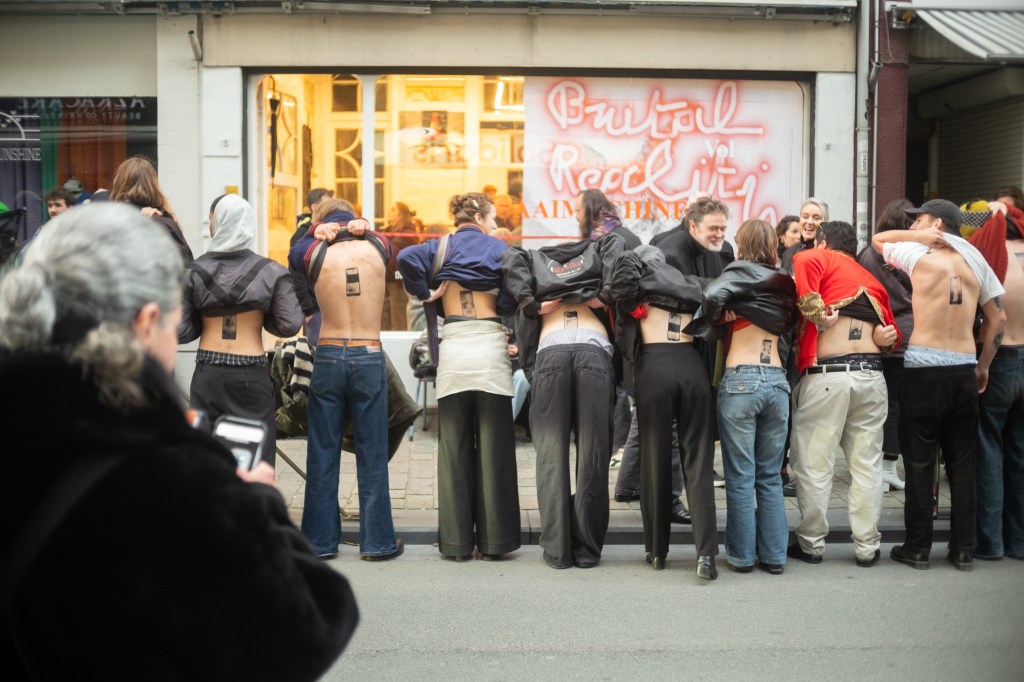
Exhibition at Aaimachine, Antwerp (26/10/25 – 23/11/25). Curated and hosted by Lieven Segers, Johanna Trudzinski, and Frank Olbrechts.
Sixteen artists were invited to respond to this title – Brutal Realities. In the space were hung large prints from Goya’s Los Desgstres de la Guerra (1810-1820). Heavy and yellowed with history (although freshly printed). serving as a kind of visual anchor against which the participating works had to converse or …… crumble.
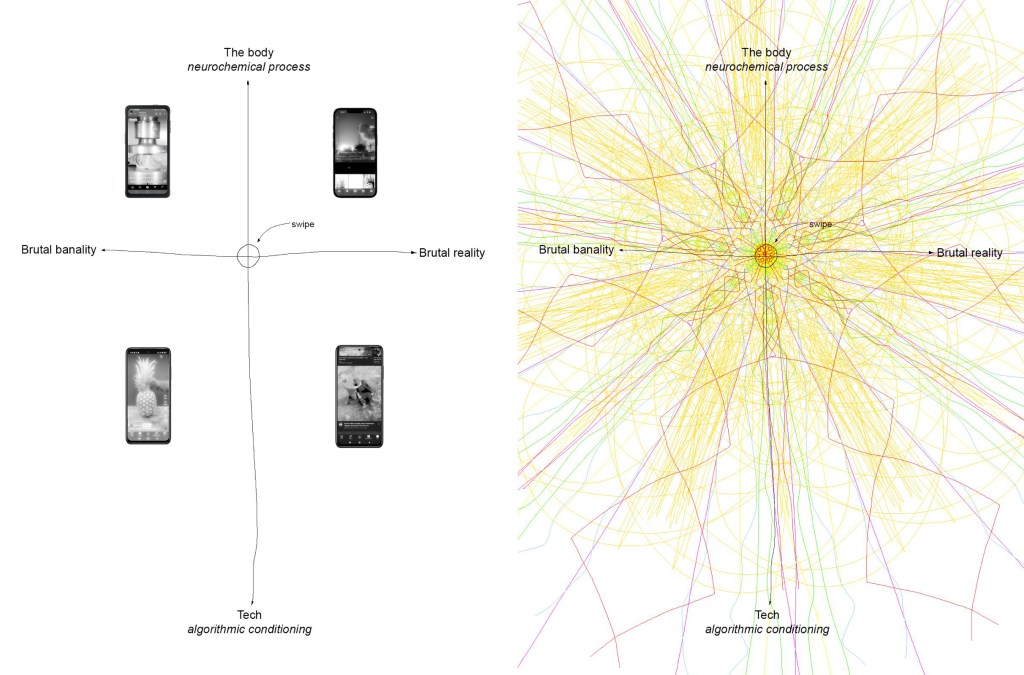
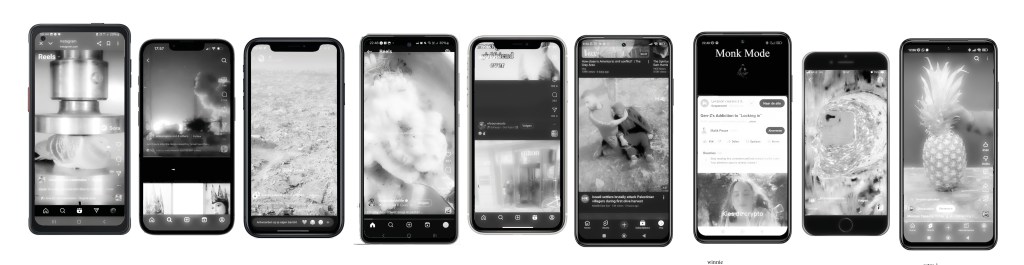
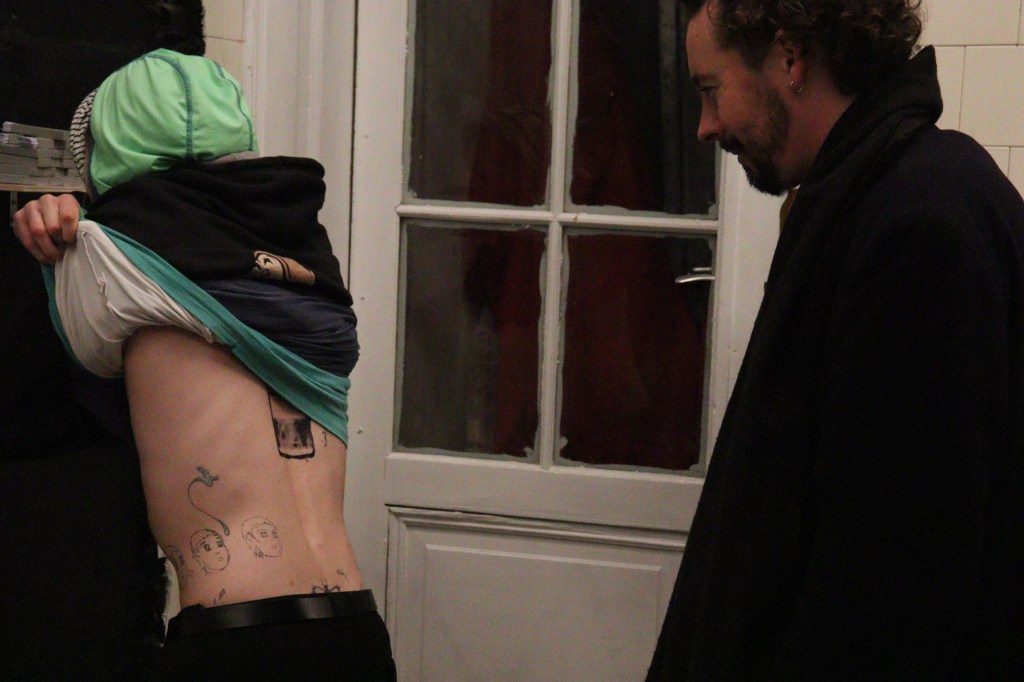
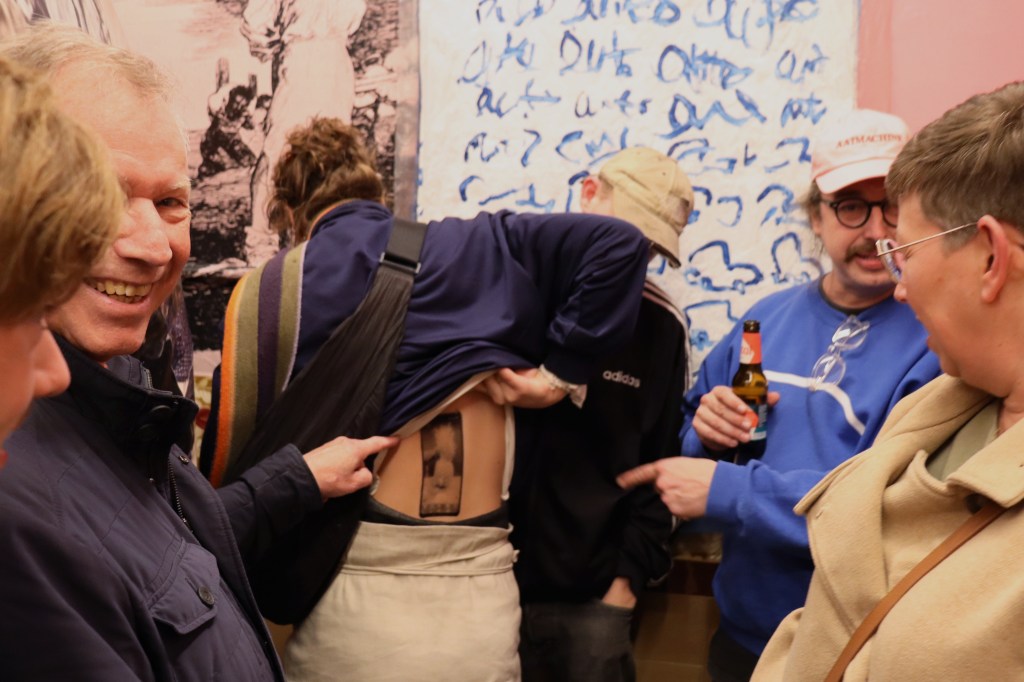
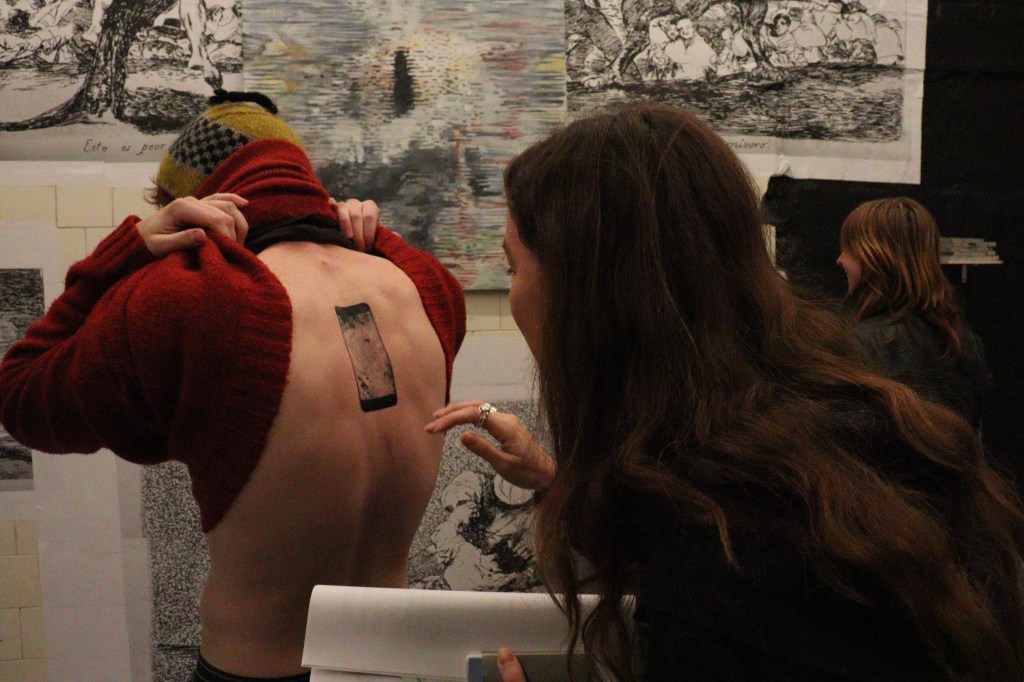
On the opening day, every artist present wore, on their back, a temporary tattoo depicting their own phone showing a screenshot they themselves had taken, All together forming a flattened mosaic of our collective doomscroll: cooking tutorials, murdered Palestinians, Al generated sludge, the algorithmic dead space … A timeline sliding between brutal reality and brutal banality.
It is abundantly clear that the form of our western general preoccupation with the brutality of reality (or lack thereof) stems from the way we encounter it on our devices. In many ways it is strategically deployed in the ongoing attempt to fuse us more intrinsically to these very devices. That it appears to us the way it does is a testament to the tailor-made implosion of the barriers between our bodies’ electro-chemical processes and those of the algorithms (and tech) we live with.
Both the brutality and banality we see are a product of our own way of existing. In this sense, what is revealed to us is a highly intimate creation. One that deeply informs how every one of these artists relates to the given theme and makes it his own.
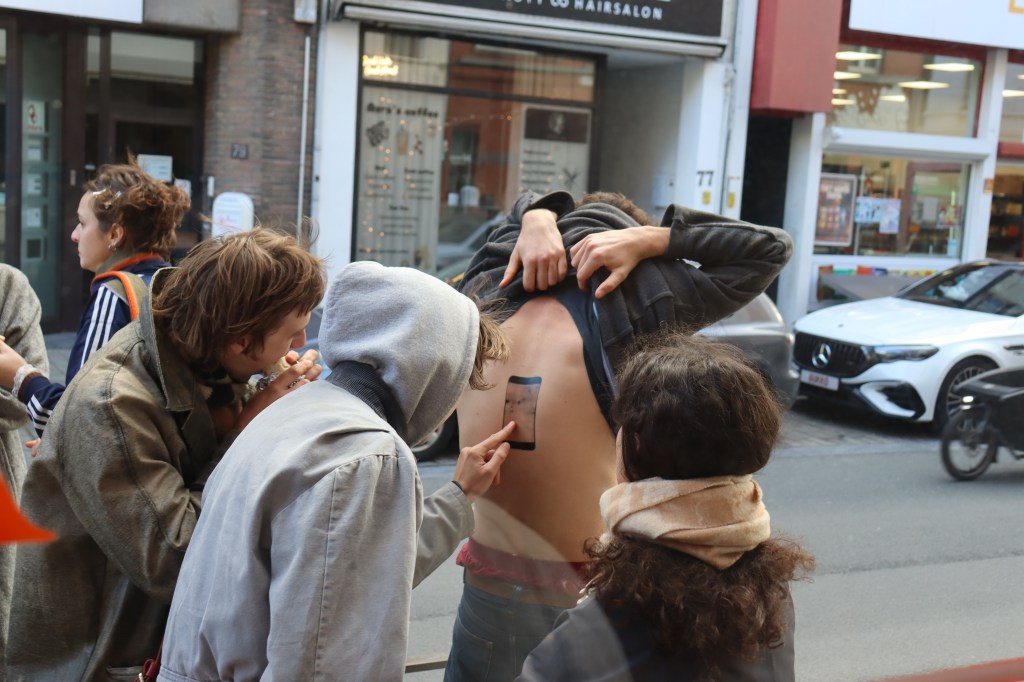
As I remember, a participating artist answering a visitor, I join mid-conversation; ‘‘although as a daily passerby of rough and tragic scenes while walking home at night in my beloved metropolitan city. I can’t help but notice how these encounters pale in comparison to the pixelated, infinitely refreshed devastation waiting for me when I slump into the sofa, phone in hand. The brutality squared, cubed, optimized for engagement. And through the same feed ! I do think I also encounter what we need to see. The news that doesn’t make it to the news. The footage that speaks when institutions don’t. Activist voices, unfiltered tragedies. So how do we navigate that? Staying clear and grounded. How to metabolize what’s necessary without becoming addicted to the spectacle of necessity? is there another path, or do we just give up and let the feed eat us… whole.’
Scene 38 from the situation at Aaimachine
What is reality?
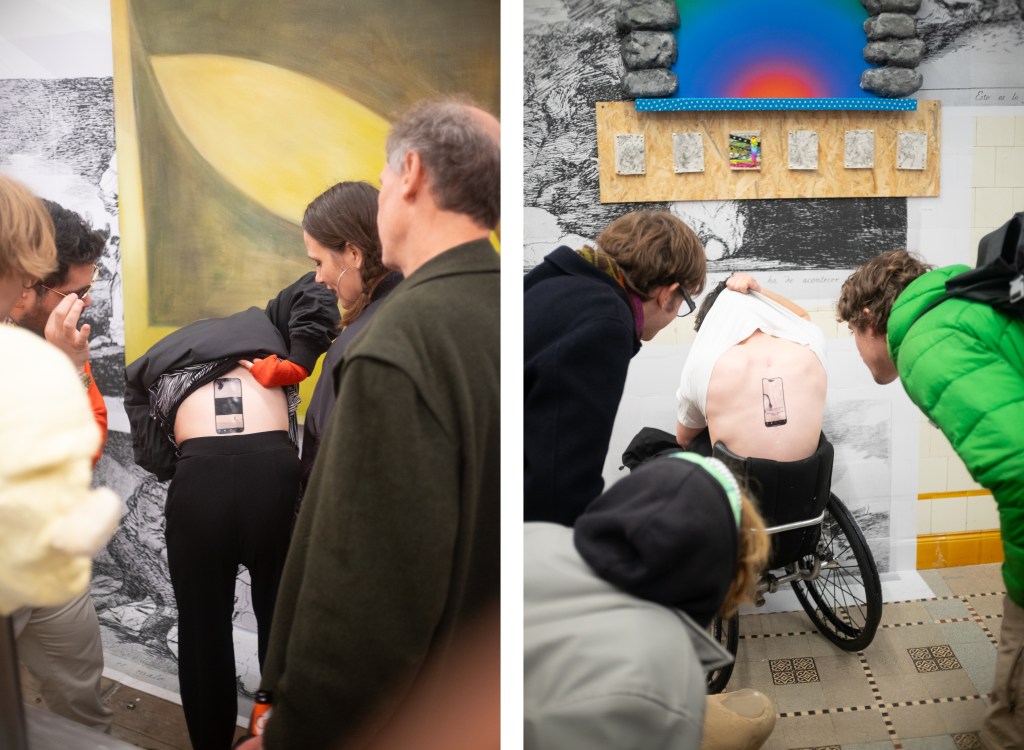
I bend over, raise my shirt,
and reveal the reel I saw last week, that is printed on the skin of my back.
Now others look at the frozen image, a screenshot I made some days ago but already forgot about.
They touch it as if it were an actual screen and say
“wow so detailed!”
What does it mean for the screen of ones phone to become the skin on ones back? The phonescreen is probably the surface many of us touch and look at the most. Our own back is one of the surfaces we touch the least and see even less.
Maybe we attempted some form of touch. Between the pixels, and the bodies they contain.
They meet on the surface. The skin is the most deep.
The act
The act of turning around, raising ones clothes and revealing ones bare back is a supreme gesture of surrender, revelation and vulnerability. Sayings like ‘ive got your back’, ‘watch your back’ or ‘being stabbed in the back, locate the back as a bodily site of vulnerability and violence. If we accept the notion that our phones have effectively integrated in the system that is our body and mind, it is not a stretch to consider our phones an equally vulnerable personal space. Equally suseptible to violence, even though we do not yet have the same kind of proverbs to describe it. Putting it on our backs then is a clear gesture of recognizing this expansion of what body is, and locating it. This is body now, my phone sinking through my chest, its material being metabolized to then blend with the scars or genetically determined marks that were already there on my back.
The gesture poses a rather direct question. It asks us to wonder about the psychosomatic interaction between our senses and the nature of abstraction. The images we see are clear and direct, within the bounds of a screen, it is literal. Yet they exist in nonsensical sequence, framed by a network in which material (reality) is endlessly transfigured. What we are left with is an utter abstraction of sensory and conceptual context that would otherwise allow us to ascribe meaning to such an image. Faced with this, body offers a materiality that could prove crucial in maintaining ones ability for relating to material in a landscape where collectivity is a state of disorientation.
Written and made by Lennert Lefever & Jacob lambrecht
 jacob lambrecht